We question whether strict adherence to moderate temperatures and bounded charge ranges truly extends lithium-cell life. In practice, we assess how monitoring voltage, current, and temperature reveals aging signs and prompts calibration steps before performance degrades. We’ll outline controlled charging, quality equipment, and disciplined conditioning to minimize drift, while keeping packs isolated to reduce parasitic drain. If these methods hold, we’ll have a clear path to steady, reliable performance—and you’ll want to follow us as we justify each step.
Key Takeaways
- Maintain moderate temperatures, avoid extreme heat or cold to reduce impedance rise and capacity loss.
- Keep SOC within optimal ranges, avoid deep discharges and frequent full charges to minimize stress.
- Use certified chargers and quality cables, follow manufacturer guidance, and avoid long top-off cycles.
- Monitor battery health: track capacity, internal resistance, and temperature trends to detect early degradation.
- Schedule regular inspections, isolate packs when idle, and document calibration or firmware updates for accuracy.
Why Battery Health Extends Longevity
Maintaining battery health directly preserves capacity and extends overall longevity. We examine how maintaining condition affects performance, focusing on conservative discharge, proper charging, and environmental control. Our approach tracks battery chemistry, recognizing how voltage, current, and temperature interact to influence internal reactions and degradation pathways. By adhering to controlled cycling and avoiding deep discharges, we reduce stress on electrodes and mitigate solid electrolyte interphase changes that accelerate capacity fade. We monitor lifecycle milestones—start, peak, and end-of-life indicators—to time maintenance actions and prevent irreversible loss. Consistent health checks enable early detection of impedance rise and capacity drift, informing calibration and replacement decisions. Through disciplined stewardship, we maximize usable energy and preserve function across the battery’s lifecycle, preserving reliability for continued application relevance.
Keep Your Charge Within Safe Ranges
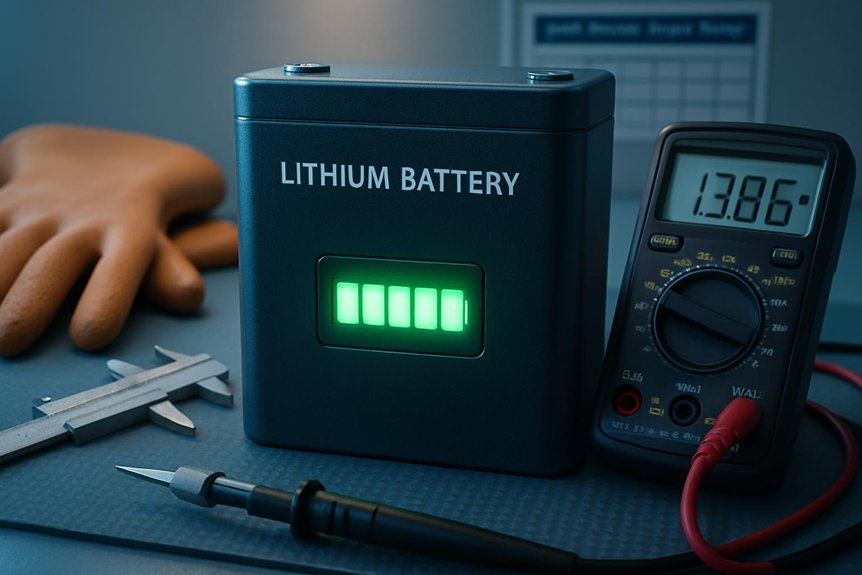
We keep our lithium packs within defined charge windows to limit stress and degradation. By monitoring and adhering to safe upper and lower bounds, we prevent voltage and temperature excursions that shorten life. We’ll outline practical thresholds and steps to maintain charge within those limits.
Stay Within Safe Range
How should you stay within safe charge ranges to preserve lithium battery health? We, the maintenance team, outline a disciplined approach to keep voltages and states of charge within recommended bands. We calibrate charge targets to minimize stress: avoid full discharges below critical thresholds, and prevent overcharges above safe limits. We monitor temperature alongside voltage, since elevated heat accelerates degradation. We prefer gradual charging profiles over rapid top-ups, and we reserve high-current sessions for brief durations. We document cycle counts and correlate them with capacity trends to detect signs of lost capacity early. We also align storage state of charge with ambient conditions to reduce aging effects. By adhering to these practices, we mitigate rapid aging and preserve performance over time.
Monitor Charge Limits
To keep charge within safe ranges, we actively track voltage and state of charge and enforce tight limits on both ends of the spectrum. We define monitoring limits that cap charge and discharge windows, preventing excursions that degrade cycle life. We implement segmented thresholds: a conservative upper boundary to avert overcharge, and a lower boundary to prevent deep discharge. We continuously compare real-time measurements against these charge boundaries, triggering safeguards when deviations occur. Our approach combines precision instrumentation with procedural enforcement, including automatic cutoff, logging, and alerting to ensure consistent adherence. By maintaining strict, repeatable limits, we reduce volatility, improve stability, and extend longevity. Readers should integrate calibrated monitoring limits into charging routines, verify boundary values periodically, and document any irregularities for ongoing optimization.
How Temperature Impacts Lithium Batteries
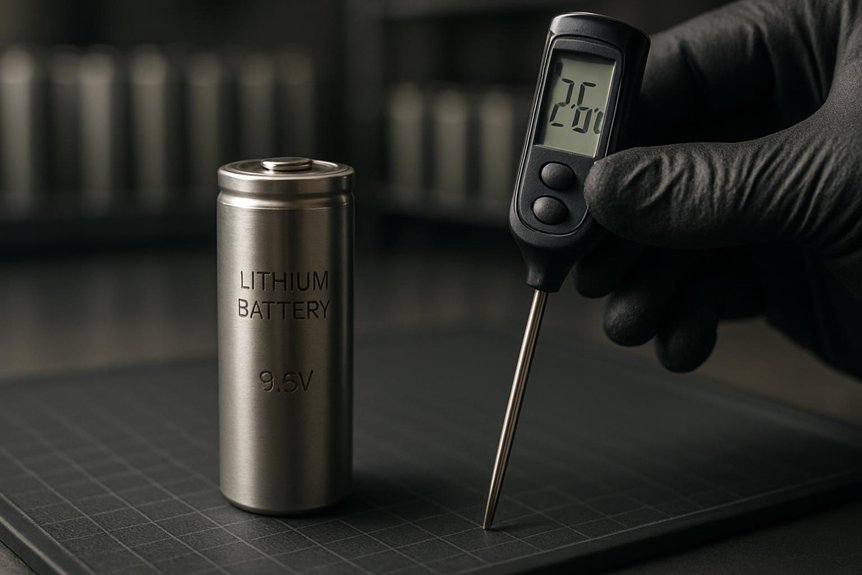
We will explain how temperature affects a lithium battery, focusing on how temperature influences capacity, internal resistance, and charge acceptance. We’ll outline the best operating range and how deviations outside it degrade performance, efficiency, and cycle life. We’ll also note cold-start considerations and practical steps to maintain performance within the stated limits.
Temperature Effects On Battery
Temperature strongly influences lithium battery performance and longevity, so understanding how heat and cold affect chemistry is essential. We describe how temperature governs reaction rates, internal resistance, and degradation pathways, and we emphasize two word discussion ideas: Temperature fluctuations, Heat dissipation. In practice, moderate temperatures minimize self-discharge and calendar aging, while extremes accelerate SEI growth and lithium plating risks. We monitor ambient and pack temperatures to maintain steady heat removal and avoid rapid thermal ramps. Below is a concise grid illustrating relationships:
| Temperature Zone | Effect on Chemistry | Recommended Action |
|---|---|---|
| Low | Slower kinetics | Gentle warming if feasible |
| Moderate | Optimal balance | Maintain consistent conditions |
| High | Accelerated degradation | Enhance cooling, reduce load peaks |
Optimal Operating Range
What is the optimal operating range for lithium batteries, and how does temperature define it? We present a precise, methodical view. Temperature governs reaction kinetics, impedance, and cycle life, so we define an effective window while acknowledging two word discussion ideas and subtopic misalignment risks. We frame limits by chemistry, form factor, and application duty cycle to avoid overstress.
- Define acceptable ambient and pack temperatures for charging and discharging to minimize degradation.
- Monitor impedance changes to detect drift toward performance loss.
- Align charging protocols with temperature bands to preserve efficiency.
- Reassess limits for aging cells and varying load profiles to prevent misalignment.
Cold Start Considerations
Could a cold start reveal hidden limits in lithium batteries? Yes, it highlights thermal resistance, electrolyte viscosity, and internal impedance changes that degrade immediate performance. We observe slower current delivery during cold starts, increased voltage drop, and reduced available capacity as ions struggle to mobilize. Our approach is to quantify battery warm up rates, monitor time-to-acceptable voltage, and set conservative thresholds for safe activation. We recommend preconditioning procedures when ambient temperatures fall below manufacturer guidelines, ensuring a gradual rise in cell temperature before high-load operation. By documenting temperature versus current capability, we define acceptable cold start windows and adjust charging circuitry to minimize inrush stress. In practice, we validate performance through repeated cycles, confirming that proper battery warm up preserves long‑term health and reliability.
Best Practices for Charging: Equipment, Cables, and Timing
Proper charging is the backbone of battery longevity, so we start with the right equipment, cables, and timing. We present a precise, methodical approach focused on reliability, safety, and performance. We, together with you, implement standardized steps to minimize wasted energy and voltage stress, ensuring consistent runtime optimization.
1) Use certified charging equipment compatible with the cell chemistry and BMS recommendations.
2) Select high-quality charging cables with adequate gauge to prevent voltage drop and heat buildup.
3) Adhere to manufacturer-specified charging currents and complete cycles for accurate state of health assessment.
4) Schedule charging during stable temperatures and avoid excess top-off times to sustain optimal voltage and current profiles.
These practices protect charging cables and maximize runtime optimization across cycles.
Daily Habits to Minimize Capacity Loss
Daily habits matter just as much as the charging setup when it comes to preserving capacity over time. We focus on disciplined care habits and consistent daily routines that reduce stress on the cell chemistry. First, we minimize deep discharges; maintain partial states of charge within recommended windows and avoid letting cells sit at extreme voltages. Second, we implement gentle, regular conditioning—steady currents, short cycles, and prompt, complete charges when needed. Third, we monitor temperature exposure, preventing abrupt rises during operation and after use. Fourth, we keep connections clean, secure, and free of corrosion to reduce resistance and heating. Finally, we log performance shifts and calibration checks, enabling proactive maintenance. These daily routines support reliable capacity retention without extending cycle counts unnecessarily.
Storage Strategies That Preserve Power
What storage conditions best preserve power over time, and how can we apply them consistently? We address this topic with precise steps, focusing on practical implementation and measurable outcomes. Our approach centers on minimizing loss mechanisms through controlled environments and disciplined procedures.
- Maintain moderate temperatures and stable ambient conditions to reduce stress-induced degradation.
- Employ storage isolation by separating charged and discharged packs, preventing cross-effects and parasitic drain.
- Set and monitor a target state of charge that minimizes voltage drift during idle periods.
- Schedule periodic, minimal-duty refresh checks to verify insulation, connections, and isolation integrity without cycling the cells excessively.
How to Monitor Battery Health and Indicators
How can we reliably gauge a lithium battery’s health and read its indicators with confidence? We approach monitoring with a disciplined workflow, emphasizing repeatable measurements and clear criteria. Begin with baseline data: nominal voltage, open-circuit voltage when rested, and charge-discharge cycles to establish performance norms. Track capacity retention over time and record internal resistance trends; rising resistance signals aging and potential safety risk. Indicators monitoring should include state of charge accuracy, temperature behavior during operation, and voltage recovery after load removal. Use manufacturer specs as reference for acceptable ranges, then flag deviations promptly. Document any calibration events, SOH estimates, and anomaly notes. Maintain consistent sampling intervals, verify data integrity, and correlate sensor readings with observed performance. This systematic approach keeps battery health insights actionable and actionable readings defensible.
When to Calibrate or Relearn Battery Metrics
Calibration and relearning should be scheduled when observed drift or operational changes exceed predefined thresholds. We approach this with a disciplined protocol that defines when to perform calibration frequency checks and when relearn triggers necessitate a full metric refresh. By adhering to specified limits, we ensure consistent accuracy and predictable performance.
- Monitor drift against baseline metrics and initiate calibration frequency review if the variance surpasses the threshold.
- Detect environmental or load changes that trigger relearn processes to restore metric fidelity.
- Schedule recalibrations after firmware or software updates to avoid stale data.
- Validate post-calibration results with a controlled test cycle before returning to normal operation.
Choosing the Right Replacement and Aftercare Plan
When selecting a replacement and planning aftercare, we align the choice with our validated metrics and the observed operating conditions from the calibration and relearn steps. We focus on replacement selection that minimizes impedance rise, preserves cycle life, and matches pack voltage behavior under load. Aftercare planning then defines charging protocol, temperature limits, and state-of-health monitoring frequency. We document the decision criteria, verify supplier data, and schedule a staged integration to avoid thermal shocks. Table below summarizes the criteria and actions for each option, ensuring traceability and repeatability.
| Option | Key Metric | Action |
|---|---|---|
| A | Capacity retention | Schedule integration |
| B | Internal resistance | Adjust charge profile |
| C | Thermal stability | Implement monitoring |
| D | Compatibility | Validate with prototype |
| E | Lifecycle cost | Approve long-term plan |
Frequently Asked Questions
How Often Should I Recalibrate a Lithium Battery for Accuracy?
We recalibrate when accuracy drifts beyond 1–2% or after firmware changes, ensuring recalibration frequency aligns with usage patterns to support accuracy maintenance; we perform routine checks quarterly, then adjust schedule if measurements deviate beyond prescribed tolerances.
Can I Use a Wireless Charger With Lithium Batteries Safely?
Yes, we can use wireless charging with lithium batteries, but we must follow safety considerations. We assess coil alignment, heat buildup, and charging protocols; we monitor temperature and voltage, guarantee compatibility, and use certified wireless chargers for safe operation.
Do Battery Health Indicators Vary by Device or Brand?
We observe Battery indicators do vary by Brand variance, device, and calibration states; device specific indicators exist. We calibrate periodically, match indicators to each device, and note Battery calibration steps to ensure accurate readings for trustworthy results.
What Is the Best Sign of a Failing Cell Pack?
Knock-on-wood, the best sign of a failing cell pack is rising impedance and erratic capacity. We observe falling voltage and uneven discharge, plus temperature inconsistencies, indicating internal degradation and potential safety risks in the pack.
Should I Replace All Cells at Once or Individually?
We should replace all cells at once to ensure uniform performance and avoid mismatched aging, then reassess; if some cells are within tolerance, consider selective replacement. Also explore recycling options and verify warranty coverage for replacements.
Conclusion
We’ve walked through practical steps to sustain lithium battery health, and we’ll keep applying them with disciplined precision. By monitoring voltage, current, and temperature, we catch early aging signs and adjust our routines before they worsen. We’ll use certified chargers, keep environments stable, and separate charged from discharged packs to reduce drain. Think of it as tuning a high-performance engine: small, regular tuning prevents big, costly failures. Consistency is our safeguard, and longevity follows.