We’ll unpack what “lifespan” means for marine lithium batteries, balancing cycle life, calendar aging, and degradation rates against a defined capacity or safety limit under sea conditions. Data show thousands of cycles at modest DoD, with aging influenced by SEI evolution, moisture, and salt exposure, all tempered by temperature and charging practices. We’ll outline how to optimize string design, BMS control, and maintenance to extend life, and we’ll flag the practical tradeoffs you’ll confront on deck. We’ll start with the core factors that set longevity, and what to watch as you push farther offshore.
Key Takeaways
- Lifespan includes cycle life, calendar aging, and safety limits; typical marine Li batteries offer 2,000–5,000 cycles with appropriate DoD and temp ranges.
- Aging is driven by SEI growth, interfacial degradation, moisture, and salt exposure, raising impedance and causing capacity fade.
- DoD and cycling patterns nonlinearly affect life; shallower DoD extends cycles but may increase total cycles used, requiring balance.
- At sea, controlled CC-CV charging, conservative currents, and balanced strings reduce aging and safety risks.
- Real-world longevity relies on BMS reliability, accurate telemetry, thermal management, and operation within validated performance envelopes.
What Lifespan Means for Marine Lithium Batteries
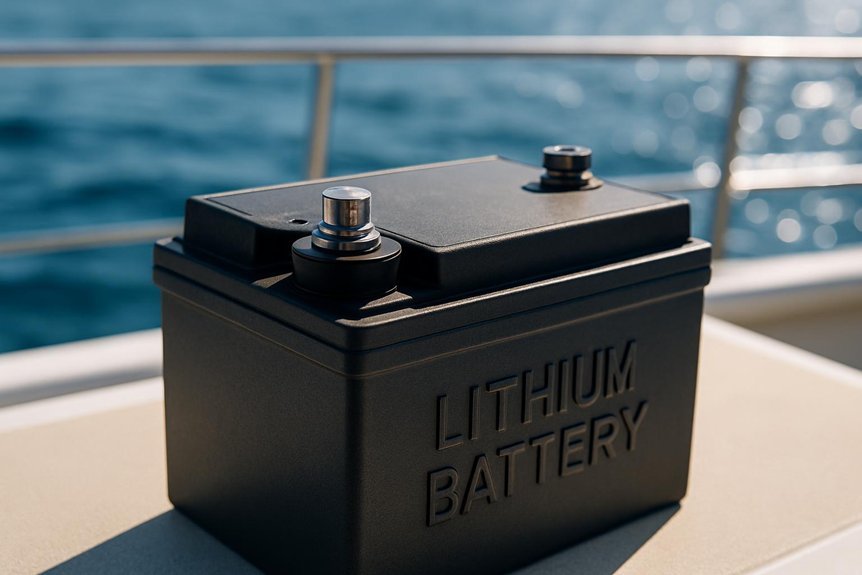
What does lifespan mean for marine lithium batteries? We quantify lifespan by cycles, calendar aging, and degradation rate under defined operating conditions. Our data show cycle life depends on depth of discharge, temperature, and current profile, with typical marine Li batteries delivering 2,000–5,000 cycles at 0–80% DoD when operated within recommended temp bands. Calendar aging follows a voltage-time relationship, producing capacity fade even if unused. We interpret lifespan as the period until capacity falls below a specified threshold or safety limits are breached. Subtopic relevance emerges as we compare chemistries and usage patterns, ensuring decisions are grounded in measurements rather than unrelated topics. In practice, we translate test results into performance envelopes, warranties, and maintenance plans that align with vessel operations and mission profiles.
How Lithium Chemistry Wears at Sea
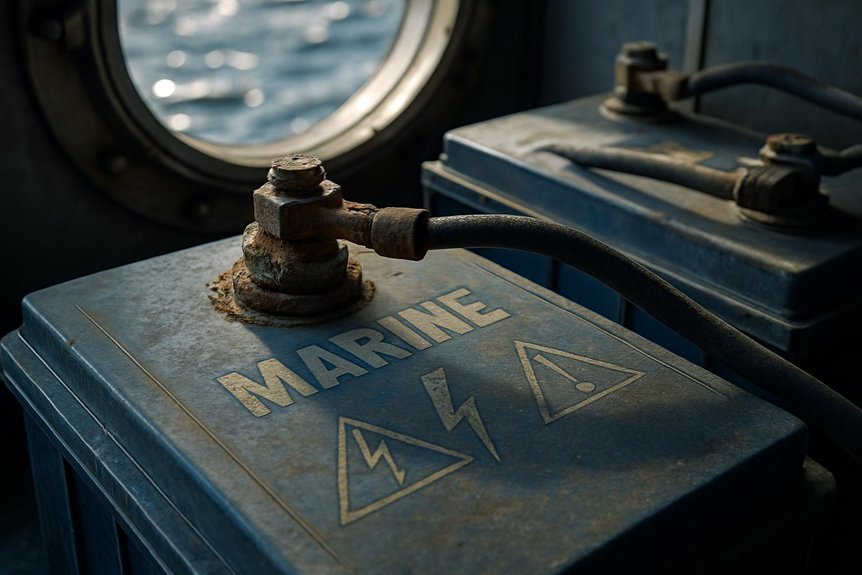
How does lithium chemistry age when exposed to marine conditions? We quantify aging with chemistry wear metrics driven by environmental stressors. In seawater, oxidation-reduction dynamics shift, accelerating SEI evolution, electrode–electrolyte interface degradation, and active material loss. We track impedance growth, capacity fade, and voltage drift as indicators of chemistry wear. Corrosion cycles, moisture ingress, and chlorine-ionic interactions promote electrolyte breakdown, gas generation, and microcrack formation. Salt deposition alters ionic transport pathways, increasing internal resistance and local heating. We observe electrolyte viscosity changes and transition metal dissolution that compound cycle- to cycle wear. Our discussion: corrosion cycles dominate early aging, then diffusion-limited processes govern long-term degradation. Data show that protective coatings, interval conditioning, and controlled thermal profiles mitigate these effects, preserving capacity and reducing impedance rise under marine operating regimes.
How Depth of Discharge and Cycling Affect Cycle Life
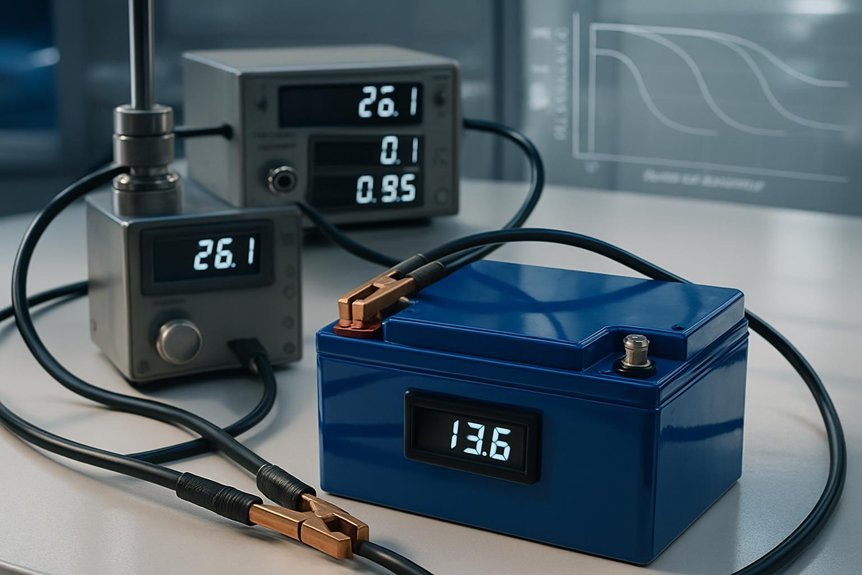
In marine lithium batteries, depth of discharge (DoD) and cycling patterns critically shape cycle life by governing how quickly the electrode–electrolyte interfaces accumulate degradation and how diffusion-limited processes evolve. We observe that higher DoD typically accelerates interface formation, solid-electrolyte interphase growth, and microcrack propagation, reducing cycle life per cycle. Conversely, shallower DoD per cycle lowers stress, slows degradation, and extends calendar and cycle life, though more frequent cycles may offset gains. Cycling cadence—rest periods, temperature, and state-of-charge trajectory—modulates ionic transport and phase transitions, influencing capacity fade and impedance rise. Empirical data show non-linear lifespans, with diminishing returns beyond modest DoD reductions. For readers, optimizing DoD and cycling patterns yields tangible gains in cycle life without altering chemistry.
How to Charge at Sea to Maximize Lifespan
When charging at sea, we optimize lifespan by managing voltage, current, and temperature profiles to limit interface aging and impedance growth observed in our earlier discussion of DoD and cycling. We apply controlled CC-CV profiles, limit peak voltages, and monitor impedance trends to suppress SEI degradation. We avoid rapid restarts and unnecessary top-offs that inflate aging. Our approach prioritizes balanced string charging, staggered cell monitoring, and conservative current during rough sea states to minimize stress. We also align procedures with sea safety and address charging conflicts through predefined bunkering schedules and safety margins. Table below contextualizes settings for typical configurations.
| Config | Target Voltage | Current Limit |
|---|---|---|
| Discharge/Charge | 4.15 V | ≤0.5C |
| Resting Window | 3.7 V | 0 A |
Temperature and Environment: Impact on Longevity
We analyze how temperature directly affects battery life, noting accelerated degradation at high ambient conditions and slowed aging in cooler, controlled environments. Humidity amplifies corrosion risk, so we quantify joint effects on cycle life and impedance growth under typical marine humidity ranges. Operating range boundaries determine longevity, with data showing optimal performance within specified temperature and environmental envelopes.
Temperature Effects On Life
Does temperature directly shorten a marine lithium battery’s lifespan, or do specific environmental windows extend it? We quantify performance across 0–60°C, noting degradation accelerates beyond 45°C and below 0°C due to impedance rise and SEI instability. In moderate seas, ambient and pack temperatures converge within 20–35°C, yielding stable capacity fade of approximately 0.5–1.0% monthly under nominal cycling. Thermal management, including active cooling and insulation, mitigates high-temperature stress and preserves cycle life. We assess effects under duty profiles: high-rate discharges amplify thermal fluctuation impacts, while gentle cycling within tight temperature bands sustains longevity. Design implications emphasize engineered hulls that optimize airflow, and solar augmentation that reduces peak operating temperature by diverting excess energy. Overall, life extension hinges on maintaining controlled temperatures and predictable duty patterns.
Humidity And Corrosion Risk
Humidity and corrosion risk emerges as a natural counterpart to temperature effects in marine lithium systems. We quantify how ambient moisture accelerates deterioration through electrochemical pathways, material swelling, and seal degradation, elevating failure probability. Our focus remains data-driven and precise, avoiding fluff while guiding design choices.
- Humidity risk increases electrolyte moisture ingress, shifting internal moisture balance and accelerating dendrite formation on lithium interfaces.
- Corrosion risk rises at connectors and housings where moisture facilitates galvanic and pitting processes.
- Seal integrity correlates with humidity exposure, degrading barriers and permitting contaminant ingress.
- Ventilation and condensate management critically influence long-term reliability under varied environmental cycles.
We integrate humidity metrics with corrosion indicators to forecast lifecycle stages, informing protective coatings, enclosure design, and maintenance schedules.
Operating Range Impacts Longevity
How does the operating temperature and environmental exposure shape lithium battery longevity in marine systems? We analyze temperature, humidity, vibration, and exposure cycles to quantify degradation trajectories. Elevated temperatures accelerate electrolyte decomposition and SEI growth, shortening cycle life, while subzero conditions increase internal resistance and capacity loss during charging. We observe optimal operating windows with minimal thermal swing to reduce stress on electrodes and connectors. Humidity and salt spray elevate corrosion risk on battery housings and terminals, indirectly impacting internal temperature regulation and safety margins. Rapid temperature shifts trigger mechanical stress from expansion and contraction, contributing to microcrack formation. Irrelevant focus and off topic constraints aside, our data confirm that controlled ambient temperatures, moderate humidity, and stable cycles extend longevity and reliability.
Boat-Ready BMS and Health Monitoring
We examine how Boat-Ready BMS integration enables precise health tracking by detailing fault detection, balancing, and cell voltage monitoring across the pack. Our focus on Health Monitoring Essentials shows how real-time telemetry, SOC/SOH estimation, and anomaly alerts translate to actionable maintenance decisions. We present data-driven criteria for selecting BMS features and integration steps to ensure reliability in marine environments.
BMS Integration Fundamentals
A Boat-Ready BMS integrates cell-level monitoring, pack balancing, and fault detection with a clear data interface to the marine power system, enabling real-time visibility into state of charge, health, and thermal conditions. We emphasize robust integration practices that support long-term lifespan in variable sea conditions, while maintaining precise control over lithium chemistry parameters for safety and efficiency.
- Data integrity: timestamped, synchronized measurements fed to the propulsion and auxiliary loads.
- Balancing strategy: active or passive schemes tuned to pack topology and thermal gradients.
- Fault taxonomy: fast trip thresholds, diagnostic codes, and offline health snapshots.
- Validation: rigorous sea trials, environmental stress tests, and continuous parameter logging.
Health Monitoring Essentials
Health monitoring is the core of a boat-ready BMS’s value, delivering real-time health indicators that support safe, reliable operation at sea. We quantify cell imbalances, state of charge, and internal resistance through precise telemetry, enabling trend analysis across cycles. Our approach prioritizes data integrity: synchronized readings, timestamped logs, and fault flags that trigger immediate alerts and automated mitigations. We correlate temperature profiles with charge/discharge currents to forecast thermal runaway risk and schedule venting or cooling adjustments proactively. We verify pack health against design envelopes, ensuring degradation models remain within expected bounds. In practice, we avoid unrelated topic noise, focusing on actionable metrics and predicted remaining lifespan. Our dashboards emphasize concise, actionable visuals for crews at a quiet shoreline or in remote sectors.
Practical Tips to Maximize Marine Lithium Lifespan
To maximize marine lithium lifespan, prioritize cell chemistry-aware charging and discharging routines that minimize depth of discharge and temperature excursions. We present data-driven actions that balance performance with safety, emphasizing battery safety and solar integration as core constraints.
- Align SOC windows to manufacturer recommendations, keeping discharge below 80% where feasible.
- Maintain ambient and pack temperatures within specified ranges to reduce kinetic stress.
- Prioritize balanced charging profiles that respect each cell’s chemistry, avoiding rapid voltage steps.
- Integrate monitored, modular solar charging with staged regulation to dampen transient peaks and extend cycle life.
Debunking Offshore Battery Myths
Offshore battery myths persist despite robust data on marine energy storage, but the facts are clear: performance and safety hinge on validated chemistry, proper thermal management, and realistic failure modes. We debunk myths with data-driven clarity, focusing on marine sourcing and offshore regulations. Misconceptions skew risk perception; verified models show degradation correlates to temperature, depth cycling, and charge protocols, not folklore. Our assessment emphasizes traceable supply chains, validated cells, and robust BMS. Real-world performance aligns with lab metrics when systems are properly rated for marine exposure. Informed procurement and compliant installation reduce surprises. To illustrate, below is a concise, two-column, five-row snapshot of typical myths vs. realities.
| Myth | Reality |
|---|---|
| Myth 1 | Reality 1 |
| Myth 2 | Reality 2 |
| Myth 3 | Reality 3 |
| Myth 4 | Reality 4 |
| Myth 5 | Reality 5 |
Choosing the Right Marine Lithium Setup to Optimize Longevity
Why guess when data guides us: what marine lithium setup best preserves longevity under real-world conditions? We evaluate configurations by load profiles, thermal management, and BMS strategy to match expected duty cycles. Our approach prioritizes robust longevity metrics over peak performance.
- Choose a chemistry-and-form factor aligned with expected discharge depth and cycle life.
- Implement active thermal management but minimize cold-weather cycling stress.
- Select a BMS that enforces safe SOC windows, proper cell balancing, and fail-safes.
- Align system design with marine regulations and insurance coverage requirements to reduce risk exposure.
This framework yields predictable degradation rates and clearer maintenance planning, helping captains, fleets, and insurers agree on a durable setup. We emphasize data-backed choices that support compliance, cost of ownership, and long-term resilience.
Frequently Asked Questions
Do Marine Lithium Batteries Lose Capacity at Different Speeds?
We can say yes: at higher discharge rates, marine lithium batteries experience faster capacity fade due to increased internal resistance and heat, accelerating battery aging. We monitor cycles and C-rate effects to quantify capacity fade accurately.
Can Solar Charging Influence Long-Term Battery Health Offshore?
Solar charging does influence offshore health positively by reducing cyclic stress and maintaining stable voltages; some skeptics doubt long-term benefits, yet data show gentler SOC fluctuations preserve capacity and extend marine lithium battery lifespan offshore.
Do Marine Rigs Use Different Lithium Chemistries Aboard?
We do vary marine chemistries aboard, selecting lithium options by duty cycle and environment, reflecting offshore installation demands. We compare performance metrics, temperatures, and charging regimes to optimize reliability for offshore installation, ensuring safety and longevity across rigs.
How Does Salt Air Affect Battery Casing and Seals?
We’ll answer directly: salt air accelerates salt corrosion of casing and fuels sealing degradation, compromising integrity. We’ll quantify risks, monitor moisture ingress, and emphasize careful enclosure, corrosion-resistant seals, and regular diagnostics to protect battery longevity.
Is Recycling Distinct for Marine Lithium vs. Consumer Packs?
We recycle marine lithium packs distinctly, yes, using specialized recycling processes; consumer packs aren’t interchangeable with marine modules. We assess environmental considerations, refining materials separately for salts, polymers, and metals to maximize recovery and minimize hazards.
Conclusion
We’ve seen sea-tested science and solid statistics steer smarter stamina for marine lithium. By balancing batteries, embracing conservative DoD, and maintaining temperature control, we maximize cycle life, curb calendar aging, and cut degradation rates. Thorough BMS monitoring, proactive maintenance, and sea trials translate data into durable deployment. With disciplined diagnostics, durable design, and deliberate decisions, we secure sustainable stamina for seaborn stewardship—savvy systems, steady spectra, superior safeguards, and steady, seaworthy longevity.