We store lithium cells with care to slow aging and prevent failures. We’ll keep a dry, stable environment, a modest temperature around 15–25°C, and tight humidity control, then hold a mid-range charge (roughly 40–60%). We’ll label, separate chemistries, and monitor voltage, impedance, and temperature, documenting every condition. The routine seems simple, but the details matter, and small deviations can set long-term outcomes. If you want to know how to tune each step, we should start here.
Key Takeaways
- Store at a mid SOC (roughly 40–60%) to minimize SEI stress and parasitic reactions during long-term storage.
- Keep a stable, cool environment (1–25°C) with minimal humidity and no temperature shocks to slow degradation.
- Use calibrated instruments to verify resting voltage and SOC, and document before sealing the storage container.
- Avoid full charges and deep discharges; use controlled, low-current revival if reactivation is needed after storage.
- Prepare and handle cells carefully: inspect connections, prevent moisture ingress, and store in labeled, single-chemistry containers.
How Lithium Batteries Degrade Over Time
Lithium batteries degrade primarily through loss of capacity and increased internal resistance as they cycle and age. We, as a reader-facing guide, examine the mechanisms that drive this decline. Ion transport becomes less efficient, electrode surfaces accumulate irreversible reactions, and solid electrolyte interphase layers thicken, all reducing usable energy and causing voltage inefficiencies. We observe calendar aging and cycle aging effects, with higher states of charge accelerating degradation due to elevated parasitic reactions. Temperature amplifies these processes, while microstructural changes introduce impedance growth. Lithium degradation is not uniform; different chemistries and form factors exhibit distinct pathways. We emphasize storage impact as a key factor, noting that prolonged exposure to suboptimal conditions compounds loss. Understanding these dynamics helps us optimize usage, maintenance, and, ultimately, longevity of stored cells.
Start Here: The Right Charge Before Long-Term Storage
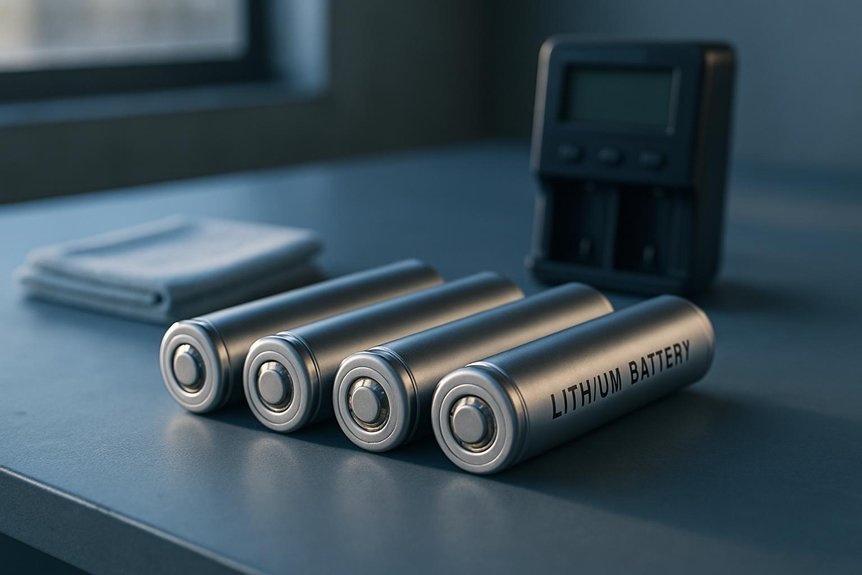
To prep lithium cells for long-term storage, we start by setting the charge to a level that minimizes stress on the electrodes and SEI layers. Our approach follows strict storage guidelines that target a mid-range state of charge, typically around 40–60%, depending on chemistry. We avoid full charge and deep discharge, as both elevate degradation risk during hiatus. We document a clear charge strategy: stabilize voltage, minimize internal resistance, and prevent parasitic reactions by limiting exposure to elevated temperatures and self-discharge. We ensure measurement accuracy with calibrated instruments and monitor for drift over the storage period. This protocol emphasizes consistency, reproducibility, and traceability, so long-term performance remains predictable. Readers should implement the prescribed charge window at setup and maintain it throughout the storage interval.
Best Storage Temperatures to Protect Chemistry
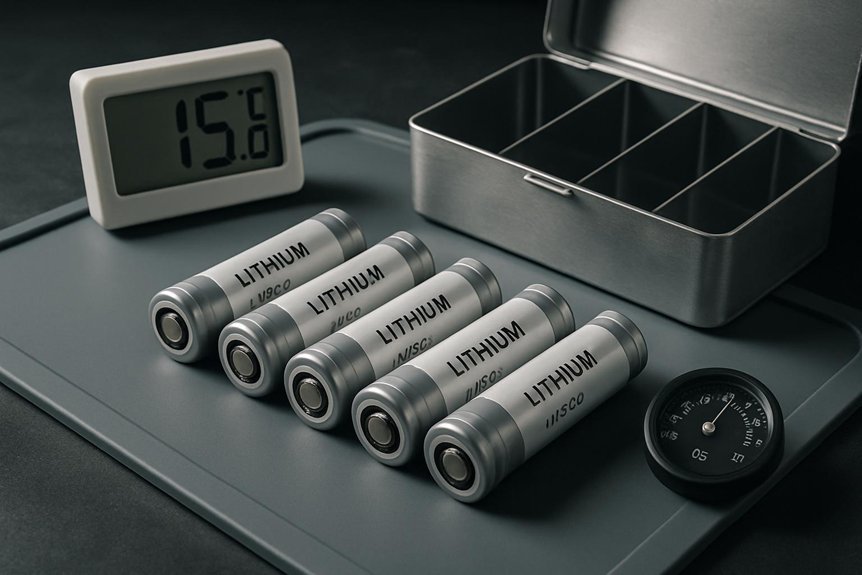
We set clear targets for storage temperature to minimize aging, focusing on ideal ranges that preserve chemistry. We’ll outline how charge level interacts with temperature and why keeping batteries within recommended limits reduces degradation. By understanding these factors—temperature, charge level, and their combined effect on chemistry—we guide you toward consistent long-term performance.
Optimal Storage Temperature
Even slight departures from the ideal temperature can accelerate degradation, so we recommend storing lithium batteries at modestly cool, stable conditions. Our guidance targets a narrow thermal band to minimize side reactions and impedance growth. Optimal storage temperature is typically between 1°C and 25°C (34°F–77°F), with tighter control toward the lower end for long-term reserves. Rapid temperature shifts should be avoided, as they induce mechanical stress and crystalline changes within the electrode materials. We assess storage humidity as a concurrent factor, maintaining low absolute humidity to suppress condensation and electrolyte compatibility issues. Consistency matters: implement a steady environment and a controlled charging routine during prior use or intermittent rest periods. By maintaining these parameters, we reduce self-discharge effects and preserve usable capacity over extended timeframes.
Charge Level Guidelines
Charge level is a key companion parameter to storage temperature, as the state of charge (SOC) strongly influences chemical stability and impedance growth during idle periods. We recommend moderate SOC targets to minimize deleterious reactions and aging: avoid full charges and prolonged complete discharge. Our guidance prioritizes a predictable, repeatable battery lifecycle with consistent SOC management, supporting storage safety and long-term performance. Maintain a stable SOC range that reduces electrode strain and parasitic loss, while aligning with device recommendations. To engage readers, consider the following quick reference table.
| SOC Target | Rationale | Effect on Lifecycle |
|---|---|---|
| 40–60% | Balances stability and chemistry activity | Slows impedance rise |
| 60–80% | Higher runtime readiness | Moderate aging impact |
| <40% | Limited chemistry activity | Increased self-discharge risk |
| >80% | Elevated degradation risk | Not recommended for long storage |
| 100% | Emergency use only | Highest risk, avoid long-term |
Temperature Impact on Chemistry
Temperature is the dominant factor shaping lithium battery chemistry during storage; higher temperatures accelerate parasitic reactions and impedance growth, while lower temperatures slow these processes but can introduce moisture-related risks if freezing occurs. We examine how temperature affects cell chemistry, emphasizing temperature sensitivity and chemical stability. At elevated temperatures, electrolyte decomposition and SEI evolution accelerate, reducing capacity and increasing internal resistance. Moderate cooling preserves electrolyte integrity and minimizes self-discharge, yet excessive cold can cause lithium plating on graphite electrodes during reactivation, harming cycle life. We advise maintaining a stable, dry environment with controlled temperatures appropriate to chemistry and state of charge. Monitoring equilibrium temperatures across storage periods prevents thermal gradients. By aligning storage temperature with chemical stability principles, we prolong usable life and preserve performance.
Short Rests vs. Long Rests: Storage Setups That Work
When storing lithium batteries, short rests and long rests differ mainly in balance and voltage targets: short rests keep cells within a usable window, while long rests require careful voltage control to minimize capacity loss. We, therefore, compare implementations that emphasize stability versus deep storage readiness. In short rests, we maintain moderate state of charge and frequent checks, preserving brisk response and preventing drift in balance. For long rests, we target a defined resting voltage with controlled rest duration and minimal self-discharge exposure; monitoring prevents overvoltage or undercharge that accelerates degradation. Storage timing matters: too aggressive delays or mismatched voltages undermine capacity. We recommend pairing temperature-aware environments with calibrated cutoffs, documenting each session. Overall, align rest duration to application goals, balancing readiness against longevity.
How to Prepare and Inspect Batteries Before Storage
We start by evaluating battery health, looking for signs of swelling, leakage, or voltage deviation that could indicate compromised cells. Next, we clean contacts safely with recommended tools and avoid introducing moisture or conductive debris. Finally, we verify the state of charge to target an appropriate level for storage, ensuring measurements are accurate and repeatable.
Inspect Battery Health
How can we reliably assess a battery’s condition before storage to prevent capacity loss? We begin with a concise health check that targets usable capacity, internal resistance, and voltage stability. We measure open-circuit voltage after a rest period and compare it to nominal values for the cell chemistry. We verify capacity retention through a partial or full discharge test under controlled current, noting any abrupt voltage sag that indicates degradation mechanisms at work. We record impedance trends over several cycles to identify aging behavior, and we inspect for signs of softening or swelling that would flag unsafe storage. We avoid aggressive charging and document any charging pitfalls observed during test procedures. Our aim is a reproducible baseline that informs storage conditions without inducing undue stress.
Clean Contacts Safely
Before storage, we ensure all contact surfaces are clean and oxide-free to minimize contact resistance and corrosion risk. We then inspect terminals, tabs, and connectors for pitting, staining, or residue, removing corrosion with approved contact cleaner and lint-free wipes. We avoid liquids near active cells and follow manufacturer safety guidelines to prevent moisture ingress. Handling procedures emphasize minimal mechanical stress to prevent microcracks at the interface. We document any anomalies and replace damaged hardware rather than attempting interim fixes. When cleaning, we use lint-free wipes, apply cleaners sparingly, and allow complete drying before assembly. This approach maintains clean contacts, reduces parasitic resistance, and supports safe handling during storage. Consistency in preparation reduces failure risk and preserves capacity over time.
Verify State Of Charge
Is the battery still at an ideal charge for storage, or has it drifted into an unsafe range? We verify state of charge by measuring voltage under rest and comparing it to manufacturer recommendations. We record a precise resting voltage, then estimate the state of charge using the cell chemistry curves, not assumptions. We check for any variance between cells; a single outlier indicates imbalance that can worsen with time. We confirm there’s no continued self-discharge beyond expected levels and verify the pack isn’t near termination of life. If storage requires a specific SOC (for example 40–60%), we adjust promptly. This review eliminates unrelated topic confusion and avoids redundant topic data. We document the final SOC, timestamp, and conditions to ensure consistent, safe preparation for long-term storage.
How to Store Batteries Safely, Dryly, and Stably
To store batteries safely, dryly, and stably, we first establish a controlled environment that minimizes temperature swings and moisture exposure. We set a neutral temperature, avoid rapid changes, and shield from humidity. Our protocol emphasizes clean handling, proper insulation, and clear labeling to reduce storage hazards and ensure consistent SOC. We practice battery etiquette by using dedicated containers and preventing mixed chemistries. We monitor storage conditions with calibrated instruments and document readings. The goal is repeatable stability and minimized self-discharge.
| Parameter | Target Range |
|---|---|
| Temperature | 15–25°C |
| Humidity | 25–50% RH |
| SOC | 40–60% |
Seasonal and Regional Storage Considerations
Seasonal and regional conditions directly impact how we store lithium batteries, so we tailor our protocol to expected temperature and humidity patterns in each location. We calibrate storage rotation and humidity control to align with seasonal fluctuations, ensuring cells remain within safe voltage and temperature ranges during extended holds. We factor electricity availability and ventilation needs, avoiding condensation and thermal buildup through proactive monitoring. Our approach minimizes capacity fade by adjusting cabinet setpoints, insulation quality, and the cadence of inspections. We emphasize predictable cycles rather than ad hoc handling, reducing risk during demand spikes or power outages. Seasonal ventilation planning prevents stagnation and maintains fresh air exchange around stored packs, preserving chemistry integrity across environments.
Seasonal storage protocols optimize voltage, temperature, and airflow to preserve battery chemistry and prevent degradation.
- storage rotation cadence by season
- humidity and condensation prevention measures
- seasonal ventilation and air quality management
Quick-Starts to Revive Aged Cells After Long Storage
During long storage, aged cells often emerge from rest with elevated internal impedance and uneven state-of-charge, so we initiate a controlled revival sequence that restores balance before load introduction. We begin with a low-current conditioning pulse to reestablish electrode contacts, then apply short, monitored charging to verify capacity recovery without overheating. We document impedance reduction, SOC synchronization, and voltage recovery milestones, stopping if safe thresholds are exceeded. We emphasize that revival is not a cure-all; it simply reduces idle storage risks and reveals remaining health. We address revival myths by distinguishing transient surface effects from genuine capacity loss. We avoid aggressive fast-charging because safety margins matter. If measurements remain unstable, we recommission under supervision or retire the cell rather than risk unexpected failure.
Frequently Asked Questions
How Long Can Lithium Batteries Sit Without a Charger?
We can’t leave lithium cells uncharged indefinitely; storage duration depends on chemistry, temperature, and state of charge. In practice, we recommend a partial charge, about 40–60%, as optimal charging state, reducing loss during different storage duration.
Do All Lithium Chemistries Share Identical Storage Voltages?
We note that Lithium chemistries do not share identical storage voltage. Different chemistries require specific targets; Storage voltage depends on each type. Temperature impact and Humidity relevance also affect performance and longevity in practical storage scenarios.
Can Vibration During Storage Affect Long-Term Capacity?
Yes—we can say vibration affects long-term capacity. We analyze vibration effects, we monitor storage conditioning, we minimize shocks, we stabilize mounts, we document bounce metrics, we interpret data, we adjust protocols, we protect cells, we preserve performance.
Is It Safe to Store Used and New Cells Together?
Yes, we don’t recommend storage pairing used and new cells together; separate them. We assure proper battery isolation, monitor each pack, and follow safe isolation standards to prevent cross-current and thermal risks during storage.
Should Humidity Levels Influence Storage Above Temperature?
Yes, humidity does influence storage; controlled humidity matters. We’ve found that maintaining 20–50% RH reduces degradation risk. Humidity control minimizes corrosion, while humidity impact remains significant, so we monitor and adjust environments proactively in our guidance.
Conclusion
We’ve walked the careful trail, reader. Like the quiet blade of a sundial, storage discipline defines a battery’s long arc: steady SOC, stable temperature, and dry air shaping durable chemistry. We store with intent, guard against mixed chemistries, log every check, and respect the limits of revival. Remember the old shipwright’s patience—gentle handling, meticulous curation—and you’ll sail many seasons with cells that hold their charge as if time stood still.