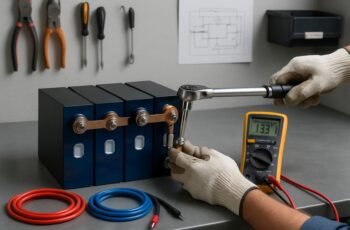
Did you know that improper LiPo charging can cause catastrophic failure in seconds? We’ll walk through precise, standards-driven steps to charge safely: choosing the right charger, enabling balance charging, setting per-cell voltage (3.6–4.2V) and current (0.5C–1C), and monitoring temperature (aim for ≤45°C). We’ll also verify balance leads, inspect for swelling, and store packs properly. Stick with us to ensure every pack stays within safe limits—and there’s more that could impact your results.
Key Takeaways
- Use a LiPo-specific charger that matches cell count, capacity, and provides balance charging, temperature monitoring, and auto-termination.
- Set per-cell voltage targets to 4.20V max (3.60–4.20V range) and limit charging current to 0.5C–1C within charger specs.
- Monitor cell voltages and pack temperature continuously; stop if temperature exceeds 45°C or signs of swelling appear.
- Balance charge to equalize cells, verify balance leads, and document cycle results for health tracking.
- Charge in a fire-rated area with proper enclosure, ventilation, and fire safety measures; store and handle packs per recommended guidelines.
How LiPo Chemistry Guides Safe Charging
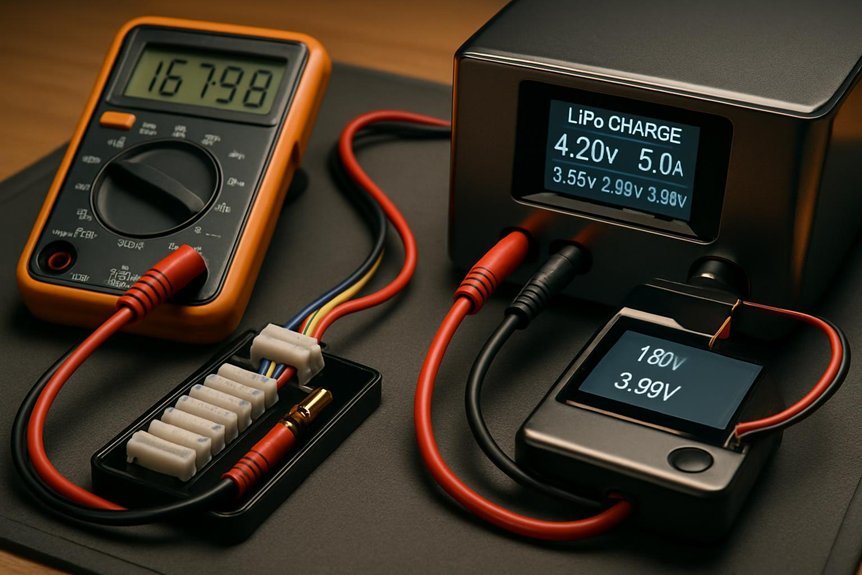
LiPo chemistry directly informs safe charging by defining voltage limits, current rates, and temperature thresholds that prevent overcharge, overheating, and cell imbalance. We translate those rules into practical steps you can follow. We set strict cell-level and pack-level limits, monitor real-time temperature, and verify balance during every cycle. Our approach emphasizes consistency, traceability, and adherence to standards so you can trust each procedure. We also recognize that safety extends beyond chemistry, touching welding safety practices and radio protocols when working with charging stations or in shared spaces. By enforcing proper enclosure, ventilation, and electrical isolation, we minimize risk. In short, chemistry guides the numbers; our procedures translate them into safe, repeatable actions you can rely on.
Choose the Right LiPo Charger for Your Packs
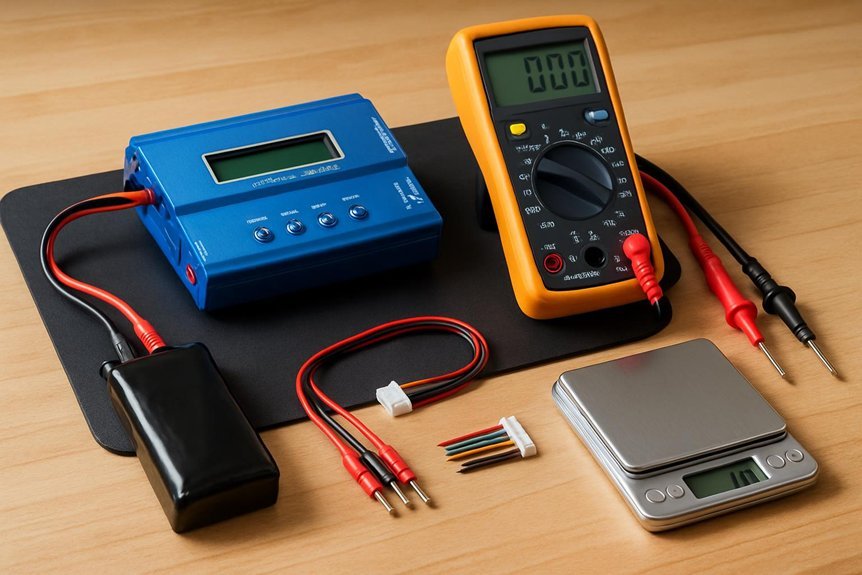
Choosing the right LiPo charger starts with matching its specifications to your packs. We assess cell count, capacity, and discharge rate, then verify the charger’s balance and peak-current capabilities align with safety standards. We insist on chargers with certified safety features, clear labeling, and auto-termination to prevent overcharging. We reject vague claims and favor devices that provide precise charging profiles, temperature monitoring, and fault detection. When selecting modes, we prioritize proper balance charging for multi-cell packs and compatibility with our pack chemistry without forcing adapters. We document a defined process, avoiding unrelated topic and off topic discussion that distract from core requirements. We test chargers with a controlled load, observe timing and temperature, and maintain traceable records for maintenance and compliance.
LiPo Balance Charging Essentials: What It Is and Why It Matters
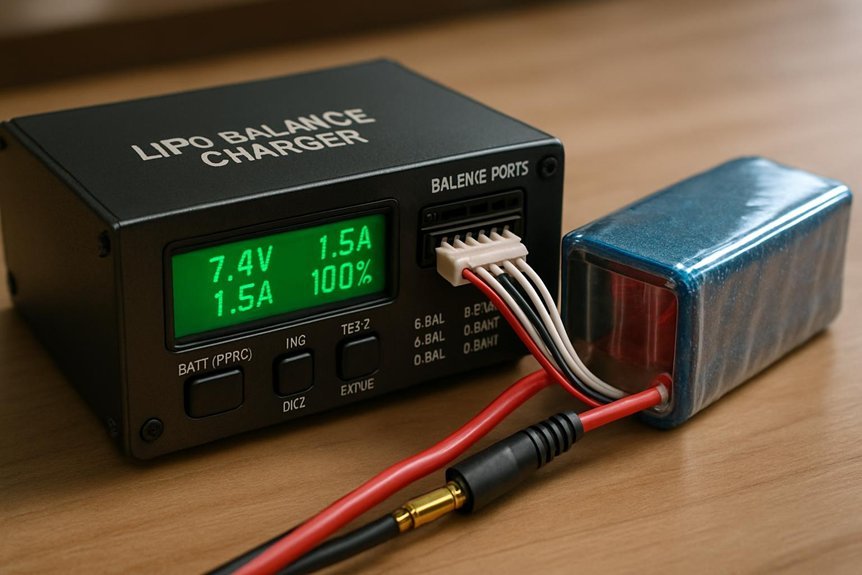
Ever wondered what balance charging does for LiPo packs and why it matters for safety and performance? We answer with a clear focus on how balance charging maintains cell voltage uniformity, reduces imbalance-driven heat, and protects pack longevity. By ensuring each cell reaches its proper voltage, we improve overall capacity and reliability. Our approach emphasizes charging safety and consistent procedures, aligning with standards and best practices.
- We monitor individual cell voltages during balance charging to prevent overcharging and heat buildup.
- We verify that the charger performs proper top-off balancing without compromising pack integrity.
- We document cycle results to track health, identify aging cells, and minimize risk.
How to Set LiPo Charge Voltage and Current Safely
Setting the correct charge voltage and current is the next step after ensuring balance charging works properly, because improper settings can negate safety gains and shorten pack life. We follow strict standards to prevent overcharge, undercharge, or heat buildup. Set voltage to the pack’s recommended maximum per cell, and apply current within the charger’s rated limit. Always monitor temperature and stop if it rises rapidly. For safety, use a purpose-built LiPo charger in a fireproof area. Below is a quick reference table to guide you.
| Parameter | Recommended Range | Why it matters |
|---|---|---|
| Voltage per cell | 3.60–4.20V | Exceeding limits risks swelling or venting |
| Charging current | 0.5C–1C | Balances speed with heat control |
| Temperature limit | ≤45°C | Protects cells and retention |
| Monitoring cadence | continuous | Ensures immediate action if |
Note: Last row wraps to next line; ensure table renders correctly in your environment.
Charge LiPo Packs by Cell Count: 2S, 3S, 4S, and Beyond
We’ll outline how cell count affects charging, from 2S through higher configurations, and set clear guidelines for each pack. We’ll emphasize safe charging methods, including matching voltage, current, and balance practices to the exact cell count. By sticking to precise standards and verified procedures, we help you avoid common risks and ensure consistent performance.
Cell Count Guidelines
Charging LiPo packs by cell count is essential for safe, effective operation: 2S, 3S, 4S, and beyond each require specific voltage targets and awareness of pack balance.
We address cell count guidelines with precision. Keeping track of cell count informs voltage ceilings, balance expectations, and cycle life, all while preserving cell chemistry and charge safety. Adhering to labeled configurations minimizes overcharge risk and maximizes performance consistency.
1) Verify the pack’s nominal and full-charge voltages match the intended cell count.
2) Confirm balance leads and connector compatibility before charging.
3) Monitor for abnormal warmth, puffing, or voltage disparity during initial cycles.
Safe Charging Methods
When charging LiPo packs, we must follow strict cell-count guidelines to prevent overvoltage, imbalance, or thermal runaway. We charge by 2S, 3S, 4S, and beyond only with matched cells, proper chargers, and balanced monitoring. Use a purpose-built LiPo charger, set the correct cell count, and verify each pack’s voltage after charging. Never exceed manufacturer limits, and always store at recommended voltages. Keep charging area ventilated, away from flammables, and within sight. After charging, inspect for swelling or heat. Recycling options should be considered for end-of-life packs, and travel safety practices require consolidating packs safely and transporting them in approved containers.
| Column A | Column B |
|---|---|
| Safety | Efficiency |
Safe Practices During LiPo Charging: Monitoring, Environment, and Alerts
We monitor charging metrics in real time, including cell voltage, current, temperature, and balance status, to detect anomalies early. We also enforce a safe environment with proper ventilation, nonflammable surfaces, and away from heat sources, while maintaining appropriate containment and fire suppression readiness. We implement clear alerts and response protocols so any deviation triggers immediate action and safe shutdown.
Monitoring Metrics During Charge
To safely monitor a LiPo charge, we track key metrics in real time and respond immediately to any deviation. We prioritize accuracy, document trends, and maintain strict adherence to charging etiquette and lithium safety guidelines during the process. Real-time supervision focuses on voltage, current, and temperature to detect early warning signs and prevent thermal runaway or overvoltage. We verify cell balance and capacity indicators, logging any irregularities for review. Our approach keeps safety margins intact and ensures consistent cell health throughout the charge.
- Track voltage, current, and temperature continuously to detect anomalies.
- Confirm proper cell balancing and log any deviations for diagnosis.
- Respond immediately to out-of-range readings with appropriate action, maintaining lithium safety and charging etiquette.
Safe Environment And Alerts
Safe charging requires a controlled environment and alerting system that support the real-time monitoring we’ve established. We design our workspace to minimize ignition sources, ensure proper ventilation, and maintain a stable, dry surface free of clutter. We use a fireproof charging tray or containment bag and place batteries away from flammable materials. Our protocol specifies continuous supervision, with clearly defined thresholds for temperature, voltage, and current, triggering automatic cutoffs when limits are exceeded. We implement alerts and safety checks that notify our team instantly of deviations, enabling rapid response. Every action prioritizes safe environment discipline, verification, and documentation. By adhering to standardized procedures and proactive communications, we reduce risk and preserve battery integrity while maintaining operational efficiency and confidence in every charge.
Troubleshooting LiPo Charging: Signs of Trouble and Quick Fixes
Are your LiPo charger and pack behaving oddly enough to raise a red flag? We’ll walk you through quick, precise checks to keep risk low and operations safe. If you notice unexpected heat, swelling, or abnormal buzzing, pause charging and perform a rapid risk assessment before proceeding. We’ll cover immediate steps and when to escalate to emergency response.
- Verify connections and polarity, inspect pack for damage, and confirm charger settings match the pack specification.
- If temperatures rise beyond 50°C or you smell fumes, discontinue charging and isolate the pack in a fire-rated container.
- Document symptoms, test data, and outcome to guide decisions and prevent recurrence.
LiPo Storage Charging: Tactics for Long-Term Health
When storing LiPo batteries for extended periods, we follow a disciplined protocol that minimizes degradation and reduces risk. Our storage charging routine prioritizes nominal voltage targets, stable temperatures, and clean terminals. We calibrate chargers to deliver a float voltage appropriate to cell chemistry, typically around 3.8V per cell, and avoid overfill. We use dedicated storage mode when available, and monitor environmental conditions to prevent heat buildup. We verify pack balance before long-term storage, labeling packs with date and intended storage window. This approach supports lipo safety by reducing parasitic aging and swelling risks. We address charging myths by relying on manufacturer guidance, not anecdote. In short, disciplined, monitored storage charging preserves capacity and readiness without compromising safety or performance.
LiPo Fast Charging: When It’s Worth It and How to Do It Safely
Fast charging LiPo packs can save time, but it’s not always the right choice; we weigh speed against heat, cell health, and safety. Our approach prioritizes controlled current, balanced voltage, and strict temperature limits to preserve longevity and reduce risk. When fast charging is appropriate, follow certified chargers, proper balancers, and standardized EMF protections. We emphasize lipo disposal planning and incident-ready procedures, including post flash charging considerations to verify integrity after rapid fill.
Fast charging LiPo packs requires controlled current, balanced voltage, and strict temperature limits for longevity and safety.
- Use only approved fast chargers with correct C-rate settings and room-temperature operation.
- Monitor for swelling, heat rise, and voltage imbalance; pause immediately if anomalies appear.
- Document charge events, plan lipo disposal if cells degrade, and include post flash charging checks in your routine.
Routine Maintenance and Aftercare for LiPo Longevity
We follow strict conditioning habits, storage charge guidelines, and routine inspection to protect LiPo longevity. We’ll address consistent battery conditioning, proper storage voltages, and clear repair practices to minimize risk and maximize performance. Our guidance emphasizes safety, standards-driven procedures, and practical steps you can apply today.
Battery Conditioning Habits
Regular battery conditioning helps LiPo packs reach and maintain peak performance, so we follow a simple routine: check and calibrate the pack, cycle it within its safe voltage range, and monitor for signs of wear after each use. We stay disciplined about connections, balance, and cutoff limits to minimize risk and maximize life. Our approach keeps nonessential topics and unrelated considerations from clouding judgment, focusing on measurable, standards-driven steps.
1) Inspect cables, connectors, and balance leads for corrosion or looseness before each use.
2) Calibrate the pack with a controlled discharge and recharge within recommended voltage and current limits.
3) Log performance indicators (voltage, internal resistance, temperature) and flag anomalies promptly.
Storage Charge Guidelines
Where should LiPo packs be stored to preserve longevity, and what exact conditions minimize degradation over time? We answer with precise storage guidelines that emphasize safety awareness and long-term stability. Ideal storage is a cool, dry location, around 3.7–3.85V per cell (mid-range, not fully charged or discharged). Maintain ambient temperatures near 20°C (68°F) and avoid direct sunlight, heat sources, or freezing conditions. Use a purpose-built LiPo storage bag or fireproof container, placed on a nonflammable surface. Check cells periodically for swelling or voltage drift and ensure packs are organized by chemistry and capacity. Storage guidelines prioritize consistent conditions, proper labeling, and documented surface checks to reduce risk. Safety awareness remains central to every step and decision.
| Condition | Action |
|---|---|
| Temperature | 20°C ±5°C |
| Voltage per cell | 3.7–3.85V |
Inspection And Repair Practices
Routine inspection and aftercare begin with a clear, methodical approach to monitor LiPo packs after storage. We adopt disciplined checks to uphold safety and longevity, prioritizing inspection best practices and repair safety. We address cell balance, voltage, and physical integrity, documenting any deviations. If faults are found, we pause operation and follow controlled repair procedures, avoiding improvisation that could worsen damage. Our goal is early detection, consistent maintenance, and risk reduction.
- Inspect cell voltages and balance regularly, recording any drift or swelling.
- Verify connector integrity, insulation, and packaging for signs of wear or moisture ingress.
- Isolate and assess damaged packs using approved tools before attempting any repair.
Adhering to these steps protects personnel and equipment, ensuring responsible LiPo handling and continued safe charging practices.
Frequently Asked Questions
Can Lipo Chargers Be Used Underwater or Outdoors Inrain?
We can’t use lipos underwater or outdoors in rain; can lipos are hazardous. We must follow safety standards, keep chargers dry, use waterproof housings, and avoid moisture exposure to prevent short-circuits and fires. Safety-first, always.
How Do Temperature Changes Affect Charging Speed?
Temperature changes slow or speed charging speed subtly; we monitor carefully. We, readers, act as guardians, symbolically tending a thermometer flame. Temperature effects guide our precision, safety standards drive protocol, and we guarantee safe, consistent charging.
Is It Safe to Charge Multiple Packs Simultaneously?
Yes, we advise against charging multiple packs simultaneously unless your charger supports balanced, independent channels; otherwise, it risks charging safety issues. Always monitor, respect battery capacity limits, and follow manufacturer guidelines for safe, precise charging practices.
What Are Signs of Cell Imbalance During Charging?
We notice signs imbalance during charging: inconsistent cell voltages, rising temperature, puffing, or bloat. Watch charging indicators closely; if any deviation occurs, stop and isolate packs. We communicate safety standards, precision, and precaution throughout.
Should I Unplug Immediately After the LED Indicator Lights Green?
Yes, we unplug when the LED indicator turns green, but we follow unplug safety and charging etiquette consistently. We confirm readings, disconnect promptly, and store cells safely to prevent overcharge, heat buildup, or accidental shorts. Safety always first.
Conclusion
We charge LiPo packs with care, following standards, verifying equipment, and respecting limits. We choose the right charger, enable balance charging, and set per-cell voltage and current within safe ranges. We monitor temperature, inspect for damage, and ensure ventilation and isolation. We record cycle data, verify balance leads, and store at about 3.8V per cell in a cool, dry, fire-rated area. We remain vigilant, disciplined, and safety-minded, because safe charging safeguards everything we power.