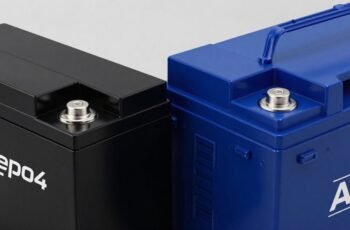
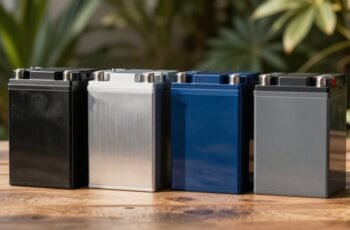
When we compare RV lithium batteries with lead-acid models, the higher upfront price is one detail we shouldn’t overlook. Lithium batteries typically provide more usable capacity, longer service life, faster charging, and lower weight, while lead-acid units remain familiar and less expensive initially. We’ll also need to take into account installation, maintenance, discharge limits, safety systems, and total ownership cost before deciding which chemistry better supports our travel plans.
Key Takeaways
- Lithium batteries provide 80–100% usable capacity, compared with roughly 50% for lead-acid batteries, delivering longer runtime at the same rated capacity.
- Lithium batteries typically last 2,000–5,000 cycles, while lead-acid batteries last approximately 300–1,000 cycles, improving long-term value despite higher upfront costs.
- Lithium batteries are lighter, more compact, and require less maintenance; lead-acid batteries need stronger supports, ventilation, and periodic inspection.
- Lithium batteries charge faster and more efficiently, but require compatible charging equipment and protection against charging below freezing.
- Lead-acid suits occasional RV use and lower budgets, while lithium is better for frequent boondocking, high power demands, and extended trips.
RV Lithium vs. Lead Acid at a Glance
When comparing RV lithium and lead-acid batteries, we find that lithium offers higher usable capacity, lower weight, faster charging, longer service life, and more consistent voltage, while lead-acid batteries generally cost less upfront and tolerate simpler charging systems. We should also compare construction and operating requirements. Lithium iron phosphate (LiFePO4) batteries include a battery-management system that protects cells from overcharge, over-discharge, excessive current, and temperature extremes. Lead-acid designs rely on simpler chemistry but may require ventilation, secure mounting, and routine inspection, especially flooded types. Lithium batteries accept high charging currents and experience minimal voltage sag, whereas lead-acid batteries charge more slowly and require carefully regulated absorption and float stages. We’ll typically pay more initially for lithium, but its reduced maintenance and longer cycle life can improve long-term value.
Compare Usable Capacity and Daily Runtime
We’ll compare usable capacity by accounting for recommended depth of discharge, not just each battery’s rated amp-hours. You’ll see why lithium typically delivers more daily runtime than lead acid at the same nominal capacity, especially under repeated cycling. We’ll also examine how discharge limits affect energy availability, battery life, and real-world RV loads.
Usable Capacity Differences
Usable capacity is where lithium batteries gain a practical advantage over lead-acid batteries, even when their nameplate capacities match. We typically size lead-acid banks around 50% depth of discharge to limit sulfation, voltage sag, and shortened cycle life. A 100 Ah lead-acid battery thus provides roughly 50 Ah of routinely usable energy. Lithium iron phosphate batteries commonly support 80–100% depth of discharge, while maintaining stable voltage and substantially better cycle durability. A 100 Ah lithium battery can consequently deliver about 80–90 Ah in normal service, depending on the manufacturer’s recommended limits and battery-management-system settings. We should also account for Peukert losses: lead-acid capacity falls as discharge current rises, whereas lithium retains far more of its rated capacity. This difference lets us install smaller, lighter banks for the same energy reserve.
Daily Runtime Comparison
A matched 100 Ah lithium and lead-acid battery won’t provide the same daily runtime in an RV. We can estimate runtime by dividing each battery’s usable watt-hours by the RV’s average load. At 12.8 volts, a lithium battery stores about 1,280 watt-hours; if its practical usable capacity is 90%, it supplies approximately 1,152 watt-hours. A 12-volt lead-acid battery stores roughly 1,200 watt-hours, but a conservative 50% usable allowance provides about 600 watt-hours. With a continuous 100-watt load, lithium could run approximately 11.5 hours, while lead acid would provide about six hours. Real appliances cycle, so daily results vary: refrigerators, inverters, fans, and entertainment equipment create changing demand. Lithium also maintains steadier voltage under load, helping appliances operate consistently and reducing premature low-voltage shutdowns during longer usage periods.
Depth Of Discharge
How deeply can we discharge each battery without shortening its life? With lead-acid batteries, we typically limit discharge to about 50% of rated capacity. A 100Ah battery therefore provides roughly 50Ah, or 600Wh at 12 volts, before recharging. Repeatedly exceeding that limit accelerates sulfation, reduces capacity, and shortens cycle life. Lithium iron phosphate (LiFePO4) batteries commonly support 80–100% depth of discharge, although we’ll preserve longevity by using about 90%. Consequently, a 100Ah lithium battery supplies approximately 90Ah, or 1,080Wh—nearly twice the usable energy of comparable lead acid. That difference extends daily runtime and reduces battery-bank size. Voltage also remains steadier with lithium, so we’ll operate appliances more consistently, while lead acid’s voltage sag can trigger inverters early despite remaining charge. Depth of discharge directly determines practical capacity and runtime.
See How Battery Lifespan Affects Value
Battery lifespan directly affects an RV’s long-term value because lithium batteries typically deliver 2,000–5,000 charge cycles, compared with roughly 300–1,000 cycles for comparable lead-acid models. When we calculate cost per usable cycle, lithium often provides stronger value despite its higher purchase price. Its longer service life means we replace batteries less frequently, reducing parts, labor, and disposal expenses over years of travel. Lead-acid batteries generally age faster, especially when repeated deep discharges, heat, or incomplete recharging accelerates sulfation. Lithium chemistry also maintains more consistent voltage as capacity declines, helping connected equipment operate reliably throughout its service life. We should still evaluate warranty terms, cycle ratings, operating temperature limits, and battery-management-system quality. A higher initial investment can thus preserve more resale appeal while lowering total ownership costs.
Weigh RV Battery Size and Installation
Long-term value also depends on each battery’s physical size, weight, and installation requirements. Lithium batteries usually deliver more usable capacity per kilogram, so we can reduce cabinet loading and preserve storage space. Lead-acid units weigh considerably more and often need ventilation because charging can release gas; lithium models generally need less ventilation but require a battery-management system and compatible protection.
- Measure the compartment: We should verify length, width, height, terminal clearance, and access before selecting a replacement.
- Check mounting strength: Lead-acid mass demands robust supports, while lithium’s lower weight can reduce structural stress, though secure restraint remains essential.
- Review system compatibility: We’ll confirm cable sizes, fuse ratings, disconnects, inverter limits, and temperature protections rather than assuming a direct swap.
Lithium’s compact footprint can simplify placement, but installation may cost more if we need new brackets, monitoring, wiring, or safety controls.
Compare Charging Speed and Efficiency
We’ll compare how quickly lithium and lead-acid RV batteries accept charge under equivalent charging conditions. We’ll also examine energy efficiency, including charge losses, usable capacity, and charging performance near full capacity. These differences affect generator runtime, solar recovery, and overall camping autonomy.
Charging Speed Comparison
How quickly can you recharge each type? Lithium batteries generally accept substantially higher charging current, so we can restore usable capacity faster. Lead-acid batteries charge more slowly and require a prolonged absorption stage near full charge.
- Lithium: With an appropriately sized charger, we can commonly charge LiFePO4 batteries at 0.5C to 1C, reaching roughly 80% capacity in about one to two hours. The battery-management system may reduce current in cold conditions or near full charge.
- Lead-acid: We typically limit charging to approximately 0.1C to 0.2C. Bulk charging may be relatively quick, but absorption can extend the total time to six to twelve hours, depending on battery condition and charger settings.
- Practical result: Lithium recovers faster after heavy RV use and accepts brief generator or solar charging windows more effectively. Lead-acid needs longer charging sessions to reach a complete charge, particularly when deeply discharged.
Energy Efficiency Differences
Because lithium batteries accept higher charging current and have lower internal losses, we can convert more incoming power into stored energy and return to usable capacity sooner. Lithium models commonly achieve roughly 95–98% charge efficiency, while lead-acid batteries typically deliver about 80–85%. With lead acid, charging losses become heat, and the battery requires extended absorption time as current tapers near full charge. We also shouldn’t routinely discharge lead acid below 50% capacity, limiting usable energy and increasing recharge frequency. Lithium batteries accept the bulk of their charge rapidly, maintain steadier voltage, and can use approximately 80–100% of rated capacity, depending on manufacturer guidance. Consequently, solar panels, alternators, and shore chargers spend less time replacing losses. Although lithium requires compatible charging equipment and battery management, its efficient energy transfer reduces generator runtime and improves overall RV electrical performance.
Understand Maintenance and Safety Needs
When we compare maintenance and safety, RV lithium batteries generally require less routine care than lead-acid batteries, but they demand stricter attention to charging compatibility and temperature limits. We don’t need to add water or clean corrosion from lithium terminals, while flooded lead-acid batteries require electrolyte checks, ventilation, and periodic terminal inspection. Absorbed glass mat batteries eliminate watering but still need proper charging and ventilation.
- We should use a charger, converter, and solar controller with a lithium profile; lead-acid systems need their specified absorption and float voltages.
- We must never charge lithium batteries below freezing unless integrated protection or heating permits it; lead-acid batteries tolerate cold charging better, though capacity falls.
- We should secure both chemistries against movement, protect terminals from shorts, and follow manufacturer disconnect procedures.
Lithium battery-management systems can stop overcharge, over-discharge, overheating, or excessive current, but they don’t replace correct installation.
Calculate the True Cost of Each Battery
Safety and maintenance affect operating costs, but the purchase price alone doesn’t show what an RV battery will cost over its service life. We should compare usable capacity, cycle life, efficiency, replacement frequency, and maintenance expenses. A lead-acid battery may cost less initially, but we typically use only about 50% of its rated capacity to limit damage. Charging losses and shorter cycle life increase its cost per usable kilowatt-hour. Lithium batteries cost more upfront, yet their greater usable capacity, roughly 80–100%, higher charge efficiency, and substantially longer cycle life can reduce long-term replacement costs. We can estimate total ownership cost by adding the purchase price, charger or installation requirements, periodic maintenance, energy losses, and replacement batteries, then dividing that total by usable lifetime kilowatt-hours. This calculation reveals the practical cost difference.
Choose the Best RV Battery for Your Trips
We should choose an RV battery based on how we travel, not just its advertised capacity or purchase price. Match usable energy, discharge limits, charging speed, and temperature performance to our actual itinerary and electrical loads.
- Weekend hookups: A flooded or AGM lead-acid battery can minimize upfront cost. We’ll need ventilation for flooded models, reserve only about 50% of rated capacity, and accept slower charging.
- Frequent boondocking: Lithium iron phosphate (LiFePO₄) provides roughly 80–90% usable capacity, steadier voltage, lower weight, and faster acceptance of charging current. Its battery-management system must include low-temperature charging protection.
- Cold or seasonal storage: Lead acid tolerates freezing better when fully charged, while lithium requires heating or charging cutoffs below freezing. We should also verify charger profiles, inverter compatibility, alternator limits, warranty terms, and installation space before selecting either chemistry for our trips.
Frequently Asked Questions
Can RV Lithium Batteries Operate Effectively in Freezing Temperatures?
Yes, we can use RV lithium batteries in freezing temperatures, but charging requires protection. Most lithium cells shouldn’t charge below 32°F; integrated heaters or low-temperature cutoffs prevent damage, while discharging remains generally effective.
Are Lithium Batteries Compatible With Existing RV Battery Monitors?
Yes, we can use lithium batteries with existing RV monitors, but readings may differ. Traditional monitors estimate lead-acid capacity from voltage; lithium-compatible shunts measure amp-hours accurately, while voltage meters alone can mislead.
How Should You Dispose of an Old Lead-Acid RV Battery?
We should recycle old lead-acid RV batteries through an authorized retailer, automotive shop, or hazardous-waste facility. Don’t trash, drain, burn, or dismantle them; their sulfuric acid and lead require controlled handling and recovery.
Do Lithium Batteries Require Specialized Inverters for RV Appliances?
Most RV appliances use standard 120-volt AC, so we don’t need a lithium-specific inverter. We’ll choose based on battery voltage, continuous wattage, surge capacity, and charging compatibility; lithium’s stable voltage improves inverter efficiency.
Can Solar Panels Fully Recharge an RV Lithium Battery?
Yes, solar panels can fully recharge an RV lithium battery, provided we size wattage, charge-controller voltage, sunlight, and daily energy production correctly. We’ll also account for charging losses and avoid insufficient winter generation.
Conclusion
Choosing between an RV lithium battery and lead-acid battery comes down to how we travel. Lead-acid may reduce upfront cost, but its limited usable capacity, slower charging, maintenance, and shorter cycle life can complicate extended trips. Lithium costs more initially, yet delivers longer runtime, lighter installation, faster charging, and thousands of cycles. As we plan our next boondocking adventure, one question remains: will short-term savings outweigh years of reduced performance, heavier equipment, and restricted energy independence?