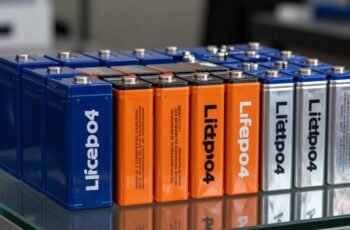
By coincidence, we may need a replacement battery just as our RV, boat, or solar system reaches peak demand. We can buy deep cycle lithium batteries from specialty marine, RV, solar, and automotive stores, reputable online distributors, or manufacturers directly. Before choosing a seller, we should compare voltage, capacity, certifications, warranty terms, shipping, and return policies. The right source depends on our application, budget, and need for local support—but several quality and compatibility issues deserve attention first.
Key Takeaways
- Buy from reputable specialty battery retailers, marine/RV suppliers, renewable-energy dealers, or established online lithium-battery manufacturers.
- Compare LiFePO₄ batteries by voltage, capacity, discharge rating, dimensions, BMS features, certifications, warranty, and cycle life.
- Request datasheets and verify certifications, including UL 1973, UL 9540, IEC 62619, and UN 38.3, for the exact model.
- Compare total delivered costs, including chargers, cables, taxes, shipping, accessories, and potential hazardous-material fees.
- Before purchasing locally or online, confirm return policies, warranty procedures, delivery tracking, product authenticity, and technical support availability.
Where to Buy Deep Cycle Lithium Batteries
You can buy deep cycle lithium batteries from specialty battery retailers, marine and RV suppliers, renewable-energy dealers, and reputable online manufacturers. We should choose a seller that provides complete electrical specifications, including nominal voltage, amp-hour capacity, continuous and peak discharge current, charge limits, operating temperature, cycle-life testing, and warranty terms. Confirm that the battery’s built-in battery-management system supports our intended loads, charging equipment, and series or parallel configuration. For boats and recreational vehicles, marine-grade construction, vibration resistance, and appropriate certifications matter. Solar-storage buyers should verify compatibility with the inverter, charge controller, and communication protocols. We’ll also check whether the seller supplies installation guidance, technical support, replacement parts, and safe shipping. Before ordering, we should confirm dimensions, terminal orientation, weight, and required charger settings to prevent integration problems.
Compare Online Battery Retailers
When we compare online battery retailers, we should first assess selection, including voltage, capacity, chemistry, dimensions, and warranty coverage. We’ll then compare total pricing, including accessories, taxes, shipping fees, and delivery timelines. This approach helps us identify the best value for our system’s electrical and installation requirements.
Compare Battery Selection
Comparing online battery retailers helps us evaluate deep-cycle lithium batteries by chemistry, usable capacity, continuous and peak discharge ratings, cycle life, warranty coverage, certifications, and total delivered cost—not just the advertised amp-hour rating. We should first filter for lithium iron phosphate (LiFePO₄), the preferred chemistry for most house, marine, and renewable-energy systems. Then we can match nominal voltage and usable amp-hours to our inverter, charger, and expected loads. We’ll verify whether published current ratings are continuous or brief peak values, and check low-temperature charging limits, integrated heaters, Bluetooth monitoring, battery-management protections, and parallel or series compatibility. Product documentation should identify test standards, safety certifications, cell provenance, and installation requirements. By comparing complete specifications across retailers, we can select a battery that genuinely fits our system and operating conditions.
Evaluate Pricing And Shipping
Before choosing the lowest listed price, we should calculate the battery’s delivered cost, including shipping, residential or lift-gate fees, sales tax, and any required accessories. Compare equivalent voltage, amp-hour capacity, usable energy, warranty coverage, and cycle-life ratings rather than headline prices alone. Confirm whether the retailer ships from stock and provides tracking, damage inspection instructions, and a realistic delivery window.
We should also check return policies, restocking charges, and who pays freight if a battery arrives defective. Pay attention to lithium-specific packaging and carrier restrictions, especially for large batteries or multiple units.
- Compare delivered totals, not advertised prices.
- Verify shipping insurance and damage-claim procedures.
- Check warranty duration, exclusions, and registration requirements.
- Look for quantity discounts without sacrificing support.
A slightly higher price may provide better documentation, technical assistance, and dependable after-sale service. We should request a written quote before ordering.
Find Deep Cycle Batteries at Local Stores
Where can we find deep cycle batteries locally without sacrificing the specifications our system requires? We can start with marine-supply shops, recreational-vehicle dealers, solar-equipment retailers, and automotive stores with dedicated energy-storage departments. Before visiting, let’s call to confirm lithium iron phosphate (LiFePO4) availability, voltage, capacity, terminal layout, and physical dimensions. We should bring the existing battery’s measurements and check whether the store stocks compatible chargers, fuses, disconnects, and mounting hardware.
In person, we can inspect packaging for the manufacture date, safety certifications, continuous and peak discharge ratings, operating-temperature limits, and warranty terms. Let’s verify that the battery-management system supports our inverter or motor’s current demands and charging profile. Local pickup also lets us examine return policies, obtain technical assistance, and avoid shipping damage. However, we should compare the store’s total price with equivalent specifications before purchasing.
Buy Directly From Lithium Battery Brands
Buying directly from a lithium battery brand can expand our options beyond local inventory while giving us access to current specifications, factory support, and manufacturer-backed warranties. We can compare cell chemistry, rated capacity, continuous discharge limits, cycle-life testing, and integrated battery-management-system protections. Before ordering, we should verify certifications, operating-temperature limits, charging requirements, terminal configuration, dimensions, and shipping restrictions for lithium batteries.
Direct-brand purchasing can also provide clearer accountability:
- Confirm the warranty term, exclusions, and claim procedure.
- Request the latest datasheet and installation manual.
- Check production dates and storage-charge requirements.
- Verify technical support availability after purchase.
We shouldn’t assume a familiar brand guarantees compatibility. Let’s compare documented performance rather than marketing labels, calculate usable capacity from stated limits, and confirm whether firmware updates or proprietary chargers affect serviceability. Buying from the manufacturer can simplify returns, replacement parts, and warranty registration, but we should still review payment security, delivery timing, and total landed cost before checkout.
Choose Batteries for RVs, Boats, or Solar
When we choose a deep-cycle lithium battery for an RV, boat, or solar system, we should match its voltage, usable capacity, discharge rate, and environmental protections to the application’s actual loads. For RVs, we’ll prioritize lightweight construction, vibration resistance, low-temperature charging protection, and compatibility with the converter, inverter, and alternator. Marine installations demand sealed, corrosion-resistant enclosures, secure mounting, and protection against moisture, shock, and temperature changes. For solar storage, we’ll verify that the battery’s management system supports the inverter-charger, charge controller, and planned cycling profile. We should also consider continuous and peak current ratings, especially when motors, refrigeration compressors, or induction appliances start. Before buying, we’ll confirm communication protocols, monitoring options, warranty coverage, installation requirements, and whether the battery can operate safely in the installation’s temperature and ventilation conditions.
Check Battery Capacity and Voltage
After matching the battery to the application, we’ll calculate the required capacity and verify the system voltage. Start by listing each load, its wattage, and daily operating hours. Multiply watts by hours to find watt-hours, then divide by system voltage to estimate amp-hours. Increase that figure for inverter losses, temperature, aging, and the usable depth of discharge.
- Add every device’s daily energy consumption.
- Convert watt-hours to amp-hours at the battery voltage.
- Select capacity with practical reserve, not merely the minimum.
- Match nominal voltage to the inverter, charger, and loads.
Confirm whether the system uses 12, 24, or 48 volts; connecting incompatible equipment can cause poor performance or damage. When comparing batteries, check rated amp-hours, voltage, continuous current, and parallel or series limits. We’ll also ensure the battery’s actual usable capacity supports the expected cycle demands.
Verify Safety Certifications and Warranty Coverage
Before selecting a deep-cycle lithium battery, we’ll verify that it carries certifications appropriate to its chemistry, installation, and region, such as UL 1973, UL 9540, IEC 62619, or UN 38.3 transport testing. We’ll confirm the certificate applies to the exact model, not merely the manufacturer’s product family.
| Check | Evidence | Why it matters |
|---|---|---|
| Safety listing | Certificate number and laboratory | Confirms tested construction |
| Battery management | Overcharge, thermal, and short-circuit protection | Reduces failure hazards |
| Warranty | Term, cycles, capacity retention, exclusions | Defines usable coverage |
Next, we’ll read the warranty’s conditions carefully. We should verify coverage for cells, the battery-management system, labor, and approved applications, while noting registration requirements and documentation. We’ll also confirm whether installation by a qualified technician is mandatory. Keeping invoices, serial numbers, and test records protects our claim if performance or safety problems arise.
Compare Prices, Shipping, and Return Policies
We’ll compare battery prices by normalizing capacity, voltage, cycle life, included components, and warranty terms. We’ll also review shipping costs, delivery estimates, hazardous-material restrictions, and packaging requirements before ordering. Next, we’ll examine return windows, restocking fees, return shipping responsibility, and procedures for defective or damaged batteries.
Compare Battery Prices
When comparing deep-cycle lithium battery prices, we should evaluate the complete purchase cost rather than the advertised battery price alone. We’ll compare batteries with matching voltage, amp-hour capacity, continuous discharge rating, cycle life, and warranty terms. A lower price may reflect less usable energy, fewer protection features, or a shorter service life.
We should record each seller’s final checkout total, excluding shipping details covered separately:
- Battery price and applicable sales tax
- Required charger, cables, fuses, or monitoring equipment
- Warranty duration, exclusions, and registration requirements
- Return eligibility, restocking fees, and refund conditions
Next, we’ll calculate cost per usable watt-hour and estimate lifetime cost using the manufacturer’s cycle rating. We shouldn’t compare nominal capacity alone; depth-of-discharge limits and efficiency affect practical energy. We’ll also verify whether advertised discounts apply to the exact model, quantity, and configuration we need.
Review Shipping Policies
How quickly will the battery arrive, and what will delivery actually cost? We should compare shipping policies alongside battery prices. A low listed price may become expensive after freight, residential surcharges, or hazardous-goods fees. Confirm processing time, carrier, tracking, signature requirements, and whether the seller ships to our location. Heavy batteries may require freight delivery, so we should verify liftgate service and damage-inspection procedures before ordering.
| Policy detail | Why it matters |
|---|---|
| Processing time | Reveals when dispatch actually begins |
| Freight charges | Exposes costs beyond the advertised price |
| Damage claims | Defines inspection and reporting deadlines |
We should also check return policies carefully. Confirm the return window, restocking fee, unopened-packaging rules, and who pays return freight. Lithium batteries often require approved transport, making returns costly or restricted. We’ll save the policy, invoice, and tracking records, then inspect the shipment immediately and photograph any damage before signing.
Avoid Poor-Quality Deep Cycle Batteries
Poor-quality deep cycle batteries can undermine an entire power system through inaccurate capacity ratings, excessive voltage sag, short cycle life, and inadequate protection against overcharging or deep discharge. When we compare sellers, we should verify independent test data, cell specifications, and the battery’s continuous and peak current ratings. A reputable manufacturer clearly identifies its battery-management system (BMS), certifications, warranty terms, and recommended charging parameters.
Before purchasing, we should check:
- Genuine LiFePO4 cells from a documented supplier
- BMS protection for overcurrent, temperature, and voltage
- Capacity test results at a stated discharge rate
- Traceable warranty support and replacement procedures
We shouldn’t rely on unusually low prices, vague listings, inflated amp-hour claims, or stock photographs. We can also inspect reviews for recurring reports of swelling, premature shutdowns, shipping damage, or difficult warranty claims. A transparent seller helps us avoid costly failures.
Frequently Asked Questions
Can Lithium Batteries Be Recycled After Reaching the End of Their Service Life?
Yes, we can recycle lithium batteries after service life. We should deliver them to certified recyclers, never household bins. Specialists recover lithium, cobalt, nickel, copper, and aluminum while safely managing residual electrical and fire hazards.
How Should Deep Cycle Lithium Batteries Be Stored During Extended Periods of Nonuse?
Store deep cycle lithium batteries partially charged, typically around 40–60%, in a cool, dry, ventilated location. We’ll disconnect loads, prevent freezing, avoid heat, inspect periodically, and follow the manufacturer’s specified storage voltage and maintenance schedule.
Can Lithium Batteries Power Appliances During Freezing Temperatures?
Lithium batteries can power appliances below freezing, but charging requires caution: many lithium iron phosphate models shouldn’t charge under 32°F (0°C). We’ll use built-in heaters, insulation, and monitoring to prevent damage and preserve capacity.
What Maintenance Do Deep Cycle Lithium Batteries Require Throughout Their Lifespan?
We don’t need routine electrolyte checks or watering. Keep terminals clean, inspect cables and cases, monitor voltage and battery-management alerts, maintain recommended charge levels, avoid prolonged heat, and store batteries partially charged.
Are Lithium Batteries Safe to Install Alongside Lead-Acid Batteries?
Yes, we can install lithium batteries alongside lead-acid batteries, but we shouldn’t connect them directly in parallel. We’ll use separate charge controllers, isolation, fusing, compatible voltage profiles, and monitoring to prevent imbalance, overheating, or damage.
Conclusion
We can find deep cycle lithium batteries through reputable online retailers, local marine and RV stores, solar suppliers, or directly from established manufacturers. Let’s compare voltage, amp-hour capacity, certifications, warranty terms, shipping costs, and return policies before purchasing. A lower price isn’t a bargain if the battery lacks protection or support. When we choose verified quality, we’re not merely buying stored energy—we’re securing dependable power for every journey, voyage, and backup need ahead.