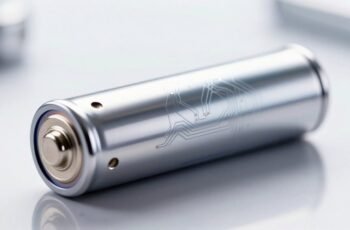
As we picture an EV gliding silently on a highway, its battery becomes the engine of every mile, charge, and safety decision. We’ll compare solid-state and lithium-ion designs across energy density, charging speed, lifespan, cost, and sustainability. Lithium-ion remains the practical benchmark, while solid-state technology may redefine future performance—but manufacturing limits and interface durability could determine which chemistry ultimately powers our next vehicles.
Key Takeaways
- Solid-state batteries use solid electrolytes, while lithium-ion batteries use liquid or gel electrolytes.
- Solid-state technology could provide higher energy density, longer range, faster charging, and improved thermal safety.
- Lithium-ion batteries offer mature manufacturing, predictable performance, lower costs, and established recycling infrastructure.
- Solid-state batteries still face challenges involving production scale, interface durability, temperature performance, and long-term validation.
- Lithium-ion is the practical choice today, while solid-state suits early adopters willing to accept greater technology risk.
Solid-State vs Lithium-Ion Batteries: Quick Verdict
Solid-state batteries offer the stronger long-term proposition for EVs because their solid electrolytes could improve energy density, safety, charging speed, and packaging flexibility. For us, that advantage matters most when evaluating vehicle range, mass, thermal-management complexity, and cabin space together rather than treating battery cost as the sole metric. Lithium-ion batteries still deliver the practical verdict today: mature manufacturing, established supply chains, predictable performance, and lower near-term costs support widespread deployment. Solid-state designs remain constrained by production yield, interface durability, material availability, and uncertain fast-charging behavior across temperature extremes. Consequently, we should view lithium-ion as the current industrial benchmark and solid-state as the strategic successor. The shift won’t be instantaneous; hybrid architectures, incremental electrolyte improvements, and premium applications may bridge the gap while manufacturers validate durability and scale.
How Solid-State and Lithium-Ion Batteries Work
At their core, both battery types convert chemical energy into electricity by moving lithium ions between two electrodes, but they differ in how those ions travel. During discharge, ions leave the negative electrode, cross the electrolyte, and enter the positive electrode while electrons power the vehicle’s circuit. Charging reverses that flow.
Both battery types generate electricity through lithium-ion movement, differing primarily in how ions travel between electrodes.
- Lithium-ion cells use a liquid or gel electrolyte that transports ions.
- Solid-state cells replace that medium with a solid ceramic, sulfide, or polymer electrolyte.
- The separator prevents direct electrode contact while permitting ion transfer.
- Electrode chemistry controls voltage, reaction pathways, and structural stability.
- Interfaces between solid layers require precise engineering to limit resistance.
We can therefore view solid-state designs as an architectural change, not a different electrical principle. Their challenge is creating intimate, durable contact across rigid materials while preserving rapid ion conduction.
Compare EV Range, Charging, and Lifespan
When we compare EV range, charging, and lifespan, we’re evaluating the entire cell design—not just its electrolyte. Solid-state architectures may enable higher energy density because solid electrolytes can support lithium-metal anodes, reducing inactive material and increasing watt-hours per kilogram. That advantage could extend driving range without enlarging the pack. Charging performance depends on more than conductivity: interfaces, temperature management, lithium plating, and electrode thickness determine how quickly we can replenish energy. Solid electrolytes may improve fast-charging potential, but manufacturing uniform interfaces remains challenging. Lithium-ion cells benefit from mature engineering, predictable charge curves, and increasingly rapid charging, although aggressive rates can accelerate degradation. Lifespan reflects cycling depth, heat, charging power, and calendar aging. Solid-state designs could suppress certain failure mechanisms, yet long-term field data remains limited compared with established lithium-ion chemistry.
Weigh Safety, Cost, and Sustainability
How should we weigh safety, cost, and sustainability when comparing these battery architectures? We should examine the entire lifecycle, not just laboratory performance. Solid-state cells replace flammable liquid electrolytes, potentially reducing thermal-runaway risk, though manufacturing defects and lithium interfaces still demand controls. Lithium-ion packs benefit from mature monitoring, supply chains, and recycling systems, keeping costs predictable.
- Solid-state designs may improve abuse tolerance and simplify cooling.
- Lithium-ion production currently achieves greater economies of scale.
- Solid electrolytes can require energy-intensive fabrication and specialized equipment.
- Both chemistries depend on mining, water, and responsible material sourcing.
- Recycling infrastructure must recover valuable metals while limiting waste.
We should also measure embodied carbon, factory yield, repairability, and second-life potential. As solid-state manufacturing scales, costs and environmental impacts could fall, but that outcome isn’t guaranteed. Transparent lifecycle data will reveal which advantages persist beyond the prototype stage.
Which EV Battery Technology Should You Choose?
Your choice should reflect driving needs, charging access, ownership horizon, and tolerance for emerging technology—not a single battery specification. For most buyers today, lithium-ion remains the pragmatic default. It offers mature supply chains, predictable service, broad model availability, and increasingly capable fast-charging systems. We should compare usable range, charging curves, cold-weather performance, warranty terms, and battery-replacement provisions rather than advertised capacity alone.
Solid-state batteries may suit early adopters who prioritize potential gains in energy density, safety, and charging speed. However, limited production, higher prices, uncertain degradation data, and restricted availability still complicate ownership calculations. If we keep a vehicle for many years, verify manufacturer durability evidence and recycling pathways. For fleet operators, total cost, uptime, and thermal-management requirements should drive procurement. We can treat solid-state technology as promising, not automatically superior.
Frequently Asked Questions
Can Solid-State Batteries Be Retrofitted Into Existing Electric Vehicles?
Not practically today: we can’t simply retrofit solid-state batteries into existing electric vehicles. We’d need compatible dimensions, cooling, battery-management software, charging hardware, structural integration, and safety validation; manufacturers may eventually offer conversion kits.
How Do Battery Recycling Processes Differ Between Solid-State and Lithium-Ion Batteries?
Recycling pathways diverge at chemistry’s crossroads: we shred and hydrometallurgically recover lithium-ion cells, while solid-state designs demand specialized separation to remove solid electrolytes, often requiring emerging, less-scalable recovery methods and different safety controls.
What Materials Are Used to Manufacture Solid-State Battery Electrolytes?
We manufacture solid-state electrolytes from ceramic oxides, sulfides, polymers, or composites. Oxides use lithium, lanthanum, zirconium, or titanium; sulfides combine lithium with phosphorus and sulfur; polymers incorporate lithium salts within flexible chains.
Do Solid-State Batteries Perform Differently in Extremely Cold Climates?
Yes, solid-state batteries typically lose power and charge more slowly in extreme cold because ion mobility declines. We’ll need optimized electrolytes, interfaces, heating, and thermal management to preserve performance and reliability.
Which Companies Are Currently Developing Commercial Solid-State EV Batteries?
Toyota, Nissan, QuantumScape, Solid Power, Factorial, ProLogium, and Samsung SDI are developing commercial solid-state EV batteries. We should note, however, that no company has yet achieved mass-market deployment; most target production between 2027 and 2030.
Conclusion
We’ve reached the electrifying verdict: lithium-ion remains today’s dependable workhorse, while solid-state is the promising understudy still rehearsing its grand entrance. We get mature supply chains, predictable costs, and proven range with lithium-ion; solid-state offers tantalizing gains in safety, energy density, and charging—once manufacturing stops behaving like a science-fair project. For most buyers, we’d choose lithium-ion now and monitor solid-state’s progress. Tomorrow’s best EV may combine both technologies’ strongest traits, minus the hype.