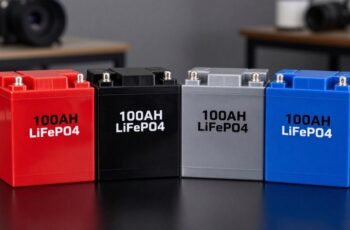
Although deep cycle marine lithium batteries cost more upfront, we’ll see why their longer service life, lighter weight, and faster charging can lower ownership costs. We’ll compare capacity, cycle life, charging compatibility, dimensions, and built-in protection across leading models. We’ll also examine vibration resistance, waterproofing, installation requirements, and real-world efficiency, because the best battery depends on your boat’s electrical demands and operating conditions—not just its advertised amp-hour rating.
Key Takeaways
- Compare LiFePO4 batteries by usable capacity, continuous discharge current, cycle life, warranty, weight, dimensions, and price.
- Match battery voltage and amp-hour capacity to your motor, onboard electronics, expected runtime, and reserve requirements.
- Verify charger, alternator, solar, and shore-power compatibility, including charge limits and low-temperature charging protection.
- Prioritize robust BMS protection, sealed enclosures, corrosion resistance, vibration tolerance, secure terminals, and protected cabling.
- Check installation fit, mounting requirements, monitoring options, vessel weight distribution, and manufacturer support before purchasing.
Compare Top Deep Cycle Marine Lithium Batteries
When comparing top deep cycle marine lithium batteries, we evaluate usable capacity, continuous discharge current, charging compatibility, protection circuitry, weight, dimensions, and warranty support—not just the advertised amp-hour rating. We confirm that each battery uses LiFePO4 cells, an appropriately rated battery-management system, and sealed construction suitable for vibration, spray, and temperature changes. We also check whether the BMS protects against overcharge, over-discharge, excessive current, and thermal faults without nuisance shutdowns under normal trolling-motor loads. Charging specifications matter: the battery should support a lithium-compatible onboard charger and provide clear voltage limits. We compare terminal types, mounting provisions, Bluetooth monitoring, cold-weather charging protection, and published cycle-life testing. By checking these details together, we can identify batteries that deliver dependable service rather than relying on marketing claims alone.
Match Battery Capacity to Your Boat
To match battery capacity to your boat, we calculate energy demand from the trolling motor’s voltage, maximum current, expected operating time, and actual duty cycle rather than selecting an amp-hour rating by boat length alone. We estimate watt-hours with volts × amps × hours, then divide by nominal voltage to obtain amp-hours. Include sonar, lighting, pumps, and radios in the load total, and add a reserve for wind, current, and temperature.
| Boat demand | Capacity guidance |
|---|---|
| Light use, small motor | 50–80 Ah |
| Moderate use, 24V motor | 100–150 Ah |
| Heavy use, 36V motor | 150–200 Ah |
| Accessories included | Add calculated Ah |
We’ll confirm the motor’s required voltage first: batteries must match its series configuration. Choose capacity from measured or manufacturer-rated consumption, not hull size. For multi-battery banks, we’ll verify parallel connections increase amp-hours while preserving voltage.
Weigh Lifespan, Charging Speed, and Efficiency
We’ll weigh a deep-cycle marine lithium battery by comparing its usable cycle life, charge rate, and round-trip efficiency against your operating pattern and charging equipment. Check the manufacturer’s cycle rating at a stated depth of discharge, not an idealized value. A battery rated for 4,000 cycles at 80% depth of discharge may deliver more practical energy over its service life than one rated for 6,000 cycles at 50%. Next, confirm its continuous and peak charge limits, then match them to your alternator, solar controller, shore charger, and battery-management system. Faster charging shortens generator runtime, but only when the charging sources can supply sufficient current safely. Finally, compare round-trip efficiency: lithium typically returns more stored energy than lead-acid, reducing charging losses. We should also verify low-temperature charge protection before winter use.
Check Weight, Size, and Installation Needs
Let’s compare battery weight with your boat’s existing unit to confirm handling, trim, and load-capacity requirements. We’ll measure the available space, including height, width, depth, and cable-clearance zones, before selecting a battery. We’ll also verify mounting hardware, ventilation, terminal orientation, wiring, fusing, and charger compatibility for a secure installation.
Battery Weight Comparison
Because a deep-cycle marine lithium battery typically weighs far less than a comparable lead-acid battery, we should compare more than the battery’s listed weight before installation. We should account for the complete bank, including cables, terminals, fuses, disconnects, and mounting hardware. Lithium batteries often deliver equivalent usable capacity at substantially lower mass because we can discharge them more deeply without the voltage sag and capacity penalties associated with lead-acid designs.
That weight reduction can simplify handling and reduce the load on the vessel, but we still need to verify every component’s rated capacity and installation requirements. We should check whether the battery-management system, charger, and inverter add meaningful weight, then confirm the mounting structure can resist vibration and shock. A lighter battery isn’t automatically a drop-in replacement; we must evaluate total installed weight, restraint, and service access.
Dimensions And Space
A few inches of extra length, height, or width can determine whether a deep-cycle marine lithium battery fits safely in its intended compartment. We should measure the available space in all three dimensions, including irregular corners, raised lips, and access openings. Compare those measurements with the battery’s published dimensions, not just its nominal group size. We should also check terminal placement and case shape, because protruding posts or molded handles can increase the effective footprint. Leave enough clearance for cables and for removing the battery later, while avoiding pressure against bulkheads or lids. Lithium batteries often weigh less than comparable lead-acid units, but their weight still affects mounting surfaces and vessel balance. We should confirm the compartment can support the battery and that its center of gravity suits the boat’s layout before choosing a model.
Installation Requirements
Before installing a deep-cycle marine lithium battery, we should verify its weight, dimensions, mounting method, cable access, and required safety equipment against the boat’s available space. We should confirm the compartment supports the battery without stressing hull structures, then measure clearance for terminals, ventilation, inspection, and removal. Although lithium batteries weigh less than lead-acid models, we must secure them with corrosion-resistant brackets or straps designed to withstand vibration and impact. We should position the battery upright unless the manufacturer permits another orientation, keeping it away from excessive heat, water spray, fuel systems, and moving components. Next, we’ll select correctly sized marine-grade cables, fuses, disconnects, and terminals for the expected current. We’ll also verify charger and alternator compatibility, install a battery-management-system connection when required, and follow manufacturer torque and protection specifications.
Evaluate Safety Features and Marine Durability
When we evaluate a deep cycle marine lithium battery, we should prioritize both built-in protection and resistance to harsh onboard conditions. A reliable battery management system should monitor cell voltage, temperature, charge current, and discharge current, then disconnect the pack during overcharge, excessive discharge, overheating, or short circuits. We should also verify low-temperature charging protection, because lithium cells can suffer permanent damage when charged below freezing.
For marine durability, we should inspect the enclosure’s ingress rating, terminal covers, seals, and corrosion-resistant hardware. Vibration resistance matters when engines, waves, and rough passages stress connections. We should confirm that the battery tolerates moisture, salt spray, and temperature changes without compromising insulation or electronics. Secure mounting and properly protected cables further reduce impact, abrasion, and water-related failures during regular operation.
Choose the Best Marine Lithium Battery Value
The best marine lithium battery value balances usable capacity, service life, protection, and total ownership cost rather than relying on the lowest purchase price. We should compare batteries by watt-hours delivered, not amp-hours alone, and verify continuous discharge ratings against our trolling motor, inverter, and electronics.
- Capacity: Calculate daily energy demand, then add practical reserve without paying for unused capacity.
- Longevity: Review cycle-life testing, warranty duration, and allowable depth of discharge; a longer-lived battery can reduce replacement cost.
- Protection: Confirm the BMS provides overcharge, over-discharge, temperature, short-circuit, and cell-balancing safeguards.
- Ownership: Include charger compatibility, installation hardware, monitoring, shipping, and warranty support in our comparison.
We’ll favor a battery with documented specifications, dependable terminals, and sealed construction suited to vibration, spray, and temperature changes. The best choice delivers predictable runtime and fewer service interruptions.
Frequently Asked Questions
Can Marine Lithium Batteries Be Used Safely in Saltwater Environments?
Yes, we can use marine lithium batteries safely in saltwater environments when we install sealed, marine-rated models, protect terminals against corrosion, provide proper ventilation, and follow manufacturer charging, mounting, inspection, and maintenance requirements.
Are Lithium Batteries Compatible With Existing Marine Battery Monitors?
Yes, lithium batteries often work with existing marine monitors, but we’ll verify voltage range, shunt compatibility, and calibration. Choose monitors supporting lithium’s flat discharge curve, and install a properly rated battery-management-system communication interface when necessary.
How Should a Marine Lithium Battery Be Stored During Winter?
Store it fully charged, disconnected, and somewhere dry, cool, and frost-free. We should disable parasitic loads, protect terminals, avoid freezing temperatures, and check voltage periodically, recharging only with a lithium-compatible charger.
Can Solar Panels Recharge a Deep Cycle Marine Lithium Battery?
Yes, solar panels can recharge a deep-cycle marine lithium battery. We’ll keep the boat’s energy pipeline flowing by pairing panels with a lithium-compatible charge controller, proper voltage settings, adequate sunlight, and correctly sized wiring and overcurrent protection.
What Warranty Coverage Is Typical for Marine Lithium Batteries?
Typical marine lithium batteries include 5–11-year limited warranties covering manufacturing defects and capacity retention, but excluding misuse, improper charging, freezing, water intrusion, and installation errors. We’ll verify cycles, prorating, claim procedures, and transferability before purchasing.
Conclusion
We’ve seen that the best deep cycle marine lithium battery balances usable capacity, cycle life, charging efficiency, weight, protection, and installation fit. We shouldn’t choose by price alone: a well-built, vibration-resistant, water-protected battery can prevent unwelcome surprises offshore while reducing maintenance. By matching amp-hours to our loads and confirming charger compatibility, we’ll gain dependable runtime and faster recovery. Although the initial investment may feel substantial, its longer service life can make ownership considerably gentler.