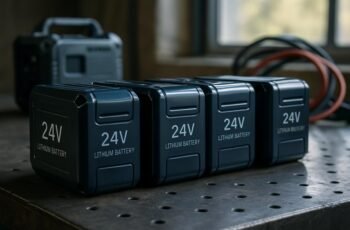
Coincidentally, two 100Ah RV lithium batteries can deliver noticeably different results despite identical capacity ratings. We’ll compare usable energy, continuous and peak output, voltage stability, charging speed, BMS protections, cycle life, warranties, and monitoring options. We’ll also check dimensions, terminals, mounting, and system compatibility so you can match a battery to your RV’s actual loads and climate. The differences become most important when boondocking, running inverters, or recharging under tight time limits.
Key Takeaways
- Compare usable capacity, voltage stability, and watt-hours rather than relying solely on the advertised 100Ah rating.
- Check continuous and peak discharge ratings against your RV’s inverter, refrigerator, water pump, and appliance startup demands.
- Verify dimensions, terminal placement, mounting requirements, and compatibility with your RV’s charger, solar controller, and inverter.
- Evaluate BMS protections, including overcharge, over-discharge, overcurrent, temperature monitoring, and low-temperature charging safeguards.
- Compare cycle life, warranty coverage, Bluetooth monitoring, charging speed, certifications, and customer support for long-term value.
How We Compare 100Ah RV Lithium Batteries?
We compare 100Ah RV lithium batteries by examining the specifications that directly affect usable power, installation, safety, and service life. We first assess usable capacity rather than relying solely on the advertised 100Ah rating. Discharge limits, voltage consistency, and low-temperature charging protection show how much energy you can safely access in real conditions. We then compare continuous and peak discharge ratings against common RV loads, including inverters, refrigerators, and water pumps. Dimensions, weight, terminal placement, and mounting requirements determine whether a battery will fit your compartment and connect cleanly. We also examine the battery management system’s protections, including overcharge, over-discharge, short-circuit, and temperature control. Finally, we evaluate cycle-life testing, warranty terms, charging compatibility, monitoring options, and documentation, so you can judge long-term value and practical ownership requirements.
Top 100Ah RV Lithium Battery Picks
Using those criteria, our top 100Ah RV lithium battery picks balance usable capacity, discharge performance, safety features, fit, and long-term value rather than relying on capacity claims alone. We’d choose among three practical categories:
- Best overall: A battery with a robust BMS, reliable cell matching, clear protection limits, and a durable case.
- Best for cold climates: A model with low-temperature charging protection or integrated heating, especially for unheated storage areas.
- Best value: A well-supported battery offering dependable construction, warranty coverage, and accessible service without unnecessary extras.
We also favor clearly labeled terminals, secure mounting options, Bluetooth monitoring when useful, and documented certifications. Before buying, we’ll verify compartment dimensions, terminal orientation, cable access, and inverter compatibility. These details often determine whether a battery installs cleanly and performs consistently over years of RV travel. Further comparisons should examine electrical output, charging behavior, and recharge timing separately.
Compare Capacity, Output, and Charging Speed
Capacity, output, and charging speed determine how well a 100Ah RV lithium battery will support your actual loads. Although each battery stores roughly 1,280 watt-hours at 12.8 volts, usable energy varies with the manufacturer’s discharge limit and operating conditions. We should compare continuous output, not just peak ratings: a battery delivering 100A continuously can run larger inverters and appliances than one limited to 50A. Check the recommended inverter size and confirm whether startup surges fit the battery’s short-term rating. Charging speed also separates similar models. A 50A maximum charge rate can refill faster than a 30A model, provided our charger, alternator, or solar controller can supply that current. Compare recharge time using this practical estimate: amp-hours divided by charging amps, then allow extra time for the final charging stage.
Check Safety Features and Battery Lifespan
After comparing capacity, output, and charging speed, we should verify how each battery manages faults and long-term wear. Compare the battery-management system (BMS) protections before judging value. A stronger BMS should disconnect charging during overvoltage, stop discharge during undervoltage, limit excessive current, and monitor temperature. We should also check whether the manufacturer specifies low-temperature charging protection; lithium cells can suffer permanent damage when charged below freezing.
> Compare BMS protections, including overvoltage, undervoltage, overcurrent, temperature monitoring, and low-temperature charging safeguards.
- Protection: Confirm overcharge, over-discharge, short-circuit, overcurrent, and thermal safeguards.
- Construction: Prefer cells with documented cycle testing, balanced charging, and secure terminals.
- Lifespan: Compare rated cycles at a stated depth of discharge, not vague “long life” claims.
Warranty length, capacity-retention guarantees, and published test conditions reveal more than marketing. A five-year warranty and transparent cycle data generally indicate stronger confidence in durability.
Match the Best Battery to Your RV Setup
Once you’ve confirmed safety features and lifespan, match the battery’s capabilities to your RV’s electrical demands. For weekend campers running lights, phones, and a small refrigerator, a standard 100Ah battery with a 100A BMS may provide sufficient capacity and value. If we operate an inverter for coffee makers, microwaves, or power tools, we should choose a model rated for higher continuous and peak discharge currents. Confirm the battery’s voltage compatibility with the RV’s converter, solar controller, and inverter; a 12.8V LiFePO4 battery typically replaces a 12V lead-acid bank, but charging profiles must support lithium chemistry. Cold-weather travelers should prioritize low-temperature charge protection or internal heating. We should also compare dimensions, terminal placement, and communication features, since installation space and monitoring needs vary between motorhomes, trailers, and van conversions.
Frequently Asked Questions
Can I Install a 100AH Lithium Battery Myself?
Yes, we can install a 100Ah lithium battery ourselves if we’re comfortable with RV electrical systems. We’ll verify polarity, charging compatibility, fusing, ventilation, cable sizing, and manufacturer instructions, then test everything carefully.
How Much Does a Quality 100AH RV Lithium Battery Cost?
A quality 100Ah RV lithium battery typically costs $300–$700, with premium models reaching $900. We’ll compare cycle life, warranties, Bluetooth monitoring, heating, and continuous discharge ratings before choosing the best value.
Can Lithium Batteries Be Stored Safely During Winter?
Yes, we can store lithium batteries safely during winter. We’ll disconnect loads, charge them to manufacturer-recommended levels, keep them dry above freezing, and periodically inspect terminals; lithium batteries generally tolerate storage better than lead-acid.
Are 100AH Lithium Batteries Allowed on Airplanes?
Airplanes treat 100Ah lithium batteries like fire in a bottle: we can’t pack them in checked luggage, and airlines generally prohibit carry-on units exceeding 160Wh. We’ll need airline approval, proper terminals, and shipping instead.
What Maintenance Does a 100AH RV Lithium Battery Require?
We’ll inspect terminals, wiring, and the battery-management system periodically, keep firmware updated, and monitor voltage. Unlike lead-acid batteries, we don’t add water or equalize; we store lithium batteries partially charged and protected from freezing temperatures.
Conclusion
Choosing a 100Ah RV lithium battery means looking beyond the label. We compare usable capacity, steady output, charging speed, BMS protection, cycle life, warranty, and monitoring to find the right power partner. We also verify dimensions, terminals, mounting, and system compatibility, because a battery must fit both the compartment and the journey. Whether we’re powering weekend comforts or demanding off-grid loads, the best choice delivers dependable energy—a quiet, stable current flowing like a reliable trail through changing climates.