We see 24V Li batteries as a compact, energy-dense solution where predictable performance and straightforward integration matter—think off-grid cabins, RVs, and workshop tools where stable peak power and clean charging yield reliability. They pair well with modular sizing and BMS safety, supporting 24V motor drives, solar–generator hybrids, and e-bikes when thermal management and DoD targets align with the chemistry. The implications for wiring, charging strategies, and maintenance shape our next steps, but there are practical tradeoffs we must weigh before committing.
Key Takeaways
- Ideal for 24V systems in RVs, off-grid cabins, portable tools, and e-bikes where compact packs and predictable performance matter.
- Suited for high-energy, moderate to high-drain apps requiring stable high-load voltage and rapid transient response.
- Compatible with 24V BMS-enabled architectures for scalable wiring, safety, and robust fault protection.
- Beneficial when thermal management is well-controlled to maximize cycle life and efficiency under load.
- Best supported by standardized charging, DoD targets, and field-ready maintenance for reliability.
What a 24V Li Battery System Delivers
A 24V Li battery system delivers a compact, high-energy pack with predictable performance across demanding apps. We quantify its deliverables in energy density, cycle life, and response consistency, then translate those metrics into actionable outcomes for our users. In practical terms, you gain reliable peak power for motorized tools, stable voltage during high-load sequences, and rapid transient response for control systems. We also note thermal behavior, charge efficiency, and lifecycle predictability that inform long-term planning. Our assessment includes maintenance cadence implications, so you can align inspections, balancing, and impedance checks with service windows. We flag warranty caveats early, clarifying coverage limits on high-temperature events, fast-charging conditions, and third-party integrations. Together, these factors define repeatable performance and reduced downtime across mission-critical applications.
Is 24V the Right Fit for You? a Decision Framework
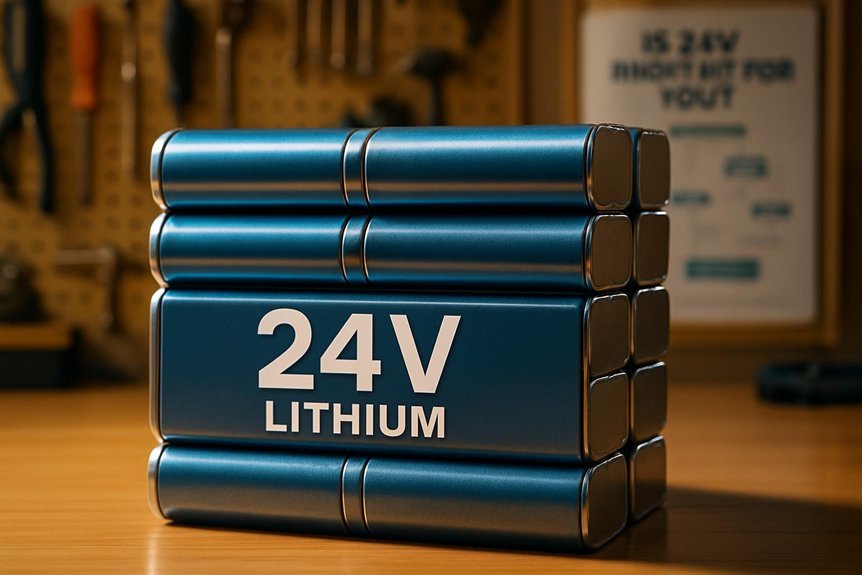
Is 24V the right fit for you? We approach this decision with a structured framework that weighs system demands, load profiles, and lifecycle costs. First, assess the expected current draw, peak loads, and battery depth of discharge tolerances; these define whether 24V delivers adequate efficiency without overbuilding. Next, evaluate packaging constraints, wiring complexity, and charge strategy compatibility to avoid unnecessary losses. We then examine control architecture: can your existing BMS integrate smoothly, and does the system support scalable configurations as needs evolve? Finally, examine safety practices, fault response, and maintenance routines to prevent Downtime. If bms integration and predictable safety outcomes align with your goals, 24V likely fits; otherwise, reframe around higher or lower voltage architectures.
Where 24V Shines: RVS, Off-Grid, Tools, and E‑Bikes
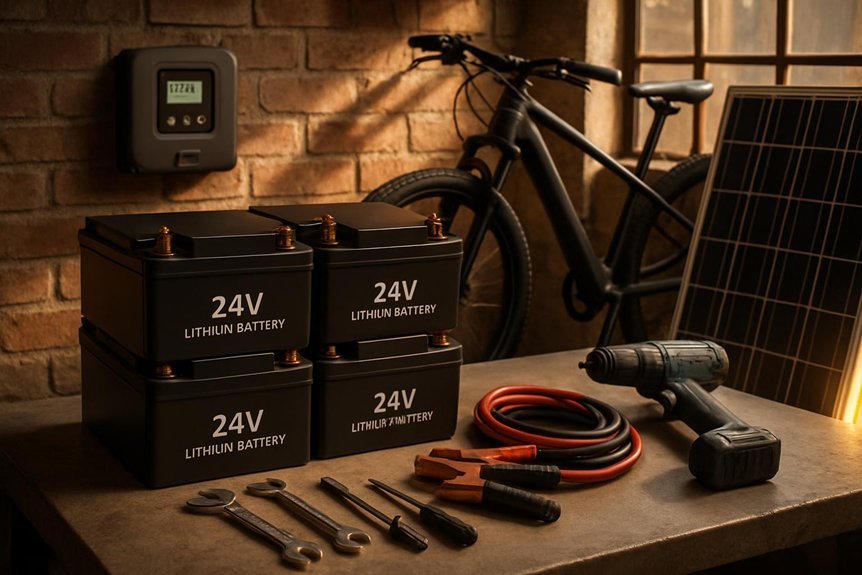
For many mobile and remote applications, 24V systems hit the sweet spot for efficiency, reliability, and manageability. We see 24V shine in RVs, off‑grid cabins, power tools, and electric bikes where compact wiring, balanced current, and predictable losses matter most. Our focus is on practical integration: robust bms integration, clean topology, and deliberate wiring safety to minimize fault paths and heat. In RVS and off‑grid setups, 24V reduces conductor gauge while maintaining performance, aiding thermal management. Tools benefit from steady voltage under dynamic loads, and e‑bikes gain smoother torque delivery with fewer cascading components. Table imagery below helps visualize how nodes connect, while careful layout preserves accessibility and serviceability.
| Application | Benefit | Key Considerations |
|---|---|---|
| RVS | Efficiency | BMS integration |
| Off‑Grid | Reliability | Wiring safety |
| Tools | Consistency | Thermal management |
| E‑Bikes | Torque flow | Accessibility |
| General | Manageability | System topology |
How to Size a 24V System: Loads, Dod, and Inverter Needs
We’ll start by outlining load sizing basics and ensuring we account for peak rather than average demand. We then match DoD targets to mission requirements and translate those boundaries into inverter and cable sizing with practical headroom. Finally, we’ll tie inverter efficiency and actual DoD choices to system resilience, so your 24V setup meets real-world use without oversizing.
Load Sizing Essentials
How do we correctly size a 24V system to meet real-world loads without wasting capacity? We approach load sizing analytically, listing all devices, duty cycles, and peak surges, then convert to continuous power at 24V. We separate essential versus optional loads, apply real-time duty factors, and account for derating due to temperature and battery aging. We select an inverter with a conservative, 80–90% continuous-load rating to avoid future overload, and we size battery capacity to meet the daily energy budget with an appropriate DoD target. We tie sizing to quantity, not just wattage, to minimize wasted capacity. Throughout, quality control and manufacturing timelines inform component tolerances, verification tests, and documentation, ensuring repeatable performance under field conditions.
Inverter and DoD Needs
In sizing a 24V system, the inverter’s continuous-load rating and the battery’s depth of discharge (DoD) targets must align with real-world duty cycles and peak surges. We assess loads, crest factors, and voltage dips to determine inverter sizing and peak-current capability. DoD considerations drive usable capacity, cycle life, and calibration of reserve margins; we balance deeper DoD against accelerated aging and temperature sensitivity. Our method ties inverter efficiency curves to typical duty cycles, avoiding over- or under-sizing that wastes capacity or triggers nuisance shutdowns. We document derating factors for temperature, wiring, and MPPT charging to refine DoD targets. Inverter sizing and dod considerations converge on reliable runtime predictions, ensuring system resilience, repeatable performance, and predictable battery longevity under varying load profiles.
Wiring 24V Packs Safely and Reliably
We’ll start by analyzing how Proper BMS Integration and Safe Wiring Practices set the foundation for reliable 24V pack operation. Our focus is on ensuring balanced cell monitoring, correct series/parallel connections, and secure terminations that minimize voltage drops and heat buildup. By outlining precise wiring conventions and acceptance criteria, we establish a clear path to safe, repeatable pack performance.
Proper BMS Integration
What are the essential steps for integrating a BMS into a 24V lithium pack to ensure safe and reliable operation? We’ll outline a precise approach that emphasizes proper connections, configuration, and validation, without venturing into safe wiring practices next. Our focus is on robust bms integration and rigorous safety practices to minimize risk and maximize performance.
- Verify cell balance requirements and fuse ratings before connection
- Configure voltage, current, and temperature thresholds in the BMS
- Validate communication, isolation, and protection behavior under load and fault
Careful monitoring during initial cycles confirms correct readings and protective actions. We prioritize traceable documentation, standardized wiring practices, and repeatable testing to ensure consistent results across 24V packs.
Safe Wiring Practices
Safe wiring starts with a disciplined, methodical approach to connector selection, conductor sizing, and secure terminations that minimize resistance and prevent fault paths. We guide readers through a practical framework for 24V packs, emphasizing consistent polarity, tight crimping, and verified torque specifications. We rate cable gauges by current, ambient temperature, and bundle conditions, avoiding overfilling harnesses and ensuring fording paths are clear. We discuss two word discussion ideas—connectivity reliability and thermal management—to frame decision points, then translate them into actionable steps: select weather-rated housings, use fused protection, and document liaison points. Safety protocols govern every procedure, from inspection to testing. We implement systematic voltage drop checks, continuity verification, and periodic maintenance to sustain fault-free operation and predictable performance in real-world deployments.
24V Li‑Ion Chemistries: Options and Tradeoffs
Which Li-ion chemistries best fit 24V systems, and what tradeoffs do they impose on performance, safety, and cost? We frame options around energy density, power delivery, and thermal behavior, highlighting how battery chemistry drives system attributes. We balance performance against safety considerations and total cost, noting that form factor and accessory compatibility constrain integration. Our view emphasizes predictable thermal management and cycle life as core metrics, with chemistry-driven implications for protection schemes and fault tolerance. We compare NMC, NCA, LFP, and high-nickel chemistries in a 24V context, stressing that each alters wiring, BMS strategy, and enclosure design.
24V Li-ion options: NMC, NCA, LFP, high-nickel—balancing energy, safety, and cost across thermal, BMS, and form factor.
- Battery chemistry tradeoffs and lifecycle expectations
- Thermal management and safety considerations
- Form factor, accessory compatibility, and system cost
24V Charging Strategies: Choosing Chargers and Limits
Charging strategy for 24V systems hinges on selecting appropriate chargers and setting sensible limits that reflect chemistry, protection schemes, and thermal realities.
We discuss charger selection by matching voltage, current, and termination logic to the pack’s BMS. We prioritize charging safety, thermal monitoring, and impedance-aware profiles to minimize stress. Warranty considerations dictate using certified hardware and documented recovery procedures, not improvised adapters.
| Charger type | Key parameter | Why it matters | Safety note | Warranty impact |
|---|---|---|---|---|
| CC/CV supply | Max current | Controls heat | Temperature cutoff | Vendor terms |
| Balance charger | Cell balance | Prevents imbalance | Fault alarms | Coverage limits |
Real‑World Runtimes: Estimating Capacity and Depletion
We begin by clarifying runtime accuracy, outlining how capacity estimates align with actual discharge curves and measurement tolerances. We then identify depletion rate factors—temperature, load, and aging—that shift real-world runtimes from nominal specifications. Finally, we outline practical estimation methods, from simple C-rate projections to data-driven modeling, to improve predictability for readers designing 24V systems.
Runtime Accuracy Basics
Is real-world runtime a reliable gauge of a 24V lithium battery’s performance, or do we need a more rigorous approach to estimate capacity and depletion? We argue for a structured method that emphasizes runtime accuracy and battery longevity. Our approach combines controlled testing, precise instrumentation, and transparent assumptions to reduce variance and bias.
- Use standardized load profiles and environmental controls to benchmark runtimes
- Report remaining capacity with confidence intervals, not single-point estimates
- Correlate runtime data with temperature, state of health, and charging history
Depletion Rate Factors
Real-world runtimes don’t just reflect energy on-hand; they reveal how depletion rates shift with operating context. We examine factors that drive the pace of capacity loss under load, temperature, and duty cycle rather than nominal ratings alone. We quantify how higher current draw accelerates apparent depletion, while moderate, sustained loads preserve usable capacity. Temperature governs chemical kinetics and internal resistance, so thermal management directly shapes run time and cycle life. We assess ambient vs. pack temperature, heat generation during high‑drain events, and cooling effectiveness, noting nonlinear effects near thermal limits. By isolating these drivers we translate capacity into practical, predictable runtimes. This focus supports lithium safety without overestimating endurance, enabling informed design choices and maintenance planning for 24V systems.
Real-World Estimation Methods
How can engineers translate measured runtime into reliable estimates of capacity and depletion for 24V systems? We approach real‑world runtimes by tying current draw, voltage sag, and temperature to capacity forecasts, then map results to usage limits and safety thresholds. We systematically quantify uncertainty, calibrate with known benchmarks, and apply linear‑to‑nonlinear models as needed to reflect battery chemistry and pack design. Our goal is precise, actionable estimates that respect safety margins and operating conditions.
- Compare observed runtimes across load profiles to derive capacity estimates and identify deviations from nominal spec
- Adjust for temperature and aging to maintain valid depletion projections
- Validate estimates against safety thresholds and documented usage limits for continuous operation
Maintenance Tips to Extend 24V Life and Reliability
Regular maintenance is essential to maximize 24V lithium battery life and reliability, and we can systematically address it by focusing on cell balance, thermal management, charging practices, and periodic inspection. We approach maintenance with data-driven rigor, logging voltages, temperatures, and current during cycles to detect drift or imbalance. We emphasize consistent cell balancing routines to prevent capacity loss and voltage sag. Thermal control is critical: maintain uniform temperatures, avoid hotspots, and verify cooling performance under load. Charging practices follow manufacturer guidelines, including SOC limits, rest periods, and charger compatibility to minimize stress. Periodic inspection targets connectors, enclosures, and seals, preventing moisture ingress and corrosion. We avoid irrelevant topics or off topic questions, keeping the scope tight and actionable for reliable operation.
Choosing a 24V Solution: Criteria, Pitfalls, and Quick Checks
Choosing a 24V solution requires a clear set of criteria, awareness of common pitfalls, and practical quick checks to validate fit. We’ll frame criteria, highlight pitfalls, and offer checks you can run without extensive testing.
Choosing a 24V solution demands clear criteria, pitfall awareness, and quick, practical validation checks.
- Define system load profiles and endurance needs to match pack capacity and C-rate reality.
- Verify safety integration: 24V safety, proper isolation, and BMS compatibility with your topology.
- Assess ethics and sourcing: battery ethics, supplier transparency, and end-of-life handling.
Quick checks guide decisions: confirm voltage window compatibility, confirm thermal and charging limits, and review warranty terms. Being rigorous upfront saves risk later. We’ll emphasize clear documentation, validated specs, and consistent safety practices to ensure dependable performance and responsible sourcing.
Frequently Asked Questions
How Long Do 24V Lithium Batteries Typically Last?
We typically expect 24V lithium batteries to last 3–7 years or 1,500–3,500 cycles, depending on usage. We assess discreet insurance and aging warranties to manage degradation, maintenance intervals, and replacements, ensuring consistent performance and cost-effective long-term reliability for readers.
Can I Mix 24V Packs From Different Chemistries?
We don’t recommend mixing chemistries due to voltage compatibility risks and uneven aging; mixing chemistries can cause imbalance, overheating, and failure, so we strongly advise against it to preserve performance, safety, and pack longevity.
What Is the Safest Storage Temperature for 24V Packs?
We’ll keep it safe: safe storage at around 0–25°C, avoiding extremes. We’ll follow temperature guidelines to protect battery longevity; steady, controlled conditions minimize degradation. Our analysis shows proper storage preserves capacity and performance, reducing risk during transit or idle periods.
Do 24V Systems Require Special Inverters Beyond Standard Options?
We do not require special inverters beyond standard options, provided you verify inverter compatibility and charging standards for 24V systems, ensuring proper voltage, current limits, and safety features are met for reliable operation.
Are There Hidden Costs With 24V Battery Warranties?
Yes, there can be hidden costs and strict warranty terms. We uncover these upfront, then explain how our 24V battery warranties quantify coverage, exclusions, and potential service fees, so you don’t face surprises later.
Conclusion
We’ve mapped the terrain: 24V packs deliver predictability, modular growth, and safer high-load operation for off-grid cabins, RVs, and workshop tools. With careful DoD planning, thermal strategy, and matched charging, they coast through peaks and valleys like a well-tuned engine. Choose chemistry, wiring, and BMS discipline deliberately, and the system behaves like a reliable compass in uncertain weather. In short, 24V is a disciplined, scalable backbone for energy reliability.