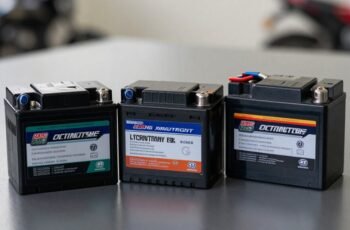
Choosing between a car lithium battery and a lead-acid starter battery can feel like comparing a featherweight power unit with a rugged industrial block. We’ll examine how each technology affects weight, starting performance, usable capacity, charging, lifespan, cold-weather reliability, safety, compatibility, and total cost. Lithium batteries may deliver longer service and significant weight savings, while lead-acid units remain affordable and broadly compatible. The right choice depends on what your vehicle demands—and where each option has limits.
Key Takeaways
- Lead-acid batteries cost less, are widely available, and work with standard vehicle charging systems, making them practical for most daily drivers.
- Lithium starter batteries are lighter, provide stronger voltage under load, and deliver faster cranking, but usually cost more initially.
- Lithium batteries typically last 5–10 years, while lead-acid batteries generally last 3–5 years with proper maintenance.
- Lead-acid batteries perform reliably in cold weather, whereas lithium batteries may require heating or charging protection below freezing.
- Before installing lithium, verify alternator compatibility, charging voltage, BMS protection, mounting, terminal fit, and required starting current.
Car Lithium Battery vs. Lead Acid: Quick Verdict
For most cars, a lead-acid starter battery remains the practical choice because it delivers reliable cold-cranking performance at a lower cost and integrates with standard charging systems. We’d recommend it for factory-equipped vehicles, daily driving, and owners prioritizing affordability, straightforward replacement, and broad availability. It tolerates conventional alternator behavior and offers predictable service support, although its greater mass, lower usable energy, and sensitivity to deep discharge limit efficiency.
We’d consider a lithium starter battery when reducing weight, improving power-to-mass ratio, or supporting specialized performance applications matters more than initial price. It can provide strong starting output and longer cycle life under appropriate conditions, but compatibility, battery-management safeguards, cold-weather performance, and charging requirements demand careful verification. For most drivers, lead acid wins on value and simplicity; lithium wins when measurable weight savings and application-specific performance justify the added complexity and expense.
How Car Lithium Batteries Work
A car lithium battery stores and releases energy through lithium-ion cells, which move lithium ions between electrodes during charging and starting. When we charge it, ions travel from the cathode through an electrolyte to the anode; electrons move through the external circuit. During starting, that flow reverses, delivering high current to the starter motor. A battery-management system (BMS) monitors cell voltage, temperature, and current, then balances cells and disconnects the pack if conditions become unsafe.
| Component | Function |
|---|---|
| Cathode | Accepts or releases lithium ions |
| Anode | Stores lithium ions during charging |
| Electrolyte | Conducts ions internally |
| Separator | Prevents electrode contact |
| BMS | Controls protection and balance |
We *thus* get predictable voltage, rapid response, and efficient energy transfer, provided charging stays within the battery’s specified limits.
Lead Acid Starter Battery Basics
We’ll examine how lead-acid starter batteries use plates, electrolyte, separators, and a casing to store chemical energy. We’ll then assess their high-current starting delivery, including cold-cranking performance and voltage behavior under load. Finally, we’ll compare maintenance requirements and service life so you can evaluate their practical trade-offs.
Lead Acid Battery Structure
Although a lead-acid starter battery looks like a simple rectangular case, it contains six electrochemical cells connected in series to produce approximately 12.6 volts when fully charged. We find each cell divided by insulating separators and built around alternating positive and negative plates. Lead dioxide coats the positive plates, while porous lead forms the negative plates. Sulfuric-acid electrolyte fills the spaces between plates, enabling ionic movement without allowing direct electrical contact. The plates connect to bus bars, and terminal posts link the cell sequence to the vehicle’s electrical system. A polypropylene case contains the electrolyte and supports the internal assembly. Its cover incorporates vent paths, caps, and terminal seals. We should also note that plate count, surface area, separator design, and electrolyte concentration influence capacity, durability, and maintenance requirements.
Starting Power Delivery
When the starter motor engages, a lead-acid battery delivers high current by converting chemical energy into electrical output across its six cells. We measure this capability as cold-cranking amps (CCA), the current available at a specified low temperature while maintaining a minimum terminal voltage. Its low internal resistance supports a brief surge, allowing the motor to overcome compression and rotational friction. As current rises, voltage inevitably falls according to the battery’s internal resistance and state of charge.
- Cranking demand: We match CCA to engine displacement, oil viscosity, and starting temperature.
- Voltage stability: We track terminal voltage because excessive sag can slow the motor or disrupt electronic controls.
- Recovery behavior: After ignition, the alternator replaces charge drawn during cranking.
Unlike lithium designs, lead-acid batteries provide substantial surge output through plate area and electrolyte chemistry, not merely rated capacity.
Maintenance And Lifespan
With proper maintenance, a lead-acid starter battery typically delivers several years of reliable service, though its lifespan depends on temperature, charging accuracy, vibration, and discharge frequency. We should inspect terminals for corrosion, confirm secure connections, and clean buildup because electrical resistance can reduce cranking performance. For conventional flooded batteries, we must check electrolyte levels and add distilled water when necessary; sealed designs generally eliminate this task. We shouldn’t allow the battery to remain deeply discharged, since sulfation permanently reduces usable capacity. A regulated charging system is essential: overcharging accelerates water loss and grid corrosion, while undercharging promotes sulfation. High under-hood temperatures also shorten service life, so we should verify battery hold-down hardware and ventilation. Periodic voltage and load testing helps us identify declining capacity before starting reliability deteriorates.
Compare Battery Weight and Starting Power
We’ll compare the substantial weight difference between lithium and lead-acid batteries and assess how it affects vehicle design. We’ll then examine starting power, including cold-cranking capability and available current. Finally, we’ll evaluate how each battery performs under sustained electrical load and temperature stress.
Battery Weight Differences
Although a lithium starter battery typically weighs 50–70% less than a comparable lead-acid battery, its lower mass doesn’t inherently mean weaker starting performance. We should examine what creates that difference:
- Materials: Lithium cells and lightweight housings replace lead plates, electrolyte, and thick structural cases. This reduces energy density penalties associated with inactive mass.
- Packaging: Lithium batteries often use compact cell assemblies and integrated battery-management systems. Their smaller footprint can simplify installation, but mounting points and terminal orientation must still match the vehicle.
- Vehicle impact: Removing several kilograms from the front end marginally reduces payload and axle load. That benefit matters most in performance vehicles, motorcycles, and applications where every kilogram affects handling or efficiency.
Lead-acid designs remain heavier because their plates, separators, electrolyte, and reinforced containers require substantial mass. We should compare manufacturer-specified weight, dimensions, reserve capacity, and certification rather than assume a lighter replacement fits every application.
Starting Power Comparison
Weight alone doesn’t determine starting power; the battery’s cold-cranking amps (CCA), internal resistance, and ability to maintain voltage under load matter more. When we compare equivalent car batteries, lithium units often weigh substantially less while delivering competitive or higher CCA ratings. Their lower internal resistance lets them release current efficiently, so the starter motor can receive strong voltage during cranking. Lead-acid batteries remain effective because their plates provide dependable surge current, but they generally require greater mass to achieve similar capacity and CCA. We should compare tested CCA ratings at the same temperature, not rely on nominal amp-hours or battery size. Lithium performance also depends on its battery-management system, which may limit output in cold conditions. Therefore, lithium offers a superior power-to-weight ratio, while lead acid may provide more predictable specifications.
Performance Under Load
Under sustained load, how do these batteries maintain voltage while the starter draws heavy current? We compare internal resistance, thermal behavior, and available capacity—not just advertised cranking amps. Lithium batteries weigh roughly 50–70% less, yet they can deliver strong starting current with minimal voltage sag. Their battery-management systems may disconnect output if temperatures or current exceed limits.
- Lithium: Low resistance supports higher terminal voltage and faster cranking, especially when adequately charged and warm.
- Lead acid: Greater mass and resistance cause more voltage drop, but robust designs tolerate brief overloads and cold-weather abuse.
- Practical result: Lithium reduces vehicle weight; lead acid often provides predictable performance at lower purchase cost.
We should match the battery’s peak current rating, reserve capacity, charging system, and operating temperature to the vehicle’s starter demand.
Compare Lifespan, Charging, and Maintenance
Lithium starter batteries typically last 5–10 years, while lead-acid batteries commonly provide 3–5 years of service, depending on temperature, cycling, vibration, and charging conditions. Lithium chemistry generally tolerates deeper discharge and retains capacity through more cycles, but its battery-management system requires compatible charging equipment. We should verify that the alternator’s voltage profile and any charger support the battery manufacturer’s specifications. Lead-acid batteries accept conventional automotive charging, yet repeated undercharging promotes sulfation, reducing usable capacity and service life. Lithium batteries usually need no electrolyte checks and resist corrosion-related maintenance, whereas flooded lead-acid designs require periodic inspection, terminal cleaning, and, where applicable, electrolyte replenishment. Both types need secure mounting and clean connections. We’ll extend either battery’s life by preventing parasitic drain, excessive charging, and prolonged storage at low charge.
Which Battery Handles Cold Weather Better?
Cold-weather performance depends on both starting-current delivery and charging behavior. When temperatures fall, engine oil thickens, increasing cranking demand, while battery chemistry slows.
- Lead-acid strength: A lead-acid starter battery typically delivers dependable cold-cranking performance. Its established cold-cranking-amp rating helps us compare available starting power at 0°F (-18°C).
- Lithium limitation: Lithium iron phosphate batteries can provide strong current in moderate cold, but charging below freezing can damage their cells. Many require an internal heater or battery-management cutoff before accepting charge.
- Practical result: For consistently severe winters, lead-acid usually offers more predictable starts without temperature-specific controls. Lithium can match or exceed performance in cold conditions when its protection system warms the cells before charging or high-current operation.
We should evaluate the vehicle’s lowest ambient temperature, required cranking amps, and battery specifications before choosing.
Compare Safety, Compatibility, and Installation
When we compare safety and installation, we should assess more than a battery’s nominal voltage. Lead-acid batteries tolerate conventional charging systems and provide predictable behavior during faults, although they contain corrosive electrolyte and can vent explosive hydrogen. We must secure them upright, protect terminals, and provide adequate ventilation.
Lithium starter batteries require greater compatibility checks. Their battery-management system must support the vehicle’s alternator, voltage regulation, parasitic loads, and start-stop controls. We shouldn’t connect a lithium battery to an unsuitable charger, booster, or dual-battery isolator; excessive charging voltage can trigger protection or cause damage. Many lithium units include internal protection, but installation still demands correct polarity, terminal hardware, cable sizing, and secure mounting. We should verify the manufacturer’s charging limits, starting-current rating, temperature restrictions, and approved vehicle applications before replacement.
Car Lithium Battery Costs and Long-Term Value
Although a car lithium battery typically costs more initially, we should evaluate its long-term value through service life, usable capacity, warranty coverage, and charging-system compatibility. A lead-acid battery usually has a lower purchase price, but its heavier construction, lower usable depth of discharge, and shorter cycle life can increase replacement frequency. Lithium chemistry can provide more usable energy at lower mass, potentially reducing lifetime cost when its service life matches the vehicle’s operating demands.
Lithium batteries may cost more upfront but can deliver greater long-term value through longer service life, lighter weight, and more usable energy.
- Service life: Compare rated cycles, calendar life, and temperature limits rather than relying on purchase price alone.
- Warranty: Check duration, mileage limits, replacement terms, and exclusions for improper charging or storage.
- Operating economics: Include maintenance, downtime, installation, and disposal costs in the ownership calculation.
We should also verify charging compatibility, because required hardware can offset lithium’s projected savings.
Which Car Battery Should You Choose?
Which car battery should you choose? We should match the battery to your vehicle’s electrical design, climate, usage, and budget. For a conventional car with modest electrical demand, a lead-acid starter battery remains the practical choice. It’s widely available, inexpensive, and compatible with standard charging systems, although it’s heavier and tolerates deep discharge poorly.
We should consider lithium when weight reduction, rapid recharge, high cycle life, or motorsport performance justifies its higher purchase price. Lithium batteries deliver strong cranking power relative to their mass, but they require suitable battery-management protection and charging compatibility. They may also perform differently in freezing temperatures and typically cost more initially.
Before purchasing, we should verify voltage, physical dimensions, terminal arrangement, cold-cranking requirements, reserve capacity, and alternator compatibility. For most daily drivers, lead acid offers simpler value; for specialized applications, lithium may be superior.
Frequently Asked Questions
Can Car Lithium Batteries Be Recycled at the End of Their Service Life?
Yes, we can recycle car lithium batteries at end-of-life through specialized facilities. We should never place them in household recycling; certified recyclers recover valuable metals, manage fire risks, and process damaged packs safely.
How Should a Lithium Car Battery Be Stored During Extended Vehicle Inactivity?
We’ll treat storage like putting the battery to sleep: disconnect it, charge it to the manufacturer’s recommended level, keep it cool and dry, prevent freezing, and periodically check voltage without allowing deep discharge.
Do Car Lithium Batteries Affect Vehicle Alternator Performance?
Car lithium batteries can affect alternator performance, because their battery-management systems regulate charging differently. We should verify alternator compatibility, charging voltage, and current limits; otherwise, overheating, premature wear, or charging faults may occur.
Can a Damaged Car Battery Cause Electrical Warning Lights or Dashboard Errors?
A stitch in time saves nine: Yes, we can see warning lights and dashboard errors when battery damage causes low voltage, unstable current, or communication faults. We should test battery health, terminals, charging voltage, and fault codes.
Are Lithium Batteries Suitable for Classic Cars With Minimal Electrical Systems?
Yes, we can use lithium batteries in classic cars with minimal electrical systems, provided charging voltage, polarity, physical fit, and battery-management requirements match. We should verify alternator compatibility and secure installation carefully.
Conclusion
We shouldn’t assume lithium automatically outperforms lead acid in every car. Lithium batteries reduce weight, deliver strong usable capacity, and can last longer, but their advantages depend on compatible charging, battery-management protection, and acceptable cold-weather performance. Lead acid remains the practical choice for conventional vehicles because it’s affordable, proven, and broadly compatible. We’ll choose lithium for weight-sensitive, high-performance applications; otherwise, a quality lead-acid starter battery often delivers the better total value.