Battery packs with lithium chemistries can deliver 2–3x higher energy density than lead acids, and they maintain a tighter voltage envelope under load. We’ll show how this translates to longer runtimes per pound and more usable capacity in real-world cycles. Our goal is to map how chemistries, BMS features, and thermal behavior interact to influence reliability and daily performance. There’s a clear tradeoff between robustness and density, and that balance is exactly what we’ll unpack as we go.
Key Takeaways
- LiFePO4 offers robust fault tolerance and deep-discharge resilience, improving safety and longevity in portable power stations.
- NMC provides higher energy density and tighter voltage profiles for longer runtimes per unit weight.
- Battery chemistry shapes runtime through capacity, voltage stability, and how current handling affects usable energy.
- BMS integration, protection timing, and fast charging limits determine real-world usable capacity and safety.
- Temperature, cycle life, and total ownership costs drive reliability and long-term performance in varied environments.
LiFePO4 vs. NMC: Which Chemistry Boosts Portable Power Reliability?
LiFePO4 and NMC each bring distinct reliability profiles to portable power stations. We compare lithium chemistry options through a rigorous lens, focusing on safety margins, cycle life, and temperature behavior. LiFePO4 offers thermal stability, deeper discharge resilience, and slower capacity fade under moderate cycling, yet it trades energy density for robustness. NMC delivers higher energy density and tighter voltage profiles, which can improve runtime per pound but introduces sensitivities to overcharge, high-temperature exposure, and calendar aging. Our assessment highlights reliability tradeoffs: LiFePO4 excels in long-term durability and fault tolerance, while NMC favors compact, high-energy configurations with stricter thermal management. Overall reliability depends on usage pattern, charging discipline, and thermal controls, aligning chemistry choice with mission-critical power reliability requirements.
How Lithium Cells Affect Runtime and Discharge Performance
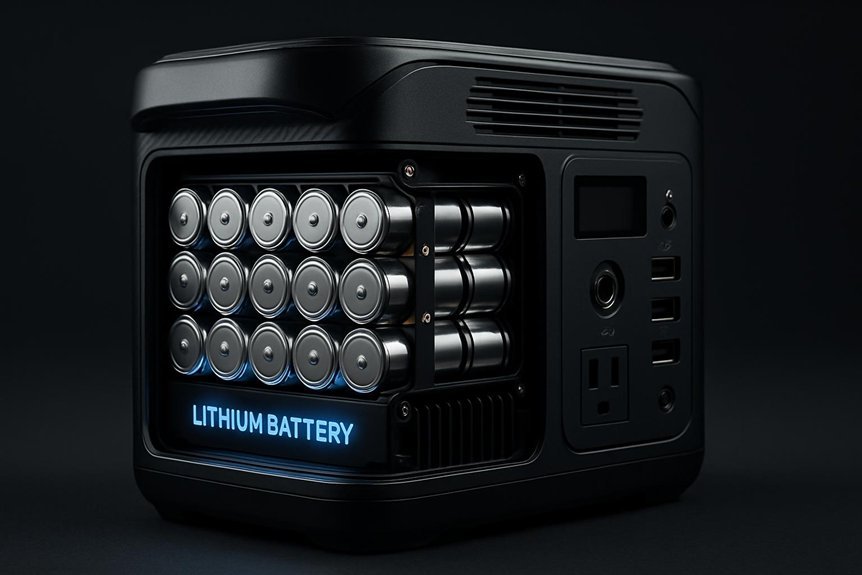
Lithium-cell chemistry directly shapes runtime and discharge behavior by governing capacity, voltage stability, and current handling. We, as readers, examine how lithium chemistry sets the baseline for portable power, then explore how runtime unfolds under load. Our analysis identifies explicit runtime tradeoffs: higher energy density often comes with tighter voltage envelopes and steeper RDS(on) impacts, subtly shortening observable runtimes under heavy discharge. Discharge rate implications reveal that aggressive high-current draws can reduce effective capacity, while moderate rates preserve energy density benefits. We evaluate cycle durability alongside cycle-life expectations for each chemistry, noting how deeper cycles influence long-term runtime consistency. In sum, we quantify energy density considerations and balance initial capability with endurance to optimize portable power performance.
BMS and Fast Charging: What Really Matters in Daily Use?

Ever wonder what truly matters for BMS behavior and fast charging in daily use? We approach this by focusing on how bms integration shapes practical outcomes. Our aim isn’t theoretical perfection but reliable, repeatable performance under typical loads. Key concerns are current sensing accuracy, cell balance strategies, and protection timing because these determine safety margins and usable capacity during high-rate pulls. Fast charging limitations hinge on thermal response, impedance growth, and charge-termination criteria that prevent voltage overshoot or overheating. We assess how the BMS coordinates with input stages, pass-through protections, and cell group monitoring to sustain consistent voltage recovery after each cycle. In daily use, predictable behavior arises from strict adherence to charging profiles, fault handling, and clear state-of-health signaling.
Temperature Tolerance, Cycle Life, and Total Ownership Costs
Temperature tolerance governs how a portable power station maintains usable capacity under ambient shifts, while cycle life defines how many full charge–discharge events the pack can sustain before its capacity degrades beyond a defined threshold.
- We monitor temperature effects on capacity fade, focusing on low temperature tolerance and high cycle stability to ensure predictable performance.
- We quantify cycle life in cycles-to-threshold and relate it to total ownership costs, including replacement intervals and maintenance.
- We model degradation curves under realistic operating temps to project lifetime costs and reliability.
- We compare chemistry variants for total ownership costs, balancing upfront price against longer-term savings and serviceability, avoiding overpromises.
These insights help readers evaluate performance envelopes, especially when ambient conditions stress the pack, and emphasize low temperature tolerance and cycle stability as key differentiators.
Choosing the Right Lithium Solution for Your Power Needs
From our look at temperature tolerance and cycle life, we can see that matching chemistry to usage not only preserves capacity but lowers total ownership costs. When choosing a lithium solution, we assess load profiles, depth of discharge, and expected runtime to select the optimal battery chemistry. We compare high‑drain performance, calendar aging, and charge efficiency to minimize degradation and maintenance intervals. For intermittent or continuous use, chemistries offering stable power and low self‑discharge boost power reliability across seasons and temperatures. We consider form factor, integration complexity, and thermal management to avoid bottlenecks in energy delivery. Informed selection prioritizes consistent voltage under load, scalable capacity, and predictable behavior, ensuring dependable operation for critical applications and user workflows.
Frequently Asked Questions
How Do Lithium Batteries Handle Long-Term Storage Without Damage?
We handle long-term storage by minimizing stress on cells, targeting 3- to 50-percent charge, and controlling temperature; this damage prevention approach preserves battery longevity, ensuring safe storage conditions that reduce capacity loss during extended periods.
What Recycling Options Exist for Used Portable Power Stations?
We recycle used portable power stations via certified take-back programs, internal refurbishments, and material recovery. We’ll hit key recycling milestones and optimize end of life logistics to maximize value and minimize environmental impact for readers like you.
Do Lithium Cells Suffer From Memory Effects or Voltage Drift?
Yes, lithium cells show minimal memory effects and voltage drift under typical use; we monitor SoC and temperature, calibrate periodically, and avoid deep cycling to keep capacity stable and performance predictable for your portable power needs.
Can Solar Charging Improve Battery Longevity in Portable Stations?
Solar charging can improve battery longevity in portable stations by reducing high-current cycling and smoothing state transitions; we monitor temperature and chargeRate to protect cells, biasing operation toward slow, consistent replenishment for long-term performance.
How Do Puffing and Swelling Indicate Battery Health?
We can tell puffing indicators and swelling signs signal internal gas buildup and cell degradation, so we monitor pressure changes, bulges, and venting activity to assess health. We’ll diagnose risks, document measurements, and advise immediate containment.
Conclusion
We’re like navigators steering a ship through variable seas. Our lithium choice is the hull: LiFePO4 with sturdy bulkheads for rugged routes, or NMC for a lighter, energy-dense voyage. The BMS acts as the compass, guiding safe charging and balance, while temperature and cycle life map our weather risks. In the end, we chart the course that matches your payload, runtime goals, and total ownership, trading density for reliability or vice versa. Your power voyage, precisely steered.