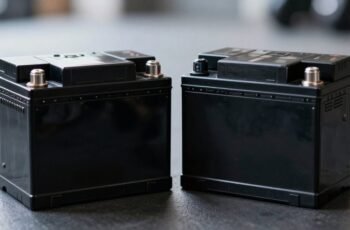
When we compare a LiFePO4 battery charger with a regular charger, we’re comparing two different charging strategies, not just two power supplies. LiFePO4 chargers use controlled constant-current and constant-voltage stages, while many regular chargers follow lead-acid bulk, absorption, and float profiles. That difference affects voltage limits, battery life, and safety. We’ll examine the required charging voltage, potential damage from incompatible chargers, key protection features, and how to select the right charger.
Key Takeaways
- LiFePO4 chargers use lithium-specific constant-current and constant-voltage profiles, while regular chargers typically follow lead-acid bulk, absorption, and float stages.
- A 12V LiFePO4 battery generally requires regulated charging around 14.2–14.6V; always follow the manufacturer’s specified voltage.
- Avoid chargers with equalization, desulfation, or prolonged float modes, which can stress or damage LiFePO4 batteries.
- Lead-acid chargers may cause improper termination, repeated restarts, overvoltage, or BMS disconnects when used with lithium batteries.
- Choose a charger matching the battery’s voltage, current, connector, and BMS requirements, with overvoltage, overcurrent, and thermal protection.
How LiFePO4 Chargers Differ From Regular Chargers
LiFePO4 chargers differ from regular lead-acid chargers primarily in their charging voltage, current profile, and control logic. We use lithium-specific charging algorithms that typically deliver a constant-current phase followed by controlled constant-voltage regulation, then terminate or reduce output without maintaining a prolonged float stage. Regular chargers often apply bulk, absorption, and float phases designed for lead-acid chemistry, whose voltage behavior and charging acceptance differ substantially. LiFePO4 chargers also incorporate tighter voltage tolerance, defined termination criteria, and protection against overcharge conditions. Some coordinate with the battery-management system, which can disconnect charging when cells approach unsafe limits. We shouldn’t assume a charger labeled “smart” supports lithium batteries; its algorithm may still target lead-acid characteristics. Compatibility depends on programmed behavior, current limits, termination logic, and communication with protective electronics.
Which Charging Voltage Does LiFePO4 Need?
For a typical 12.8 V LiFePO4 battery, we should use a charger with a regulated output of approximately 14.2–14.6 V, depending on the manufacturer’s specifications and battery-management system. This voltage represents the absorption or constant-voltage stage, where charging current gradually decreases as the cells approach full capacity. We should verify the battery’s datasheet because some packs specify narrower limits, such as 14.4 V, while others permit 14.6 V. A 12 V nominal battery generally doesn’t require a sustained float voltage; if the charger provides float, we should select approximately 13.4–13.6 V or disable that stage when permitted. For a 24 V pack, we should double these values, producing roughly 28.4–29.2 V. We should also confirm charger voltage accuracy and temperature-compensation settings before connecting it.
Why Regular Chargers May Damage Lithium Batteries
Using the correct voltage is only part of safe charging; the charger must also follow a lithium-compatible charging profile. Regular chargers often target lead-acid chemistry, so their voltage thresholds and termination behavior can conflict with LiFePO4 cells. That mismatch may cause overvoltage, unnecessary charging stress, or poor charge completion.
| Charger behavior | Lithium-battery risk | Likely result |
|---|---|---|
| High absorption voltage | Cell overvoltage | Reduced service life |
| Continuous float charging | Sustained stress | Capacity loss |
| Equalization pulse | Excessive voltage | Permanent damage |
We should never assume a charger is suitable because its output voltage appears close. Lead-acid algorithms may restart repeatedly or maintain voltage after the battery reaches full charge. LiFePO4 batteries require a charger specifically designed for their chemistry and rated battery voltage. Using the wrong unit can also trigger the battery-management system, interrupting charging without resolving the underlying incompatibility.
Compare Safety Features and Charging Stages
When we compare a LiFePO4 charger with a regular lead-acid charger, we should evaluate both its safety controls and its charging stages. A lithium charger typically uses constant-current and constant-voltage control, then stops or enters a low-current maintenance state after reaching the target voltage. It avoids prolonged float charging, which lithium batteries don’t require. A lead-acid charger commonly adds bulk, absorption, and float stages, designed to maintain voltage indefinitely.
- LiFePO4 chargers limit overvoltage, overcurrent, overheating, and reverse-polarity risks.
- Their voltage profile matches lithium cells and supports battery-management-system protection.
- Lead-acid chargers may apply desulfation pulses or equalization voltage, which can stress lithium cells.
We should also recognize that a battery’s internal management system may disconnect charging during abnormal temperature, voltage, or current conditions. These safeguards complement, but don’t replace, correct charger operation.
How to Choose the Right LiFePO4 Charger
Choosing the right LiFePO4 charger starts with matching its output voltage and charging current to the battery’s specifications. We should verify the pack’s nominal voltage and required charging voltage; a 12V LiFePO4 battery typically needs a charger rated near 14.4–14.6V, while higher-voltage packs require proportional settings. We’ll select a current that stays within the manufacturer’s limit, balancing charging speed against heat and cell stress.
The charger must use a lithium-specific charging profile, including constant-current and constant-voltage stages, without lead-acid equalization, desulfation, or float behavior. We should also confirm compatibility with the battery-management system, especially low-temperature charging protection and communication requirements. Certified overvoltage, overcurrent, short-circuit, and thermal protections improve safety. Finally, we’ll match the connector, input supply, environmental rating, and warranty to our installation conditions.
Frequently Asked Questions
Can a Lifepo4 Charger Remain Connected Overnight Safely?
Yes, we can leave a LiFePO4 charger connected overnight safely if it’s designed for LiFePO4 batteries and includes proper voltage control, temperature protection, and automatic termination; we should follow the manufacturer’s instructions.
How Long Does a Lifepo4 Battery Typically Take to Charge?
A LiFePO4 battery typically takes 2–6 hours to charge, depending on capacity, charger current, state of discharge, temperature, and battery-management limits. We calculate duration approximately as amp-hours divided by charging amps, then allow inefficiencies.
Can Solar Panels Charge Lifepo4 Batteries Directly?
Yes, we can charge LiFePO4 batteries from solar panels, but we shouldn’t connect them directly. We need a compatible solar charge controller configured for LiFePO4 voltage, current limits, temperature protection, and battery-management-system requirements.
What Maintenance Does a Lifepo4 Battery Require After Charging?
After charging, we don’t need electrolyte refills or equalization. We inspect terminals, clean corrosion, verify voltage, and store batteries partially charged in a cool, dry location. We’ll periodically check connections, temperature, and swelling.
Can Lifepo4 Chargers Work in Cold Temperatures?
LiFePO4 chargers can operate in cold temperatures, but charging below 0°C risks lithium plating and permanent damage. We should use batteries with low-temperature protection or heating, and confirm the manufacturer’s specified charging range.
Conclusion
Choosing between a LiFePO4 battery charger and a regular charger protects both performance and peace of mind. We recommend matching the charger to the battery’s chemistry, voltage, and capacity. A lithium-specific charger delivers precise constant-current and controlled constant-voltage charging, while avoiding harmful float stages and excessive voltage. By selecting the right charger, we preserve power, prevent premature wear, and promote safer service. Together, we can make every charge controlled, compatible, and confidence-building.