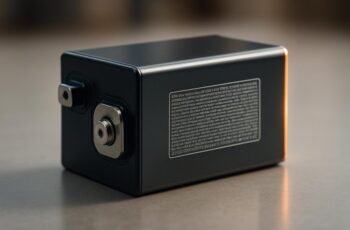
When we buy lithium polymer batteries, we should start with reputable hobby retailers, electronics suppliers, certified manufacturers, and local RC stores. We need to match voltage, capacity, cell count, discharge rating, connector, and dimensions to our device before comparing price or shipping. We should also verify UN 38.3 and IEC 62133 compliance, traceable batch records, warranty terms, and clear safety documentation, because the cheapest listing may conceal critical gaps.
Key Takeaways
- Buy lithium polymer batteries from reputable hobby shops, electronics distributors, or established manufacturers with verifiable business details.
- Choose suppliers publishing datasheets, SDS files, safety warnings, certifications, and UN 38.3 transport-test documentation.
- Verify voltage, cell count, capacity, discharge rating, dimensions, connector type, polarity, chemistry, and production date before purchasing.
- Compare total costs, including shipping, taxes, hazardous-material fees, insurance, and minimum-order charges.
- Review warranty, return, replacement, and post-sale support terms, and retain invoices and test records for traceability.
Start With Trusted LiPo Battery Retailers
Start with established LiPo battery retailers that publish complete specifications, safety documentation, and shipping policies. We should verify the seller’s business identity, contact details, warranty terms, and return procedures before placing an order. Reliable retailers identify each pack’s nominal voltage, cell count, capacity, continuous and burst discharge ratings, dimensions, connector, and recommended charging limits. We should also confirm that ratings use consistent testing conditions rather than unsupported marketing claims. Review the retailer’s storage, handling, and transport guidance, including restrictions for damaged, swollen, or recalled batteries. A compliant seller should explain how it packages lithium batteries and whether shipments follow applicable carrier and hazardous-material requirements. We shouldn’t rely solely on customer reviews; we should retain invoices, specifications, and correspondence to support traceability, warranty claims, and safe-use decisions.
Compare Online Hobby Shop Selection
When we compare online hobby shops, we should evaluate selection by verified specifications rather than product count alone. We’ll assess whether each listing provides consistent, auditable information:
- Electrical ratings: Confirm nominal voltage, cell count, capacity, continuous-discharge current, and peak-discharge limits.
- Physical fit: Compare dimensions, connector type, wire gauge, polarity, and mass against our model’s requirements.
- Construction details: Check cell chemistry, pouch protection, balance-lead configuration, and stated manufacturing tolerances.
- Documentation and controls: Prefer shops publishing datasheets, safety warnings, storage guidance, lot identification, and return terms.
We shouldn’t treat attractive pricing or extensive filters as proof of quality. We’ll also compare stock status, pack variations, and product photographs for consistency. If specifications conflict across the title, description, and datasheet, we should pause the purchase and request clarification. This approach helps us select compatible packs while maintaining traceable, compliance-focused records.
Find LiPo Batteries at Electronics Suppliers
Electronics suppliers can be useful sources for LiPo batteries when we need standardized documentation and supply-chain traceability. We should evaluate distributors by reviewing manufacturer part numbers, datasheets, safety data, certifications, and lot-level records. Their search filters can help us match nominal voltage, capacity, cell count, discharge rating, dimensions, connector configuration, and operating temperature to our design requirements. Before ordering, we’ll confirm that listed specifications apply to the exact part number, not a similar product family. We should also check storage conditions, shelf-life controls, packaging requirements, and shipping classifications for lithium batteries. Authorized electronics distributors may provide consistent invoices, certificates of conformity, and technical support, which simplifies procurement audits. However, we must verify stock status and authenticity, because marketplace listings can mix approved and unauthorized inventory.
Buy Directly From Battery Manufacturers
Buying directly from a battery manufacturer can give us better control over LiPo cell specifications, customization, quality records, and production traceability. We should provide a detailed battery specification, including nominal voltage, capacity, discharge rate, dimensions, connector, protection requirements, and expected annual volume. Before ordering, we should evaluate:
- Compliance: Confirm applicable UN 38.3, IEC 62133, and transport documentation.
- Quality systems: Request ISO certifications, inspection procedures, and cell-balancing controls.
- Traceability: Require batch identification, test reports, and retained production records.
- Validation: Obtain samples for capacity, impedance, cycle-life, swelling, and safety testing.
We shouldn’t rely solely on datasheets; we should verify performance under our actual load profile and charging conditions. A manufacturer can also define acceptable tolerances, packaging, labeling, and change-notification procedures. Written agreements should address nonconforming units, warranty limits, recalls, and lead-time commitments before we approve production.
Choose Local RC and Hobby Stores
If we need a LiPo battery quickly, local RC and hobby stores can provide immediate access to common packs, connectors, chargers, and basic technical advice. We should confirm that the retailer identifies each battery’s nominal voltage, capacity, discharge rating, chemistry, and manufacturing date. Before purchasing, we can inspect the package for swelling, punctures, crushed corners, damaged leads, or missing labels. Reputable stores should explain safe transport, storage, charging, and disposal practices, and they should stock compatible fire-resistant charging equipment. We’ll also ask whether the battery includes documented safety warnings and whether the seller accepts defective or damaged packs. Local support can simplify returns and provide practical guidance, but we shouldn’t treat informal recommendations as certification. For regulated shipping, workplace use, or commercial applications, we should request traceability and applicable compliance documentation.
Match LiPo Batteries to Your Device
Once we’ve identified a suitable seller, we need to verify that the LiPo battery matches the device’s electrical and physical requirements. We should evaluate compatibility before considering purchase logistics or installation:
- Voltage: Confirm the battery’s nominal and maximum voltage align with the device’s permitted input range.
- Capacity: Ensure the stated capacity supports the required operating duration without exceeding the device’s design limits.
- Current: Verify the battery’s continuous and peak discharge capability meets the device’s demand, including startup loads.
- Form factor: Check dimensions, connector type, polarity, mounting method, and available clearance against the battery compartment.
We shouldn’t rely on appearance or connector similarity alone. We must follow the device manufacturer’s compatibility guidance and applicable safety requirements. If any parameter remains uncertain, we’ll obtain written confirmation from the manufacturer or a qualified technician before connecting the battery.
Check Battery Specs Before You Buy
Before we place an order, we’ll review the battery’s datasheet rather than rely on marketplace descriptions or appearance. Confirm nominal voltage, capacity, dimensions, mass, connector polarity, and cell count against our device requirements. We’ll also check continuous and peak discharge ratings, charge current limits, operating temperatures, and protection requirements. Ratings should use consistent units and test conditions; advertised capacity alone isn’t sufficient.
| Specification | Acceptance check |
|---|---|
| Voltage and cells | Matches device and charger |
| Capacity | Meets runtime target |
| Discharge rating | Exceeds maximum load |
| Dimensions and connector | Fits mechanically and electrically |
We’ll verify that the stated C-rating applies to continuous operation, calculate allowable current from capacity, and account for tolerances. We should record the exact part number and revision, then retain the datasheet for purchasing and engineering records. Any missing, contradictory, or ambiguous specification warrants postponing the order.
Verify Seller Quality and Safety Standards
We’ll evaluate the seller’s quality controls and safety documentation before purchasing, not just the listed price or product photos. We should confirm traceability, testing, and regulatory evidence for each lithium polymer battery and its manufacturing source.
Prioritize traceability, testing, and regulatory documentation when evaluating lithium polymer battery suppliers—not merely price or product appearance.
- Request current SDS files identifying chemistry, hazards, handling procedures, and emergency measures.
- Verify UN 38.3 transport-test evidence, including the applicable revision and battery configuration.
- Check documented quality certifications, such as ISO 9001, and confirm the certificate’s scope and validity.
- Inspect labeling for voltage, capacity, polarity, production codes, warnings, and required conformity marks.
We should also ask whether the seller performs incoming inspection, cell matching, electrical testing, and lot-level retention. Treat vague certificates, inconsistent specifications, missing batch information, or resistance to documentation as compliance risks. We’ll choose suppliers that communicate clearly and provide auditable evidence before we place an order.
Compare Prices, Shipping, and Warranty Terms
Although the lowest listed price may look attractive, we’ll compare the complete landed cost, including shipping, insurance, taxes, handling fees, and any minimum-order requirements. We’ll request itemized quotations so we can evaluate equivalent cells, capacities, connectors, and production dates rather than headline prices alone. Confirm whether shipping complies with lithium-battery transport rules, including required packaging, labeling, documentation, and carrier restrictions. A low-cost shipment that’s delayed, rejected, or improperly declared creates compliance and safety risks.
We’ll also compare warranty terms carefully. Check the coverage period, cycle or capacity guarantees, return authorization process, inspection requirements, exclusions for swelling or improper storage, and who pays return freight. We should verify remedies, such as replacement, credit, or refund, and retain invoices, test reports, and delivery records. These details support traceability and claims.
Frequently Asked Questions
How Should I Safely Store Unused Lithium Polymer Batteries?
We should store unused lithium polymer batteries at 40–60% charge, cool and dry, in fire-resistant LiPo bags, protected from damage. We shouldn’t short terminals, stack loosely, expose them to heat, or store swelling cells.
What Is the Proper Way to Charge a Lipo Battery?
We charge LiPo batteries with a compatible balance charger, matching cell count and voltage. We inspect damage, use manufacturer-approved settings, monitor continuously, place batteries in a fire-resistant container, and disconnect immediately after charging.
How Can I Dispose of Damaged or Expired Lipo Batteries?
We should never throw damaged or expired LiPo batteries in household trash; even a swollen pack can ignite. We’ll isolate terminals, place batteries in nonconductive containers, and deliver them to certified hazardous-waste or recycling facilities.
What Should I Do if a Lipo Battery Swells?
If a LiPo battery swells, we’ll stop using or charging it immediately, isolate it in a fire-resistant area, avoid puncturing or compressing it, and contact authorized hazardous-waste services for compliant disposal.
Can I Travel by Air With Lithium Polymer Batteries?
Air travel’s 100-watt-hour limit covers most consumer LiPo packs. We can carry them in carry-on baggage, protect terminals, prevent short circuits, and obtain airline approval for larger batteries; never check spare batteries or swollen packs.
Conclusion
We shouldn’t choose a LiPo supplier by trusting the loudest “best price” banner—our batteries deserve better than internet roulette. We’ll compare reputable retailers, electronics distributors, manufacturers, and local hobby shops, then verify capacity, voltage, C-rating, dimensions, UN 38.3 and IEC 62133 documentation, traceability, warranty, and shipping controls. If a seller can’t explain its certificates or batch records, we’ll politely leave that bargain on the shelf, where questionable chemistry belongs.