We examine recycling processes, evaluate the technologies involved, and consider the standards that guarantee safety and efficiency, all while recognizing the challenges and opportunities ahead. As we explore these methods—hydrometallurgical, pyrometallurgical, and mechanical—we uncover how innovations are shaping sustainable practices. Understanding these aspects is vital to addressing the environmental impact of EV batteries. The question remains: how can industry and consumers collaborate to improve recycling outcomes and foster a truly circular economy?
Key Takeaways
- Mechanical, hydrometallurgical, and pyrometallurgical processes are primary methods for recycling EV lithium batteries.
- Emerging direct recycling techniques refurbish cathodes without full material reprocessing.
- Industry standards ensure safe disassembly, testing, and quality assurance during recycling.
- Recycling challenges include diverse chemistries, high costs, and limited recovery rates of lithium and cobalt.
- Consumer participation and innovative designs improve collection, recyclability, and overall resource recovery.
How Do Lithium Battery Recycling Processes Work?
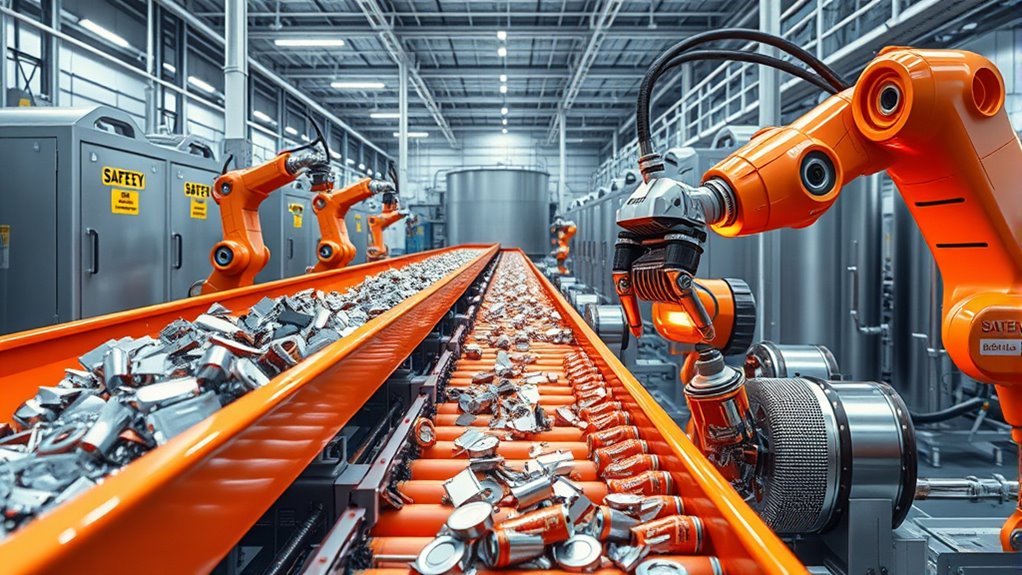
Lithium battery recycling processes involve a series of meticulously controlled steps designed to recover valuable materials efficiently. Initially, we carefully disassemble the spent batteries to separate components such as casings, electrodes, and electrolytes. Next, we subject the electrodes to mechanical or thermal treatments to reduce their size and facilitate material liberation. The subsequent step involves hydrometallurgical or pyrometallurgical methods—using chemical solutions or high-temperature smelting—to extract lithium, cobalt, nickel, and other metals. These processes are optimized for maximum recovery while minimizing environmental impact. Finally, recovered materials are purified and processed into usable feedstock for manufacturing new batteries or other applications. This systematic approach guarantees resource conservation, reduces waste, and supports a sustainable lifecycle for lithium-ion batteries.
What Technologies Are Used in Recycling EV Batteries?
Several advanced technologies are employed in recycling EV batteries to maximize material recovery and guarantee environmental safety. Hydrometallurgical processes use aqueous chemistry to leach valuable metals like lithium, cobalt, and nickel, enabling selective extraction with minimal waste. Pyrometallurgical methods involve high-temperature smelting, which simplifies separation but consumes more energy and can produce emissions. Mechanical separation techniques utilize crushing and shredding to isolate battery components, facilitating direct material recovery. Emerging technologies incorporate direct recycling, which refurbishes battery cathodes without full material reprocessing, reducing energy consumption. Analytical techniques, such as X-ray fluorescence and spectroscopy, monitor material purity and process efficiency. By combining these methods, recycling facilities optimize resource recovery, reduce environmental impact, and address the complexities of diverse battery chemistries.
How Do Industry Standards Ensure Safe and Effective Recycling?
Industry standards play a crucial role in ensuring that EV battery recycling is both safe and effective by establishing clear protocols for handling, processing, and disposal. These standards define specific procedures for decontamination, dismantling, and material recovery, minimizing risks of hazardous exposure and environmental contamination. They also specify testing and quality assurance measures to verify the integrity of recycled materials, ensuring consistent product quality. Compliance with international standards, such as ISO and IEC frameworks, facilitates uniformity across recycling facilities, promoting best practices and operational safety. Additionally, these standards mandate documentation and traceability, which support regulatory oversight and accountability. By setting rigorous technical criteria, industry standards optimize resource recovery, reduce waste, and safeguard worker health and environmental integrity.
What Are the Main Challenges and Opportunities in Battery Recycling?
While established standards guide the safety and effectiveness of EV battery recycling, numerous challenges hinder widespread implementation and efficiency. First, the diversity in battery chemistries complicates standardization, requiring adaptable processes. Second, the economic viability remains uncertain due to fluctuating raw material prices and high processing costs. Third, collection and logistics pose logistical hurdles, especially in regions lacking infrastructure. Fourth, technical difficulties in efficiently recovering valuable materials, like lithium and cobalt, limit recovery rates. However, these challenges also present opportunities: advancements in automation can improve processing efficiency, innovations in chemical separation can increase material yields, developing global collection networks can reduce logistical barriers, and policy incentives can promote industry adoption. Addressing these issues is essential for sustainable and scalable battery recycling solutions.
How Can Consumers and Companies Contribute to Better Lithium Recycling?
Consumers and companies play a crucial role in enhancing lithium recycling by establishing effective collection systems and promoting responsible usage. By implementing standardized collection points and incentivizing returns, we can improve the efficiency of material recovery processes. Companies can integrate design for recyclability, utilizing materials that facilitate easier extraction of lithium and other valuable components. Consumer education is essential—raising awareness about proper disposal practices reduces contamination and increases recovery quality. Additionally, transparent reporting on material sourcing and recycling efforts encourages accountability and fosters trust. Technological advancements, such as tracking systems and data sharing, enable better lifecycle management of batteries. Ultimately, collaborative efforts between consumers and companies create a more sustainable supply chain, minimizing environmental impact and optimizing resource reuse in lithium battery recycling.
Frequently Asked Questions
What Are the Environmental Impacts of Lithium Battery Recycling?
Lithium battery recycling reduces environmental impact by preventing hazardous waste, conserving resources, and decreasing pollution. We analyze energy use, emissions, and waste management to guarantee sustainable practices, minimizing ecological footprints while recovering valuable materials efficiently.
How Cost-Effective Are Current Lithium Battery Recycling Methods?
Current lithium battery recycling methods are moderately cost-effective, driven by technological advancements and increased demand, yet high processing costs and material recovery efficiency still challenge widespread economic viability, requiring further innovations to optimize cost-benefit ratios effectively.
What Policies Influence Lithium Battery Recycling Practices Worldwide?
We observe that policies like extended producer responsibility, recycling mandates, and international agreements shape lithium battery recycling practices worldwide, encouraging innovation and compliance while balancing environmental sustainability with economic feasibility in this evolving industry landscape.
How Is Recycled Lithium Used in New Battery Production?
Recycled lithium is purified and processed into high-grade materials, then integrated into new battery cathodes. We analyze this cycle to optimize efficiency, reduce costs, and guarantee sustainable resource management in battery manufacturing.
What Innovations Are on the Horizon for EV Battery Recycling?
We believe upcoming innovations like direct recycling, advanced hydrometallurgical methods, and AI-driven sorting will revolutionize EV battery recycling, making it more efficient, sustainable, and cost-effective—addressing concerns about resource scarcity and environmental impact.
Conclusion
In steering the complex landscape of EV lithium battery recycling, we’re like explorers charting a new frontier. By embracing evolving technologies and adhering to industry standards, we can transform waste into valuable resources. While challenges remain, continuous innovation acts as our compass, guiding us toward a sustainable future. Together, with informed consumers and proactive companies, we can turn the tide on battery waste, ensuring a more resilient planet—one recycled cell at a time.