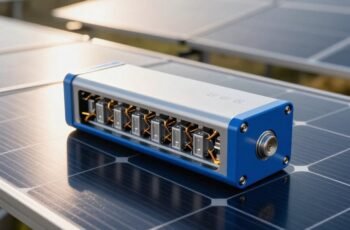
Many cheap LiFePO4 batteries online use similar-looking cells but differ substantially in usable capacity, cycle life, and built-in protection. We should compare voltage, amp-hours, battery management systems, certifications, warranty terms, and shipping costs before judging price. We’ll also examine which brands provide reliable documentation and how requirements change for RV, solar, and marine systems. The lowest listing price may not be the lowest total cost, especially when specifications or seller claims remain unverified.
Key Takeaways
- Compare total ownership costs, including shipping, taxes, accessories, installation hardware, replacement risk, and recycling fees—not merely purchase price.
- Calculate usable watt-hours and cost per delivered cycle using voltage, capacity, depth of discharge, efficiency, and verified cycle-life ratings.
- Match battery voltage, dimensions, weight, terminals, discharge current, temperature limits, and charger compatibility to your specific application.
- Verify genuine certifications, cell provenance, BMS protections, independent testing, model-specific documentation, and credible seller support before purchasing.
- Read warranty terms carefully, including capacity retention, cycle limits, exclusions, return shipping, registration requirements, and replacement procedures.
Find Cheap LiFePO4 Batteries for Your Needs
Finding cheap LiFePO4 batteries starts with comparing usable capacity, cycle life, warranty coverage, and total cost—not just the upfront price. We should calculate cost per delivered kilowatt-hour by combining purchase price, expected cycle count, efficiency, and replacement risk. Online marketplaces often show aggressive discounts, but we’ll verify datasheets, independent test results, cell provenance, and battery-management-system features before buying. A reliable BMS should provide overcharge, over-discharge, temperature, and short-circuit protection, while Bluetooth monitoring can simplify diagnostics and improve maintenance decisions. We’ll also inspect seller ratings, return policies, shipping charges, certifications, and warranty exclusions. Established manufacturers may cost more initially yet reduce lifetime expenses through better cells, tighter quality control, and responsive support. Comparing several listings side by side helps us identify genuine value and avoid suspiciously low-priced products.
Compare Battery Sizes, Voltage, and Capacity
Before we buy a LiFePO4 battery online, we’ll match its physical size, nominal voltage, and usable capacity to our application. First, we should measure the available compartment and compare listed dimensions, terminal placement, and weight—not just the advertised amp-hour figure. Voltage must also align with our equipment: a 12.8V battery suits many 12V systems, while 25.6V and 51.2V models target 24V and 48V architectures. We’ll confirm the manufacturer’s voltage range and charger compatibility before ordering. Capacity depends on both amp-hours and voltage, so we can estimate energy in watt-hours by multiplying volts by amp-hours. Usable energy may be lower than the headline rating, depending on the supplier’s stated discharge limits. Comparing watt-hours, shipping costs, dimensions, and price per usable watt-hour helps us identify genuine online value.
Check Cycle Life and Battery Management Systems
We’ll compare cycle-life ratings under stated test conditions, since temperature, depth of discharge, and charge rates affect real-world performance. We’ll also verify that each battery includes a reliable BMS with overcharge, over-discharge, thermal, and short-circuit protection. This data helps us identify the strongest value among LiFePO4 batteries online.
Compare Cycle Life Ratings
When comparing LiFePO4 batteries online, we should examine both the stated cycle-life rating and the battery management system (BMS) that helps achieve it. A headline such as “4,000 cycles” matters only when the seller specifies test conditions, including depth of discharge, temperature, charge rate, and end-of-life capacity. We should compare equivalent measurements rather than accept impressive numbers at face value.
- A 2,000-cycle battery at 100% depth of discharge may deliver similar usable throughput to a 4,000-cycle model tested at 80%.
- Ratings near 25°C don’t guarantee identical results in a hot garage or cold cabin.
- A warranty tied to cycle count, capacity retention, and calendar years reveals the seller’s confidence.
We should favor transparent datasheets, independent test evidence, and realistic capacity-retention targets over the cheapest advertised figure.
Verify Battery Management Systems
A capable battery management system (BMS) should do more than prevent overcharging; it should balance cells, control charging and discharging, monitor temperature, and record fault conditions that affect cycle life. When we compare cheap LiFePO4 batteries online, we should verify the BMS specifications, not rely on marketing claims. Look for documented current limits, low-temperature charging protection, balancing strategy, and replaceable or serviceable components.
| BMS feature | What we verify | Why it matters |
|---|---|---|
| Cell balancing | Active or passive method | Improves usable capacity |
| Temperature sensors | Charging cutoff range | Protects cells in cold conditions |
| Data logging | Fault and cycle records | Supports warranty claims |
We should also match continuous and peak ratings to the inverter or motor. A transparent supplier provides test data, wiring diagrams, and warranty terms. If those details are missing, the advertised cycle-life figure deserves skepticism, regardless of price.
Spot Reliable LiFePO4 Battery Brands Online
When we shop for LiFePO4 batteries online, we should assess brand reputation through verified reviews, certifications, and market track records. We’ll compare capacity, cycle life, discharge ratings, cell chemistry, and BMS features to identify measurable value. We should also verify warranty duration, coverage terms, and seller support before purchasing.
Check Brand Reputation
We should assess a LiFePO4 battery brand’s reputation before buying online by reviewing verified customer feedback, warranty terms, safety certifications, and operating history. We’ll prioritize manufacturers with transparent company details, responsive support, and documented quality-control processes rather than relying on polished product pages. To quickly visualize market credibility, we can look for:
- A review trail showing consistent delivery, service, and reliability across independent platforms.
- Certification records from recognized testing bodies, with searchable certificate numbers and current dates.
- Warranty claims handled publicly, revealing whether the seller honors repairs, replacements, and refunds.
We should also check how long the brand has operated, whether distributors stock its products, and whether reputable installers mention it. A sudden flood of identical five-star reviews, vague certifications, or copied specifications signals caution. Strong reputations reduce purchasing risk, especially when cheap online listings compete primarily on price.
Compare Battery Specifications
After checking a brand’s reputation, we’ll compare each LiFePO4 battery’s specifications to determine whether its performance claims are credible. We’ll prioritize capacity, voltage, cycle life, continuous discharge, operating temperature, and cell chemistry. Published figures should align with practical applications, not merely headline marketing.
| Specification | What We Check | Why It Matters |
|---|---|---|
| Capacity and voltage | Rated Ah and nominal V | Estimates usable energy accurately |
| Cycle life | Cycles at stated depth of discharge | Indicates long-term value |
| BMS and discharge | Current limits and protections | Supports safe, consistent output |
We’ll also compare energy density, charging limits, certifications, and test conditions across competing listings. A clear datasheet with measurable tolerances signals stronger engineering. When sellers omit test temperatures, discharge rates, or cell-grade details, we’ll treat impressive numbers cautiously and favor brands providing complete, reproducible specifications. This approach helps us identify genuine bargains online.
Verify Warranty Coverage
Next, we’ll verify warranty coverage before trusting any LiFePO4 battery brand found online. A low price matters less when a failed cell, BMS, or charger leaves us without support. We should treat warranty terms as measurable signals of supplier reliability, not marketing decoration.
- Duration: Look for clearly stated coverage, typically five to ten years or a specified cycle count, whichever comes first.
- Scope: Confirm protection for capacity loss, manufacturing defects, thermal events, and BMS failures; check minimum retained capacity, such as 80%.
- Process: Verify registration rules, diagnostic evidence, shipping responsibility, replacement timelines, and an accessible service address.
We’ll also compare warranty language across the brand’s website, marketplace listing, and downloadable manual. Consistent terms suggest operational maturity. Independent reviews and warranty-claim discussions can expose exclusions, delayed responses, or counterfeit listings before we commit funds.
Verify Safety Certifications and Warranty Coverage
How can we confirm a LiFePO4 battery is genuinely safe before buying it online? We should verify third-party test reports, not rely on marketplace badges or seller claims. Look for current certifications such as UL 1973 for stationary batteries, UL 9540A fire-testing data where relevant, and UN 38.3 transport testing. The report should identify the exact model, cell chemistry, capacity, laboratory, and test date. We should also confirm CE or UKCA documentation matches the selling region and product specification.
For warranty coverage, we’ll read the complete policy before ordering. Check the term, cycle or throughput limits, minimum capacity guarantee, exclusions, return process, and whether installation or registration is required. A credible seller publishes a serial-number procedure and provides responsive support. We shouldn’t accept vague “five-year” marketing without written, model-specific conditions and contact details.
Calculate the True Cost Before Buying
What will the battery really cost once we include shipping, taxes, installation hardware, monitoring equipment, and disposal fees? We should calculate the complete landed price, not trust a bargain headline. Compare each seller’s delivered quote, payment terms, return policy, and warranty support before choosing.
- Add freight, regional taxes, cables, fuses, busbars, brackets, and connectors to the advertised battery price.
- Budget for a shunt, Bluetooth gateway, display, or battery-management-system accessories that reveal voltage, current, temperature, and state of charge.
- Reserve money for recycling or compliant disposal, especially where local rules charge collection fees.
Then divide total cost by rated watt-hours and expected cycle life. This cost-per-cycle view exposes weak bargains: a slightly pricier pack with verified capacity, efficient electronics, and stronger service may deliver lower lifetime spending than the cheapest listing. Compare apples to apples.
Match Batteries to RV, Solar, and Marine Use
Whether you’re powering an RV, an off-grid solar array, or a marine system, choose a LiFePO4 battery by matching its voltage, usable capacity, continuous and peak current ratings, cycle life, and environmental protection to the application. For RVs, we prioritize 12.8V batteries with sufficient amp-hours for inverters, refrigeration, and overnight loads, plus reliable low-temperature protection. Solar installations benefit from 24V or 48V configurations, scalable parallel capacity, and a battery-management system that communicates with inverters. Marine buyers should emphasize sealed construction, vibration resistance, corrosion protection, and dependable discharge performance. We also compare charging limits with the alternator, solar controller, or shore charger. A battery’s advertised capacity isn’t the whole story; usable energy depends on the recommended depth of discharge and temperature. Matching these specifications helps us maximize runtime, safety, and system efficiency.
Avoid Common Cheap Battery Buying Mistakes
Although a low price can be attractive, we shouldn’t judge LiFePO4 batteries by upfront cost alone. We need to verify usable capacity, cycle-life ratings, warranty terms, and independent test evidence before comparing listings. A battery’s advertised amp-hours may reflect nominal capacity, not the energy available at our preferred depth of discharge. We should also inspect protection hardware: a properly rated BMS must manage overcharge, over-discharge, temperature, and balancing.
- Check specifications: Confirm voltage, continuous current, peak current, operating temperature, and communication features match our inverter or charger.
- Calculate total cost: Include shipping, taxes, accessories, replacement risk, and warranty support—not just the headline price.
- Validate the seller: Look for traceable certifications, authentic reviews, a physical support channel, and clear return procedures.
When evidence is missing, we’re not buying savings; we’re accepting operational and safety risk.
Frequently Asked Questions
Can Lifepo4 Batteries Be Recycled After Reaching the End of Their Lifespan?
Yes, we can recycle LiFePO4 batteries after their lifespan. We’ll recover valuable metals, including lithium, iron, and phosphate, through specialized facilities. Choose certified recyclers, avoid disposal, and follow local regulations to improve recovery rates.
How Should Lifepo4 Batteries Be Stored During Extended Periods of Nonuse?
Store LiFePO4 batteries cool, dry, and partially charged—roughly 40–60%—rather than full or empty. We’ll disconnect loads, prevent freezing or overheating, and check voltage every few months, following the manufacturer’s specifications.
Can Lifepo4 Batteries Be Connected in Series or Parallel Configurations?
Yes, we can connect LiFePO4 batteries in series or parallel, provided they match in voltage, capacity, age, and charge state. We’ll use compatible BMS units, fuses, balanced wiring, and manufacturer limits for reliable performance.
What Charging Temperatures Are Safe for Lifepo4 Batteries?
Safe charging temperatures for LiFePO₄ batteries typically range from 0°C to 45°C (32°F–113°F). We shouldn’t charge below freezing; lithium plating can occur. We’ll verify manufacturer specifications, use battery-management systems, and monitor temperature continuously.
Do Lifepo4 Batteries Require Special Chargers Compared With Lead-Acid Batteries?
No, we shouldn’t use lead-acid chargers blindly: LiFePO4 batteries require lithium-compatible charging profiles, voltage limits, and often built-in protection. We’ll gain safer, faster, longer-lasting performance by matching chargers to battery specifications and BMS requirements.
Conclusion
We’ve seen that finding cheap LiFePO4 batteries online isn’t simply a race to the lowest price. We must compare capacity, cycle life, BMS quality, certifications, warranty, and delivered cost before clicking “buy.” Whether we’re powering an RV, solar array, or boat, reliable specifications are our compass and safety records our anchor. By screening brands carefully and avoiding suspicious deals, we can turn online shopping from a gamble into a calculated investment that delivers dependable energy for years.