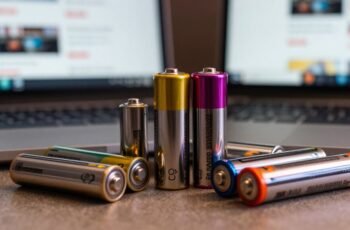
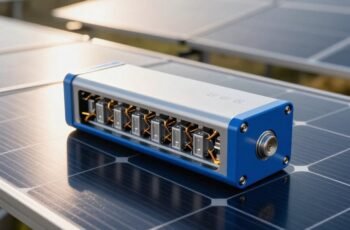
Many RV owners don’t realize that usable capacity depends more on discharge limits and charging behavior than on a battery’s label. We’ll compare LiFePO₄, NMC, and lithium titanate by cycle life, safety, cold-weather performance, power delivery, and cost. LiFePO₄ usually offers the best balance for daily RV use, but temperature, inverter demand, and charging speed can change the decision—especially when your travel conditions push a battery beyond its normal operating range.
Key Takeaways
- LiFePO₄ is generally the best all-around RV chemistry, offering excellent safety, cycle life, usable capacity, and stable voltage.
- Choose NMC when minimizing battery weight and space is more important than maximum cycle life and thermal stability.
- Choose LTO for extremely rapid charging, frequent cycling, or reliable operation in cold environments despite higher cost and lower energy density.
- Match the battery to daily energy use, inverter surges, available space, weight limits, and charging-system compatibility.
- Ensure a quality BMS, temperature monitoring, low-temperature charging protection, proper installation, and compatible chargers for safe operation.
Why LiFePO₄ Leads RV Lithium Batteries
LiFePO₄ leads RV lithium batteries because it combines high usable capacity, long cycle life, stable voltage, and strong thermal safety in a practical package. We can use more of its rated capacity without the rapid voltage sag or shortened life common with heavily discharged batteries. That usable energy supports inverters, refrigerators, water pumps, and electronics while reducing battery size and weight for a given daily demand. Its flat discharge curve also helps sensitive equipment operate consistently, even as state of charge declines. With thousands of properly managed cycles, LiFePO₄ can lower replacement frequency and long-term ownership cost. An integrated battery-management system should provide overcharge, over-discharge, overcurrent, and temperature protection. We’ll still install suitable fusing, wiring, ventilation, and charging equipment to maintain safe, reliable performance.
Compare the Main Lithium Chemistries
We’ll compare lithium iron phosphate (LiFePO₄) with lithium nickel manganese cobalt (NMC) chemistry for RV use. We’ll evaluate their energy density, safety, service life, cost, and operating characteristics. This comparison will help us match each chemistry to your power demands and installation priorities.
Lithium Iron Phosphate
Among the main lithium chemistries, lithium iron phosphate (LiFePO₄, or LFP) is usually the strongest fit for RV use because it combines high usable capacity, long cycle life, stable voltage, and excellent thermal stability. We can typically use about 80–100% of rated capacity without the rapid degradation associated with deep discharge. Its nominal 3.2-volt cell maintains consistent performance as appliances switch on, while its chemistry reduces thermal-runaway risk.
- Usable energy: More stored power supports longer boondocking.
- Cycle life: Quality packs can deliver thousands of cycles.
- Voltage stability: Electronics receive steadier power during discharge.
- Safety margin: LFP tolerates heat and abuse comparatively well.
We’ll still need a battery-management system, correctly sized cabling, proper overcurrent protection, and charging equipment with an LFP profile. Below freezing, we should prevent charging unless the battery includes low-temperature protection or integrated heating. Therefore, LFP offers a practical balance of capacity, durability, safety, and predictable RV operation.
Lithium Nickel Manganese Cobalt
Lithium nickel manganese cobalt oxide (NMC) offers higher energy density and a smaller, lighter battery than LiFePO₄, but we’ll trade some thermal stability, cycle life, and raw-material sustainability for that compact performance. In an RV, that density can free storage space and reduce installation weight, especially when battery capacity must fit beneath a seat or in a tight compartment. However, NMC generally requires more careful thermal management and robust battery-management protection against overcharge, overheating, and excessive discharge. Its usable life may fall sooner under frequent deep cycling, so we’ll want conservative charge settings and adequate ventilation. Cobalt and nickel also raise cost and environmental concerns, while supply-chain volatility can affect availability. For most RV owners, NMC makes sense when size and weight matter more than maximum longevity and simplicity.
Match Chemistry to Your RV Power Needs
Choosing the right lithium chemistry starts with your RV’s power demands, available space, climate, and charging equipment. We should evaluate the complete electrical system rather than selecting batteries by capacity alone. Use this framework:
- Load profile: We’ll total continuous loads, startup surges, and daily amp-hours to identify required voltage, capacity, and discharge capability.
- Installation constraints: Measure the compartment, cable paths, ventilation, and battery weight limits before choosing a chemistry or form factor.
- Operating environment: We’ll account for storage temperatures, heat exposure, and cold-weather charging limits because chemistry affects thermal requirements.
- Charging compatibility: Verify alternator output, solar-controller settings, shore-power charger profiles, and battery-management-system communication.
For high-current appliances, select chemistry and cells that support the inverter’s surge demand. For modest loads, prioritize usable capacity, service life, and total installed cost. We shouldn’t overlook protection hardware, fusing, and manufacturer limits; correct integration determines whether the selected chemistry performs reliably in everyday travel.
How LiFePO₄ Performs in RVs
When we install LiFePO₄ batteries correctly, they deliver stable voltage, high usable capacity, and efficient cycling for typical RV loads. Their flat discharge curve keeps lights, refrigerators, inverters, and water pumps operating consistently as capacity declines. We can usually use a greater portion of the rated capacity than with lead-acid batteries, reducing the amp-hour capacity required for the same daily energy budget. Low internal resistance also supports high inverter loads while limiting voltage sag. LiFePO₄ accepts charge efficiently, so solar controllers, alternators, and shore chargers spend less time in absorption. We must still size wiring, fuses, chargers, and battery-management systems for the installation. Charging below freezing requires temperature protection, because lithium plating can damage cells. With proper monitoring and secure mounting, LiFePO₄ provides predictable, low-maintenance RV power.
When Lithium Titanate Makes Sense
For RV owners who need rapid charging and exceptional cold-weather performance, lithium titanate (LTO) can justify its higher cost and lower energy density. We should consider it when charging windows are short, temperatures regularly fall below freezing, or daily cycling is unusually demanding. Its chemistry accepts high charge rates, resists lithium plating, and typically delivers exceptional cycle life. However, we’ll need more physical space and budget for the same usable capacity.
- Cold operation: LTO can charge safely at temperatures where other lithium chemistries require heating.
- Fast replenishment: High current acceptance helps generators, alternators, and brief shore-power sessions restore energy quickly.
- Long service life: Frequent cycling produces less capacity loss over time.
- Design tradeoff: Lower energy density increases battery weight and installation volume.
We should verify the battery’s BMS limits, charger compatibility, and temperature protections before choosing LTO. It makes the strongest case for intensive, year-round RV use.
Where NMC Batteries Fit in RVs
NMC batteries give us high energy density, helping us reduce battery weight and installation space in RVs. We’ll weigh those gains against safety requirements, including thermal management, ventilation, monitoring, and protective controls.
High Energy Density
If maximizing stored energy in limited space matters, NMC batteries can give an RV more usable watt-hours with less weight and volume than many lithium iron phosphate (LFP) systems. We should evaluate energy density alongside usable capacity, not merely compare amp-hour labels. NMC’s higher cell-level energy density can support longer operation between charges, particularly for demanding loads such as inverters, induction cooking, and air-conditioning support.
- Higher watt-hours per cell support compact battery designs.
- Greater capacity can reduce generator runtime.
- A smaller enclosure may simplify installation planning.
- Actual output still depends on voltage, temperature, and battery-management limits.
We shouldn’t treat rated capacity as fully available energy. Confirm the manufacturer’s recommended depth of discharge, continuous current rating, and low-temperature protections. NMC can be compelling when energy storage must fit a constrained electrical compartment, provided we select a properly engineered pack and match it to our RV’s load profile.
Weight And Space Savings
When RV weight or compartment space is limited, NMC batteries can deliver the required usable energy with a smaller and lighter pack than an equivalent LFP system. That advantage can improve payload margins, simplify installation, and free storage space for tools or gear. We should compare complete, installed systems rather than cell-level specifications: enclosure, battery-management hardware, cabling, disconnects, and mounting structures all affect the final result. NMC’s compact format may also fit shallow compartments or locations where larger prismatic modules won’t. Before choosing it, we need to calculate daily amp-hour demand, inverter loads, charging requirements, and the usable capacity at the planned discharge limit. Weight distribution matters, too, so we should place the pack to preserve axle-loading targets. NMC fits best when space and mass carry a higher priority than maximum cycle life.
Safety And Thermal Management
Because NMC cells have higher energy density and tighter thermal limits than LFP cells, we should treat protection and heat control as core design requirements in an RV installation. A quality battery-management system should monitor each cell, disconnect during overcharge, over-discharge, overcurrent, or excessive temperature, and balance cells consistently. We should also verify charger settings, cable sizing, fusing, and enclosure ventilation rather than assuming drop-in compatibility.
- Mount the pack securely, away from engines, heaters, and direct sun.
- Use temperature sensors on cells and charging equipment.
- Prevent charging below the manufacturer’s minimum temperature.
- Leave service clearance and inspect terminals, wiring, and alarms regularly.
NMC can fit RVs where low weight and compact capacity matter, but installation quality determines risk. We should follow the battery maker’s limits, provide controlled airflow, and never bypass the BMS or protective disconnects.
Check Cold-Weather Charging Limits
Lithium batteries shouldn’t be charged below their manufacturer-specified temperature, typically 32°F (0°C), because lithium plating can permanently reduce capacity or create a safety hazard. Before winter trips, we should verify the battery’s low-temperature charging limit in its manual, not assume every lithium chemistry has identical protection. LiFePO4 batteries commonly require charging above freezing, while some integrated battery-management systems automatically disconnect charging when sensors detect unsafe temperatures. We should confirm whether that protection applies to every charging source, including solar controllers, converters, alternators, and shore-power chargers. If the RV stays outside, insulate the battery compartment without blocking ventilation, or use a manufacturer-approved heater controlled by the battery-management system. We should also check charging-current limits at cold temperatures and postpone charging until the battery warms naturally when no approved protection exists.
Compare Battery Life, Safety, and Cost
How should we compare battery life, safety, and cost for an RV? We should evaluate the complete ownership picture, not just the purchase price. Compare usable energy, cycle ratings, protection features, and installation requirements under realistic loads.
- Life: Calculate watt-hours delivered across the rated cycles, then adjust for depth of discharge, temperature, and maintenance.
- Safety: Check battery-management-system protections for overcharge, over-discharge, excess current, and temperature faults. Confirm enclosure quality and proper fusing.
- Cost: Include the battery, charger compatibility, cabling, mounting, monitoring, and potential replacement expenses.
- Value: Divide total ownership cost by estimated usable watt-hours or service years, then compare that figure with your actual travel pattern.
We’ll get the clearest result by using identical load assumptions and warranty terms. A higher initial price may provide better lifetime economics, while a cheaper battery may impose earlier replacement or added installation costs.
Choose the Best Lithium Chemistry for Your RV
Choosing the best lithium chemistry for your RV depends on your power demands, available space, climate, and budget—not on capacity alone. For most installations, lithium iron phosphate (LiFePO4) offers the strongest balance: excellent cycle life, stable chemistry, high usable capacity, and low maintenance. We should choose it for daily boondocking, solar storage, and high inverter loads, provided the battery includes a reliable battery-management system (BMS). Lithium titanate (LTO) suits extreme-duty applications because it tolerates rapid charging, cold conditions, and exceptionally high cycle counts, but its lower energy density and higher price require justification. Lithium nickel manganese cobalt (NMC) packs deliver compact, lightweight storage, yet they demand stricter thermal management and protection. We’ll match chemistry to installation conditions, charging equipment, ventilation, temperature limits, and total ownership cost before buying.
Frequently Asked Questions
Can Lithium Batteries Power an RV Air Conditioner Overnight?
Yes, lithium batteries can power an RV air conditioner overnight, but we’ll need substantial capacity, an inverter, and adequate ventilation. A 13,500-BTU unit typically consumes 1,200–1,800 watts, requiring roughly 12–18 kWh.
What Size Inverter Is Compatible With an RV Lithium Battery?
We size an inverter by load: choose pure sine wave, continuous wattage exceeding your appliances’ total by 25–30%, and surge capacity for motors. For a 2,000-watt battery system, select 2,000–3,000 watts.
How Should RV Lithium Batteries Be Stored During the Off-Season?
Store RV lithium batteries cool, dry, and partially charged—typically 40–60%. We’ll disconnect loads, disable charging, prevent freezing, and check voltage periodically. Follow your battery manufacturer’s limits, especially for charging temperatures and low-temperature protection.
Can Solar Panels Charge Lithium Batteries While Driving?
Yes, we can charge lithium batteries while driving, using roof-mounted solar panels and a properly sized charge controller. Solar supplements alternator charging; monitor voltage, verify compatible settings, and account for shading, weather, and battery-management limits.
What Maintenance Do RV Lithium Batteries Require?
We need minimal maintenance: inspect terminals, cables, fuses, and battery cases periodically; keep connections tight and clean. We’ll monitor voltage, temperature, and state-of-charge, protect batteries from freezing, and follow manufacturer firmware and storage guidance.
Conclusion
Choosing the best lithium battery chemistry for our RV starts with matching performance to how we travel. For most of us, LiFePO₄ provides the strongest balance: dependable daily cycling, stable high-power output, excellent safety, and practical cost. We’ll gain efficient solar storage without carrying unnecessary risk or complexity. If extreme cold, rapid charging, or maximum energy density dominates our route, LTO or NMC may fit better. Otherwise, LiFePO₄ keeps our onboard power steady, quiet, and ready for the next mile.