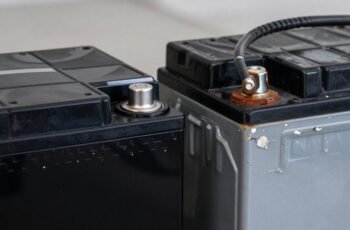
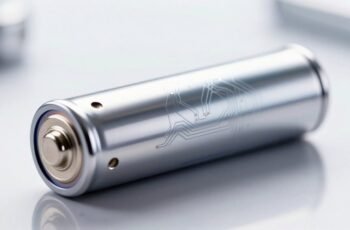
When we compare motorcycle lithium starter batteries, we should begin with fitment rather than headline capacity. We’ll verify dimensions, terminal polarity, mounting hardware, and cable reach before evaluating CCA, amp-hour capacity, reserve performance, and weight. We’ll also examine charging requirements, battery-management protection, cold-weather limitations, warranty coverage, and price. These specifications reveal whether a battery offers a genuine upgrade or simply creates compatibility and reliability risks under demanding conditions.
Key Takeaways
- Compare LiFePO₄ batteries by CCA, amp-hours, reserve capacity, and standardized testing conditions—not peak-current claims alone.
- Verify physical dimensions, terminal polarity, terminal placement, and mounting compatibility with your motorcycle’s battery compartment.
- Choose a lithium battery with a robust BMS protecting against overcharge, over-discharge, short circuits, and excessive temperature.
- Confirm your motorcycle’s regulator and charger support lithium batteries, typically requiring 14.2–14.6 volts for 12V LiFePO₄ batteries.
- Evaluate weight savings, cold-weather performance, expected lifespan, warranty coverage, self-discharge, and tolerance of parasitic electrical loads.
Compare the Best Motorcycle Lithium Batteries
To compare the best motorcycle lithium batteries, we’ll evaluate specifications that directly affect fit, starting performance, durability, and charging compatibility. We’ll prioritize rated capacity in ampere-hours, cold-cranking performance, and maximum continuous discharge, because these figures indicate how confidently each battery can start an engine under demanding conditions. We’ll also examine lithium-iron-phosphate (LiFePO₄) chemistry, internal battery-management systems, and low-temperature protection. A built-in management system should balance cells, prevent overcharge, and limit excessive discharge or current. Next, we’ll compare recharge limits, recommended charger profiles, and recovery behavior after deep discharge. Weight and stated service life provide useful efficiency and longevity benchmarks, while warranty coverage can reveal manufacturer confidence. Finally, we’ll distinguish independently verified specifications from marketing claims, giving you a more reliable basis for choosing performance, safety, and value.
Check Fit, Polarity, and Terminal Placement
We’ll confirm the battery’s dimensions against the motorcycle’s compartment and mounting specifications. We’ll match positive and negative terminal polarity to the factory wiring. We’ll also verify terminal placement, clearance, and cable reach before installation.
Confirm Battery Dimensions
Before ordering a motorcycle lithium starter battery, we’ll verify its length, width, height, terminal polarity, and terminal locations against the motorcycle’s battery tray and cable layout. We’ll compare the manufacturer’s measured case dimensions—not only the nominal battery code—with the available compartment space.
- Measure tray length, width, and depth, allowing clearance for walls, straps, foam pads, and cable routing.
- Confirm the battery’s stated height, including raised terminals, adapters, and any protective cover that could contact the seat or hold-down.
- Check terminal locations relative to the tray and cable reach, ensuring the case can sit fully down without forcing connectors or bending leads.
We’ll also inspect the retaining bracket’s travel and fastener alignment. A battery that fits the opening but exceeds height or leaves insufficient restraint can vibrate, shift, or suffer case damage during riding. Record every measurement in millimeters before comparing specifications.
Match Terminal Polarity
Once the dimensions are confirmed, we’ll match the lithium battery’s positive and negative terminal orientation to the motorcycle’s cable layout. Compare the battery’s polarity markings with the motorcycle’s positive and negative leads before making any connection. The positive cable must reach the positive terminal, while the negative cable must reach the negative terminal; reversing them can damage electronics, fuses, or the battery-management system. We’ll also confirm that the replacement uses the same polarity convention as the original battery, because case orientation doesn’t guarantee terminal polarity. Check the manufacturer’s specification sheet rather than relying solely on photographs or color coding. If the polarity doesn’t match, don’t compensate by crossing cables or forcing connections. Select a battery with compatible polarity, electrical specifications, and approved motorcycle application for safe installation.
Verify Terminal Placement
Verify that each terminal sits in the same position and has the same access clearance as the original battery. We should compare the lithium battery’s case dimensions, terminal offset, and cable reach before installation. Correct polarity alone doesn’t confirm mechanical compatibility; a reversed or shifted terminal can strain leads, contact the frame, or prevent secure fastening.
- Measure position: Record terminal distance from each case edge and compare it with the motorcycle battery specification.
- Check clearance: Confirm cables, hold-down hardware, and adjacent components won’t touch the terminals or case.
- Validate access: Ensure our tools can tighten both fasteners without forcing cables or removing unrelated components.
We should also inspect terminal height and thread type. If placement differs, use only manufacturer-approved adapters or spacers; never stretch cables, reverse connections, or modify the battery case. A precise fit supports reliable starting and reduces short-circuit risk.
Compare Cold-Cranking Amps for Fast Starts
Cold-cranking amps (CCA) indicate how much current a motorcycle lithium starter battery can deliver during a cold start, directly affecting cranking speed and ignition response. When comparing models, we should examine CCA ratings measured under the same testing standard; otherwise, headline figures may not be directly comparable. Higher CCA generally provides stronger starter-motor torque, particularly when oil thickens and combustion becomes less responsive. We should also distinguish rated CCA from peak or pulse current. CCA represents sustained output over a defined interval, while peak current describes brief bursts. Review the manufacturer’s test temperature, duration, and measurement conditions, then compare values with the motorcycle’s specified starting requirement. A battery with adequate reserve CCA should crank decisively without excessive voltage sag, reducing starter hesitation and improving ignition consistency in cold conditions.
Match Battery Capacity to Your Motorcycle
When we match battery capacity to your motorcycle, we should compare the battery’s amp-hour (Ah) rating and reserve capacity with the model’s specified electrical load and starting requirements. Capacity must support repeated starts, fuel-pump operation, lighting, and accessories without excessive voltage drop.
- We should verify the motorcycle’s required battery group size, terminal layout, polarity, and minimum Ah rating in the service manual.
- We should estimate accessory demand, including heated gear, auxiliary lamps, GPS units, and alarms, then select enough reserve capacity for realistic riding conditions.
- We should confirm the battery-management specifications: maximum charging current, acceptable voltage range, and compatibility with the motorcycle’s regulator-rectifier.
A higher Ah rating can improve operating margin, but physical dimensions, mounting restraints, and cable reach still control fitment. We shouldn’t select capacity by appearance alone; measured specifications must match the motorcycle’s electrical system.
Weigh Lithium Batteries Against Lead-Acid
Lithium starter batteries reduce weight and generally provide higher usable voltage than lead-acid units, but we should compare their specifications rather than assume a universal advantage. Check each battery’s amp-hour rating, cold-cranking amps, terminal layout, dimensions, and maximum charging current against the motorcycle’s requirements. Lithium chemistry typically delivers a flatter voltage curve and lower internal resistance, so the starter may spin faster under load. Its compact mass also eases installation and reduces total motorcycle weight. Lead-acid batteries remain broadly compatible with conventional charging systems and often provide greater tolerance for parasitic drains. We should verify that a lithium replacement includes an appropriate battery-management system and supports the bike’s regulator output. Compare stated capacities carefully: manufacturers may rate lithium amp-hours differently, while lead-acid ratings commonly assume a 20-hour discharge.
Review Lifespan, Warranty, and Reliability
We’ll assess expected service life using cycle count, storage conditions, temperature limits, and charging requirements. We’ll compare warranty duration, exclusions, replacement terms, and coverage conditions across lithium and lead-acid models. We’ll also examine long-term reliability factors, including battery-management protection, self-discharge, vibration resistance, and maintenance practices.
Battery Lifespan Expectations
A motorcycle lithium starter battery typically lasts 3–8 years, depending on cell quality, charging-system performance, storage conditions, temperature exposure, and discharge frequency. We assess useful life by tracking capacity retention, cold-cranking performance, and internal resistance rather than relying solely on calendar age. Proper voltage limits and balanced cells matter; an overcharging regulator can accelerate degradation, while prolonged low state-of-charge increases sulfation-like capacity loss at connected terminals.
- Premium cells: Often retain starting performance for five or more seasons under moderate cycling.
- Typical use: Expect roughly 500–1,000 effective cycles, depending on depth of discharge and recovery time.
- Storage: We disconnect parasitic loads and verify voltage periodically, especially below freezing.
We should also compare weight, reserve capacity, and self-discharge rate because these specifications influence practical reliability. Temperature extremes and repeated deep discharges shorten service life.
Warranty Coverage Comparison
How does warranty coverage compare with the 3–8-year lifespan we typically expect from a motorcycle lithium starter battery? Most manufacturers provide coverage for two to five years, so the warranty often protects only part of the battery’s expected service life. We should compare warranty duration, mileage or cycle limits, and replacement terms rather than treating every guarantee equally. Pro-rated coverage may reduce reimbursement as the battery ages, while a full replacement warranty offers stronger value during its stated period. We also need to verify exclusions for overcharging, deep discharge, freezing temperatures, incorrect installation, and racing use. Some brands require proof of purchase, registration, or return shipping. A longer warranty can indicate greater manufacturer confidence, but it doesn’t guarantee longer service. We should evaluate coverage alongside the battery’s stated lifespan and specifications.
Long-Term Reliability Factors
Long-term reliability depends on more than a battery’s advertised 3–8-year lifespan; we should assess its cycle rating, reserve capacity, thermal tolerance, battery-management system, and performance under repeated starting loads. A dependable model should retain capacity after seasonal storage, resist vibration, and deliver consistent cold-cranking current.
- Cycle life: Higher rated cycles indicate stronger durability, but verify testing conditions and depth of discharge.
- Protection: Overcharge, over-discharge, balancing, and temperature safeguards reduce cell degradation and failure risk.
- Warranty evidence: A longer warranty signals manufacturer confidence; examine prorated terms, replacement procedures, exclusions, and proof-of-purchase requirements.
We should also compare self-discharge rates and charging limits. Lithium batteries typically need compatible chargers and careful low-temperature charging. Track voltage, cranking performance, and capacity annually; these measurements reveal aging before a no-start event occurs.
Understand Lithium Battery Charging Needs
Charging a motorcycle lithium starter battery requires a lithium-compatible charger with the correct voltage profile, typically 14.2–14.6 V for a 12 V LiFePO₄ battery, because standard lead-acid chargers may apply unsuitable desulfation or equalization cycles. We should verify the charger’s absorption behavior, termination method, and maximum current against the battery manufacturer’s specifications. A charger designed for lithium chemistry generally uses constant-current/constant-voltage charging without prolonged float maintenance. For capacity comparison, a moderate rate around 0.5C is commonly appropriate, while the battery’s datasheet defines its allowable range. We’ll also confirm that the motorcycle’s regulator-rectifier maintains acceptable running voltage and doesn’t exceed the battery’s charging limit. Some batteries permit direct charging; others require a battery-management system or dedicated charging procedure. Matching these parameters supports consistent starting performance and service life.
Check Safety Features and Cold-Weather Limits
We’ll verify built-in protections such as overcharge, over-discharge, short-circuit, and thermal safeguards before installation. We’ll also compare the battery’s specified cold-cranking performance and minimum operating temperature with your motorcycle’s climate. If temperatures fall below those limits, we’ll account for reduced lithium-ion output and follow the manufacturer’s starting procedure.
Built-In Safety Protections
How well does a motorcycle lithium starter battery protect itself under abnormal conditions? We evaluate the battery-management system (BMS), not merely its advertised chemistry. A robust design monitors cell voltage, pack current, and temperature, then disconnects charging or load when readings exceed defined thresholds. We also verify whether protection resets automatically and whether the manufacturer specifies fault limits.
- Overcharge protection: The BMS should stop charging before any cell exceeds its maximum voltage, reducing swelling and thermal risk.
- Over-discharge protection: Load cutoff prevents damagingly low cell voltage, while balancing keeps individual cells within tolerance.
- Short-circuit and thermal protection: Fast electronic interruption limits fault current; temperature sensors can suspend charging or discharge during unsafe conditions.
We should also check fuse placement, sealed construction, and documented certifications. Clear specifications indicate engineered protection rather than marketing claims.
Cold-Weather Starting Limits
Cold temperatures reduce a motorcycle lithium starter battery’s available cranking current, so we assess its specified operating range, cold-cranking rating, and low-temperature cutoff behavior. We shouldn’t treat peak cranking amps as a winter guarantee; compare test conditions and duration. A battery-management system may block charging below freezing, protecting cells while leaving starting available, depending on design.
| Specification | What we check | Starting implication |
|---|---|---|
| Operating range | Minimum discharge temperature | Below-limit cranking may fall sharply |
| Cold-cranking rating | Temperature and test duration | Higher, comparable ratings indicate stronger starts |
| Low-temperature cutoff | Discharge and charge thresholds | Protection can prevent operation or charging |
Before riding, we’ll verify the manufacturer’s temperature limits and measure resting voltage. Preheating the battery, switching on the headlight briefly, then cranking can improve output, but it won’t override a cutoff. Use an approved charger, never force charging below its specified threshold, and select a battery whose winter rating matches your climate.
Compare Motorcycle Lithium Battery Prices
Motorcycle lithium starter battery prices typically range from about $80 to $300, with cost differences driven by cold-cranking amps (CCA), amp-hour capacity, battery dimensions, terminal configuration, brand, and included features such as a built-in battery management system or charge indicator. We should compare specifications rather than assuming the highest price indicates superior value.
Motorcycle lithium starter batteries cost $80–$300, with value determined by specifications and features—not price alone.
- Entry level, $80–$130: Often supplies moderate CCA, compact capacity, basic terminals, and limited documentation.
- Midrange, $130–$220: Commonly adds higher CCA, improved cell matching, clearer state-of-charge indicators, and stronger warranties.
- Premium, $220–$300: Typically combines high CCA, greater usable capacity, robust cases, integrated protection circuitry, and extensive warranty coverage.
We should also calculate cost per amp-hour and verify listed dimensions, polarity, terminal hardware, charger compatibility, and warranty exclusions. Shipping, core fees, and replacement chargers can materially increase the delivered price.
Choose the Right Battery for Your Riding Style
Choose a motorcycle lithium starter battery based on your riding conditions, not price alone. For daily commuting, we should prioritize reliable cold-cranking amps (CCA), adequate amp-hour capacity, and compatibility with frequent starts. A lightweight battery with moderate capacity may suit short rides, provided the charging system maintains correct voltage.
For touring, we’ll favor higher reserve capacity, vibration resistance, and a robust battery management system (BMS) that protects against overcharge, over-discharge, and thermal faults. Riders using heated gear or auxiliary electronics should verify alternator output and battery amp-hour ratings.
Track and performance riders can prioritize minimum weight and maximum CCA, but we must confirm terminal orientation, case dimensions, and discharge limits. In cold climates, we’ll select a model with documented low-temperature starting performance and follow the manufacturer’s warm-up procedure before cranking.
Frequently Asked Questions
Can Motorcycle Lithium Batteries Be Installed Upside Down or Mounted at an Angle?
Yes, we can install most motorcycle lithium batteries upside down or at an angle because they’re sealed and non-spillable. Verify the manufacturer’s orientation limits, secure the battery, and maintain terminal clearance for safety.
How Should You Dispose of an Old Motorcycle Lithium Battery Responsibly?
Dispose of your old motorcycle lithium battery through a certified battery recycler or hazardous-waste facility. We shouldn’t place it in household trash. Insulate terminals, prevent damage, and follow local transport and recycling regulations.
Will a Motorcycle Lithium Battery Trigger Compatibility Issues With Aftermarket Alarms?
Like a spark in dry grass, a motorcycle lithium battery can trigger aftermarket alarms if voltage thresholds, BMS cutoff behavior, or parasitic-load sensitivity mismatch. We’ll verify alarm specifications, charging voltage, and low-voltage protection.
Can Motorcycle Lithium Batteries Power Heated Gear and Additional Electrical Accessories?
Yes, we can power heated gear and accessories with a lithium battery, provided total wattage remains below the charging system’s surplus output. We’ll verify alternator capacity, fuse circuits, wiring gauge, and voltage compatibility carefully.
Are Motorcycle Lithium Batteries Allowed on Airplanes or During International Shipping?
We can’t generally carry motorcycle lithium batteries on passenger aircraft; IATA limits spare lithium-ion batteries to 160 Wh in carry-on luggage, while checked batteries are prohibited. International shipping requires UN 38.3 compliance, labeling, and carrier approval.
Conclusion
We’ve compared motorcycle lithium starter batteries by fit, polarity, terminal placement, CCA, capacity, weight, charging requirements, safety features, price, and cold-weather performance. Before choosing, we should verify the manufacturer’s specifications and confirm compatibility with our motorcycle’s charging system. Why risk a poor start or premature failure when a precise match is available? Let’s select the battery that suits our riding conditions, delivers sufficient starting current, and provides reliable, lightweight performance without compromising installation or safety.