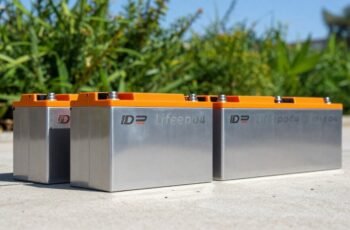
We can choose a LiPo that delivers explosive acceleration or one that provides longer, steadier flight—but the best pack depends on the airframe, power system, and mission. For racing, we’ll prioritize lightweight 6S packs with high discharge ratings; freestyle and long-range builds may benefit from greater capacity and controlled weight. We’ll compare voltage, capacity, C-rating, internal resistance, connectors, and charging practices so we can match performance with reliability.
Key Takeaways
- Choose 4S or 6S LiPo batteries compatible with your drone’s motors, ESCs, capacitors, and flight controller.
- Select capacity according to your build: 850–1500mAh for racing and freestyle, or 2500–4000mAh for long-range flights.
- Prioritize genuine discharge ratings and low internal resistance to minimize voltage sag during high-current throttle use.
- Choose the lightest battery meeting your power requirements, balancing flight time, acceleration, efficiency, and payload.
- Use quality connectors and balance charging, then inspect batteries for swelling, damage, overheating, and cell imbalance.
Best LiPo Batteries for FPV Drones
For FPV drones, we prioritize LiPo batteries by voltage compatibility, discharge capability, weight, and connector quality. We match cell count to the power system: 4S suits many 5-inch builds, while 6S provides higher voltage and lower current for comparable power. We verify the battery’s continuous discharge rating against measured or realistically estimated motor demand, rather than relying on inflated marketing figures. We also compare capacity with airframe mass; excessive capacity increases endurance only if the added weight doesn’t reduce efficiency. Low internal resistance supports stronger voltage retention, cooler operation, and more consistent thrust throughout a flight. We prefer secure XT30 or XT60 connectors, appropriate wire gauge, balanced cell performance, and durable heat-shrink protection. Before installation, we confirm dimensions, center-of-gravity effects, and charger compatibility to ensure reliable integration.
Best FPV LiPo for Racing Drones
Racing drones need LiPo packs optimized for high burst current, low mass, and minimal voltage sag rather than maximum capacity. We typically choose a 4S or 6S pack with a genuine high-C rating, low internal resistance, and durable leads. A 1300–1500 mAh 6S battery suits most five-inch racers; lighter 850–1100 mAh packs sharpen acceleration but reduce lap endurance. We should verify connector quality, balance performance, and measured—not advertised—capacity.
| Specification | Racing target | Performance effect |
|---|---|---|
| Cell count | 6S | Higher voltage, lower current |
| Capacity | 1000–1500 mAh | Balanced weight and runtime |
| Discharge rating | 100C+ verified | Strong throttle response |
Before racing, we’ll charge to storage voltage when idle, inspect swelling, and monitor voltage under load. Select the pack that keeps sag controlled through repeated gates, not merely the one with the largest label.
Best LiPo for Freestyle FPV Builds
When we tune for freestyle, we’ll choose a LiPo that balances punch, weight, and recovery after rapid throttle changes rather than maximizing peak discharge alone. For typical five-inch builds, we favor a 6S pack around 1,100–1,300mAh, with a genuine 75–120C rating and low internal resistance. That capacity supports repeated climbs, dives, and reversals without making the quad feel sluggish during snaps and rolls. A compact, lightweight case helps preserve rotational response, while durable leads and a secure connector tolerate hard landings. We’ll verify voltage sag under load, not rely solely on printed C ratings; excessive sag softens throttle response and increases heat. After each flight, we’ll check cell balance and temperature, then store the pack at approximately 3.8V per cell to protect cycle life and consistent performance.
Best LiPo for Long-Range FPV Flights
Although long-range flights prioritize endurance, we’ll choose a LiPo that preserves voltage stability without overloading the aircraft. A 4S 3000–4000mAh pack suits efficient cruisers, while a 6S 2500–3300mAh pack delivers lower current at equivalent power. We’ll prioritize high energy density, a genuine 30C rating, low internal resistance, and a robust connector. Keep battery mass near the manufacturer’s recommended center of gravity, and verify voltage sag under sustained cruise load.
| Pack choice | Best application |
|---|---|
| 4S 3000–4000mAh | Efficient, moderate-speed platforms |
| 6S 2500–3300mAh | Higher-voltage, lower-current builds |
We’ll select capacity after measuring cruise consumption: usable energy is roughly 80% of rated watt-hours, preserving a safe landing reserve. Balance charging, inspect leads, and secure the pack against vibration. A quality LiPo with consistent cells will outperform a heavier, higher-capacity battery that causes excessive throttle demand and reduces total range. Test endurance progressively in controlled conditions.
Best FPV LiPo for Cinematic Flying
For cinematic FPV, we prioritize LiPo packs that deliver smooth voltage under sustained, precise throttle inputs. We’ll compare lightweight flight packs that reduce all-up weight without sacrificing current capability or flight time. This balance helps you achieve stable footage, responsive handling, and efficient power use.
Smooth Voltage Delivery
Smooth voltage delivery gives cinematic FPV flights the controlled throttle response and stable camera performance they require. We achieve this with a LiPo whose cells maintain low internal resistance and consistent voltage under changing current demand. That stability keeps motors responding predictably during slow reveals, coordinated turns, and precise altitude adjustments. It also reduces voltage sag, preventing sudden throttle changes that can introduce vibration or disturb gimbal footage. We should select a pack with a suitable C-rating, matched cells, and reliable construction rather than relying on capacity alone. A quality battery maintains usable voltage across the discharge cycle, giving our flight controller and motors a more consistent electrical supply. We’ll obtain cleaner footage and more repeatable handling when we charge, balance, and store the pack correctly.
Lightweight Flight Packs
Consistent voltage matters most when our FPV LiPo stays light enough to preserve the drone’s thrust-to-weight ratio and agility. For cinematic flying, we favor compact packs that reduce inertia without sacrificing current delivery. A 4S or 6S pack with moderate capacity often balances smooth throttle response, flight time, and camera stability better than an oversized battery. We should compare energy density, discharge capability, connector resistance, and actual weight—not capacity alone.
| Pack choice | Cinematic priority |
|---|---|
| 4S 850–1100mAh | Smooth, lightweight builds |
| 6S 1000–1300mAh | Efficient high-voltage cruising |
| 70–100C rating | Adequate transient current |
| Soft-mounted pack | Reduced vibration transfer |
We’ll verify voltage sag under climb load, then tune throttle limits if necessary. A lighter LiPo also reduces motor demand, improving efficiency and extending usable airtime. Secure mounting remains essential: movement changes the center of gravity and destabilizes slow camera moves.
Choose the Right LiPo Voltage and Cell Count
We’ll match battery voltage to the motor and ESC specifications to maintain safe, efficient operation. Next, we’ll compare cell-count options, such as 4S, 6S, and higher, by evaluating voltage, current demand, thrust, and flight time. This approach helps you select a LiPo that delivers the required performance without overstressing the power system.
Match Voltage to Motors
To match a LiPo battery to your drone’s motors, we need to select a cell count that keeps the motor within its rated voltage range while delivering the required thrust and efficiency. First, verify the motor manufacturer’s maximum voltage and recommended cell rating. A 4S pack, for example, provides 14.8 V nominal and 16.8 V fully charged; a 6S pack provides 22.2 V nominal and 25.2 V fully charged. We must evaluate the fully charged voltage, not just the nominal figure, against the motor’s limits. Excess voltage can drive unsafe RPM, excessive current, overheating, and bearing stress. Insufficient voltage may prevent the motor from reaching target RPM under load. We should also confirm the ESC supports that voltage and that the motor’s KV rating suits the selected electrical operating point.
Compare Cell Count Options
When comparing LiPo cell counts, we should weigh voltage, current demand, motor KV, flight-time goals, and component limits as a system. A 4S pack supplies 14.8V nominally, offering predictable throttle response, moderate speed, and broad compatibility for many freestyle builds. Moving to 6S raises nominal voltage to 22.2V, reducing current for equivalent power and improving efficiency, cooling, and voltage stability under load. However, 6S demands suitable motors, ESC ratings, capacitors, and a flight controller power system; otherwise, overvoltage can cause immediate failure. We should choose motor KV inversely with cell count, typically using lower KV on 6S than 4S. Capacity and discharge rating also matter: higher voltage doesn’t guarantee longer flights. We should compare watt-hours, weight, and expected current, then verify every component’s maximum voltage before selecting the pack.
Match Battery Capacity to Flight Time
Matching battery capacity to flight time requires balancing usable energy against payload, efficiency, and reserve requirements. We estimate average current from motors, electronics, and accessories, then multiply it by the planned flight duration. Because we shouldn’t fully discharge a LiPo, we divide that requirement by the usable-capacity fraction, typically 0.8 to 0.85. For example, a 20-minute mission drawing 18 A needs about 6 Ah at 100% usage, or 7–7.5 Ah with a practical reserve. We then verify that the resulting pack fits the aircraft’s power system and mounting limits. Larger capacity can extend endurance, but its added mass increases thrust demand and energy consumption, creating diminishing returns. We should validate estimates with logged flights, measuring voltage sag, landing reserve, and actual consumption across the intended operating profile.
Compare LiPo Discharge Rates and Weight
We should compare a LiPo’s discharge rating with its mass because higher C ratings often add weight without improving performance beyond the aircraft’s actual current demand. We can estimate peak consumption from motor data, propeller choice, and the flight controller’s logged current, then select a pack whose practical continuous rating exceeds that load with a reasonable margin. Avoid treating the printed C value as absolute; manufacturers use different test methods, and voltage sag under load provides a more useful performance indicator. A heavier, high-C battery may deliver stronger burst response, but its mass increases thrust requirements, reducing efficiency and flight time. We should compare packs by watt-hours per gram, measured voltage stability, and resistance, not C rating alone. Choose the lightest battery that maintains voltage during full-throttle maneuvers without unnecessary reserve.
Check Connectors, Charging, and Battery Safety
After selecting the lightest pack that meets the aircraft’s current demand, we should verify its connector, charging system, and physical condition before flight. Confirm the main plug matches the aircraft’s polarity, pin arrangement, and expected current rating; an undersized connector adds resistance, voltage sag, and heat. Inspect solder joints, insulation, balance leads, and cells for cuts, swelling, leakage, or impact damage. We should charge LiPo packs only with a quality balance charger using the correct cell count and chemistry setting. Set the manufacturer’s recommended current, place the pack in a fire-resistant charging bag, and never leave it unattended. Store batteries at their specified storage voltage, isolated from conductive objects. After a flight, we should check temperature and puffing; discard damaged packs through an approved battery-recycling channel.
Frequently Asked Questions
Can Lipo Batteries Be Stored in Cold or Hot Environments?
We can store LiPo batteries briefly in cool, dry conditions, but not extreme cold or heat. Let’s maintain 40–60% charge, avoid freezing, and keep temperatures below 30°C during storage for safety.
How Should Damaged or Swollen Lipo Batteries Be Disposed Of?
Dispose of damaged or swollen LiPo batteries through a certified hazardous-waste facility or battery recycler. Don’t fly, charge, puncture, or transport them loosely; we’ll isolate terminals, use a fireproof container, and contact local authorities.
Do Lipo Batteries Lose Performance as They Age?
Yes, LiPo batteries lose performance as they age. We’ll see reduced capacity, higher internal resistance, weaker voltage recovery, and lower discharge capability. Heat, overcharging, deep discharges, and storage at full charge accelerate degradation considerably over time.
Can Lipo Batteries Be Transported Safely on Airplanes?
Yes, we can transport LiPo batteries safely by carrying them in cabin baggage, insulating terminals, preventing short circuits, and following airline watt-hour limits. We shouldn’t place spare batteries in checked luggage; verify carrier-specific requirements beforehand.
How Can I Identify Counterfeit or Mislabeled FPV Lipo Batteries?
A battery labeled 6S 1500mAh 100C may sag like a 50C pack, exposing counterfeiting. We’ll verify manufacturer codes, dimensions, weight, connector workmanship, cell resistance, voltage balance, and discharge-test results against specifications.
Conclusion
Choosing the best LiPo for an FPV drone means balancing voltage, capacity, discharge capability, weight, and safety—not simply selecting the highest C rating. We should match every pack to the power system and mission. For example, a 6S 1300 mAh pack can maximize a racing quad’s acceleration, while a 1500 mAh pack may extend a freestyle flight without excessive weight. By charging, storing, and inspecting batteries correctly, we’ll protect performance, equipment, and flight time.