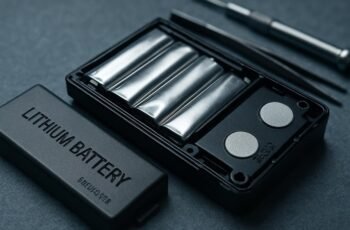
When we shop for cheap lithium polymer batteries online, we need to compare more than the headline price. We should verify voltage, capacity, C-rating, dimensions, connector type, seller history, and documented safety compliance. A low-cost pack may use inaccurate labels, aged cells, or inadequate protection, increasing performance and fire risks. We’ll examine how to compare listings, identify credible vendors, and determine whether shipping terms and test data support the apparent bargain.
Key Takeaways
- Compare prices using cost per watt-hour, including shipping, taxes, connectors, and hazardous-material fees.
- Verify voltage, capacity, dimensions, connector polarity, wire gauge, and C-rating match your device requirements.
- Choose sellers offering datasheets, batch numbers, manufacturing dates, safety certifications, warranties, and reliable return policies.
- Inspect reviews and product photos for swelling, damaged insulation, exposed conductors, poor packaging, or unsupported performance claims.
- Confirm safe shipping and storage practices, including insulated packaging, appropriate storage voltage, handling guidance, and inspection procedures.
Find Cheap Lithium Polymer Batteries Online
To find cheap lithium polymer batteries online, we compare more than the listed price: evaluate capacity in milliamp-hours, nominal voltage, continuous discharge rating, dimensions, connector type, minimum order quantity, shipping, and warranty. We record each seller’s unit cost, then calculate delivered cost per battery, including freight, taxes, and handling fees. Bulk pricing can reduce the unit price, but only when the order quantity matches our actual demand and storage limits. We filter vendors by datasheet quality, independent reviews, production dates, and documented safety testing. Clear photographs, labeled specifications, and responsive technical support provide stronger evidence than unusually low prices. We also check return policies and hazmat-shipping restrictions before purchasing. Comparing several marketplaces and manufacturer-direct listings helps us identify genuine discounts, avoid counterfeit cells, and select suppliers with consistent inventory and traceability.
Match Voltage, Capacity, and Battery Size
When we match a lithium polymer battery to a device, we verify voltage, capacity, and physical dimensions against the manufacturer’s requirements. We shouldn’t substitute nominal voltage casually: a 3.7-V cell reaches 4.2 V when fully charged, so the charger and protection circuit must support that range. Higher capacity can extend runtime, but it may increase mass, charge time, and enclosure volume. Measure length, width, thickness, connector position, and polarity before ordering.
| Parameter | Verification target |
|---|---|
| Voltage | Nominal and maximum charge values |
| Capacity | Required runtime and current demand |
| Dimensions | Measured enclosure clearance |
| Discharge rate | Peak and continuous current |
We should also confirm the battery’s C-rating: capacity multiplied by C-rating must exceed peak load current. Finally, we’ll check connector type, wire orientation, and protection features to prevent incompatible installation or unsafe charging.
Compare LiPo Battery Prices and Sellers
We’ll compare LiPo prices by normalizing cost against voltage, capacity, discharge rating, and included connectors. We’ll evaluate seller reliability through verified reviews, warranty terms, product specifications, and return policies. We’ll also check shipping costs, delivery estimates, battery-handling compliance, and regional restrictions before choosing an offer.
Compare Battery Prices
How much should a lithium polymer battery cost? We should compare prices by matching equivalent specifications, not by comparing headline numbers alone. Record each pack’s nominal voltage, capacity, cell count, discharge rating, dimensions, connector, and quantity. Then calculate cost per watt-hour: price ÷ (voltage × amp-hours). For example, a 3S, 2,200 mAh pack contains approximately 24.4 Wh; a $18 price equals $0.74 per Wh. We should also separate battery price from shipping, taxes, required connectors, and minimum-order quantities. Compare identical quantities and currency conversions, and examine tiered pricing for single units versus multipacks. A higher-capacity pack may cost more but deliver a lower cost per Wh. We should treat unusually low prices cautiously in our calculations, since incomplete specifications can make apparent savings misleading.
Evaluate Seller Reliability
After normalizing LiPo prices by watt-hour, we should assess whether each seller can reliably deliver the stated specifications and a safe, usable product. We can examine independent reviews, transaction volume, complaint patterns, and the seller’s response rate rather than relying on star ratings alone. Verify whether published capacity, discharge rating, dimensions, connector, and cell count match customer measurements and photographs. Consistent discrepancies suggest inflated specifications or weak quality control. We should also check manufacturing dates, batch identification, warranty terms, and return conditions; clear documentation indicates accountability. Seller longevity and traceable brand authorization provide additional confidence, while unusually low prices warrant stricter scrutiny. We can compare samples from multiple buyers and calculate the frequency of swelling, premature voltage sag, or capacity loss. A reliable seller demonstrates repeatable quality, transparent specifications, and responsive after-sales support.
Check Shipping Options
Shipping costs can materially change the effective price of a LiPo battery, so we should compare delivery options alongside the listed battery price. Calculate landed cost by adding postage, handling fees, taxes, and any hazardous-goods surcharge. Check whether sellers ship from domestic warehouses or overseas locations; transit time, customs delays, and tracking quality can materially affect value. Also verify packaging standards, because compliant terminals, insulation, and fire-resistant materials reduce transport risk.
| Factor | What to compare |
|---|---|
| Base freight | Economy, expedited, and per-order rates |
| Surcharges | Hazardous-goods, handling, and remote-area fees |
| Delivery performance | Estimated time, tracking, and carrier |
| Returns | Customer-paid shipping and battery restrictions |
We shouldn’t select the lowest sticker price automatically. For multiple packs, calculate total cost per watt-hour after shipping, then compare delivery promises and return terms. A slightly higher-priced domestic listing may provide lower landed cost, faster arrival, and simpler warranty resolution.
Check Connectors, C-Rating, and Compatibility
We’ll verify the battery’s connector type, polarity, and dimensions against your device before purchasing. We’ll also match the LiPo pack’s C-rating to the system’s continuous and peak current requirements. This compatibility check reduces connection errors, voltage stress, and premature battery failure.
Verify Connector Types
Verify the battery’s connector type, polarity, wire gauge, and C-rating before ordering to guarantee it matches your device and charger. We should compare the product listing with the equipment’s documented specifications, not rely on connector appearance alone. Identify the plug family, pin arrangement, contact spacing, and gender, then confirm whether the device requires an inline balance connector. A matching plug can still fail if polarity is reversed, so we should check voltage at the contacts with a multimeter when documentation is unclear. Measure wire gauge and lead length against the original pack; undersized conductors increase resistance and heating. We should also record the stated C-rating, capacity, and connector current rating for later compatibility evaluation. Reputable sellers provide photographs, dimensions, wiring diagrams, and test data rather than vague compatibility claims.
Match C-Rating Compatibility
Once the connector and wiring match, we should compare the battery’s continuous and burst C-ratings with the device’s measured current demand. Multiply capacity in amp-hours by each rating to calculate allowable continuous and peak current. For example, a 2.2 Ah, 30C pack theoretically supplies 66 A continuously, while a 50C burst rating permits 110 A briefly. We shouldn’t treat these figures as guaranteed performance: manufacturers may use inconsistent testing methods, and voltage sag, temperature, age, and wiring resistance reduce usable output. Choose a pack whose continuous rating exceeds the measured maximum by a practical margin, typically 20–30 percent. Confirm the device’s voltage range, cell count, and low-voltage cutoff, too. When buying cheap lithium polymer batteries online, we should verify the datasheet, connector polarity, and independent specifications before connecting.
Spot Quality and Safety Risks Before Buying
Before buying lithium polymer batteries online, we should assess specifications and seller evidence rather than rely on appearance or price. Verify nominal voltage, capacity, cell count, dimensions, connector polarity, and stated discharge ratings against our device’s requirements. Treat unsupported “maximum C” claims cautiously; a credible listing should identify test conditions, continuous and burst limits, and measurement standards. We should inspect photographs for swollen packs, torn insulation, exposed conductors, crushed corners, or poorly sealed tabs. Clear labeling should include chemistry, capacity, voltage, manufacturing or batch information, and appropriate warnings. Seller transparency matters: consistent specifications, traceable certifications, test reports, and technically specific answers indicate stronger quality control. We should also compare measured mass and dimensions with the stated capacity, since implausibly high energy density can signal mislabeling, recycled cells, or counterfeit products.
Review Shipping, Storage, and Return Policies
We should review the seller’s shipping, storage, and return policies because lithium polymer batteries can be damaged by improper handling, temperature extremes, or prolonged storage at full charge. Before ordering, we should verify these measurable details:
- Confirm protective packaging, terminal insulation, tracking, and a stated transit window; damaged or delayed parcels need documented procedures.
- Check whether the seller ships cells at storage voltage, typically about 3.7–3.85 volts per cell, rather than fully charged.
- Record temperature limits, humidity guidance, and maximum recommended storage duration, then confirm warehouse practices.
- Read return deadlines, inspection requirements, restocking fees, and hazardous-material restrictions before opening the package.
We should photograph the parcel and voltage readings immediately after delivery. A clear warranty should define remedies for swelling, leakage, shipping damage, or incorrect capacity. Don’t discard labels or packaging until testing confirms safe condition.
Choose the Best Cheap LiPo Battery Deal
How do we identify the best cheap LiPo battery deal without sacrificing safety or performance? We compare total cost, not just the advertised price. Calculate cost per watt-hour by multiplying nominal voltage by capacity, then divide the delivered price by that energy. Next, verify discharge capability: a 2,200 mAh, 30C pack theoretically supports 66 A, but we should treat manufacturer ratings cautiously and check independent reviews. Confirm cell count, dimensions, connector, wire gauge, and measured capacity match our equipment. We should prioritize sellers providing batch numbers, test data, clear safety instructions, and warranty coverage. Include shipping, taxes, balance leads, and replacement costs in the comparison. Avoid suspiciously cheap packs lacking specifications or showing damaged packaging. Finally, select the lowest verified cost that meets our current draw, runtime, and charging requirements.
Frequently Asked Questions
How Should I Charge a Lithium Polymer Battery Safely?
We should charge LiPo batteries with a compatible balance charger, correct cell count, and manufacturer-specified current. We’ll place them on a fire-resistant surface, monitor continuously, stop if swollen, hot, or damaged, and store safely.
Can Lipo Batteries Be Recycled After They Stop Working?
Yes, we can recycle LiPo batteries after they stop working; their cells aren’t dead ends. We should tape terminals, avoid puncturing or swelling packs, and deliver them to certified battery-recycling facilities, never household trash.
What Does Lipo Battery Puffing Mean?
LiPo battery puffing means gas has accumulated inside damaged cells, causing visible swelling. We should stop charging or using the pack immediately, isolate it safely, and arrange proper hazardous-waste recycling rather than puncturing it.
How Long Does a Typical Lithium Polymer Battery Last?
Typically, we’ll see a lithium-polymer battery deliver 300–500 charge cycles, or roughly two to five years. We’ll extend its life by avoiding deep discharges, heat, overcharging, and storage at full capacity.
Are Lithium Polymer Batteries Allowed on Airplanes?
Yes, we can bring lithium polymer batteries on airplanes, but limits apply: spare batteries must travel in carry-on baggage, terminals need protection, and batteries exceeding 100 watt-hours may require airline approval. Check current regulations.
Conclusion
We can find cheap lithium polymer batteries online without treating the lowest price like a scientific constant. Let’s verify voltage, capacity, dimensions, C-rating, connectors, certifications, seller reviews, and test data before clicking “buy.” A bargain that arrives swollen, mislabeled, or incompatible isn’t a bargain—it’s an expensive chemistry experiment. We should also compare shipping, storage, warranty, and returns. By weighing measurable specifications against credible evidence, we’ll choose affordable LiPo packs that perform safely, not merely impress spreadsheets.