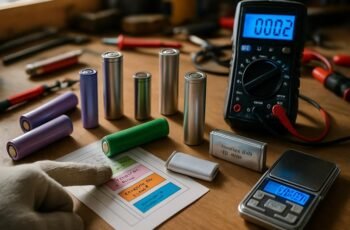
If we compare a Gens Ace, CNHL, Tattu, and SMC Racing pack under the same load, we’ll see that voltage sag, internal resistance, cycle life, and thermal stability separate strong brands from low-cost alternatives. We should also consider connector quality, cell matching, capacity accuracy, and manufacturer safety practices. Price matters, but verified specifications and consistent production often determine long-term value. So which brand best fits our RC car, drone, or racing setup?
Key Takeaways
- Gens Ace, SMC Racing, and CNHL are strong choices for RC cars due to stable voltage, low resistance, and durable construction.
- Tattu, CNHL, Gens Ace, and Thunder Power offer dependable drone batteries with strong current delivery and consistent cell matching.
- Choose racing batteries with low internal resistance, balanced cells, quality connectors, and reliable cycle-life performance.
- Value brands including Zeee and HRB can provide good performance when capacity, voltage retention, and warranty support are verified.
- Compare independent test results, measured capacity, voltage sag, temperature rise, and realistic C-ratings before purchasing.
Best LiPo Battery Brands at a Glance
Choosing a LiPo battery brand requires comparing measurable factors such as cell consistency, discharge performance, cycle life, safety features, quality control, and warranty support. We should treat “best” as a performance profile, not a universal ranking. Compare advertised capacity with measured capacity, voltage sag under a defined load, internal resistance, and balance drift across cycles. A credible brand publishes clear ratings, manufacturing specifications, and handling guidance rather than relying only on headline C-rates. We’ll also examine connector quality, insulation, cell matching, batch traceability, and documented failure procedures. For practical selection, we can weight each metric according to our application: racers may prioritize sustained current delivery, while endurance users may emphasize capacity retention and cycle life. This approach narrows choices objectively before purchase.
Top LiPo Brands for RC Cars
We’ll compare leading LiPo brands by measured power delivery, voltage stability, and discharge performance to identify the best overall options for RC cars. We’ll also examine capacity, energy density, and load efficiency to find batteries offering the longest runtime. Finally, we’ll assess cycle life, cell construction, and impact resistance to highlight durable racing batteries.
Best Overall Performance
Three LiPo brands consistently lead RC-car testing because they combine high voltage stability, low internal resistance, durable construction, and reliable cycle life: Gens Ace, SMC Racing, and CNHL. We see Gens Ace perform consistently across stock and modified platforms, with dependable voltage delivery and balanced cell matching. SMC Racing often distinguishes itself through exceptionally low resistance, producing sharper acceleration and less voltage sag under high-current loads. CNHL delivers competitive electrical performance while maintaining robust connectors, insulation, and packaging at comparatively accessible prices. When we compare packs, we should evaluate measured resistance, sustained discharge behavior, cell balance, and connector quality rather than relying solely on advertised C-ratings. We’ll also match voltage and discharge capability to the vehicle’s ESC and motor, because electrical compatibility determines whether each brand’s performance advantages translate into reliable, repeatable driving results.
Longest Runtime Options
For the longest runtime, we should look beyond peak discharge claims and compare usable capacity, voltage retention, and efficiency under the vehicle’s actual load. Brands such as Gens ace, Zeee, SMC Racing, and CNHL offer strong choices, but capacity and fit matter more than labels. A 5,000 mAh pack may deliver longer sessions than a 6,000 mAh model if its voltage sags less and its energy conversion stays efficient. We should compare watt-hours, calculated as nominal voltage multiplied by amp-hours, then verify results with identical gearing, tires, and driving conditions. Hardcase dimensions, connector resistance, and battery mass also affect practical runtime. For touring or trail driving, moderate-C-rate packs often provide the best energy-per-dollar balance. We should select the largest compatible pack without exceeding the vehicle’s weight or space limits.
Durable Racing Batteries
Durable racing batteries must withstand repeated high-current launches, hard landings, and rapid charge cycles without excessive voltage sag or swelling. We evaluate brands by cell consistency, discharge capability, connector quality, and cycle-life data—not advertised peak C-ratings alone. For RC cars, we favor packs with low internal resistance, reinforced leads, and accurate balance performance.
| Brand | Durability indicators |
|---|---|
| Gens Ace | Consistent cells, strong cases |
| CNHL | High output, reinforced wiring |
| SMC Racing | Low resistance, reliable balance |
| Zeee | Affordable, adequate cycle life |
We should match capacity and voltage to the vehicle’s ESC, then monitor pack temperature after each run. Staying below 60°C and charging at manufacturer-rated current reduces degradation. Hard cases add impact protection, while quality balance boards help prevent cell drift. Although premium packs cost more, stable voltage and longer service life can lower cost per race.
Best LiPo Brands for Drones
When choosing the best LiPo brands for drones, we evaluate more than advertised capacity: voltage stability, continuous-discharge accuracy, internal resistance, cell matching, cycle life, and build quality determine real-world performance. We prioritize manufacturers that publish test data and maintain consistent production standards across batches.
The best drone LiPo brands deliver consistent voltage, accurate discharge performance, matched cells, and dependable build quality—not merely impressive capacity claims.
- Tattu: Strong cell matching and reliable high-current delivery suit freestyle and long-range platforms.
- CNHL: Broad drone-specific configurations, accurate specifications, and stable voltage under load support demanding builds.
- Gens Ace: Consistent construction and predictable discharge behavior benefit pilots who monitor telemetry.
- Thunder Power: Low internal resistance and tight manufacturing tolerances favor efficiency-focused, competition-oriented setups.
We still verify each pack with a charger, checking measured capacity, resistance, and voltage sag before flight. Match the brand’s cell count, connector, dimensions, and genuine continuous-current rating to your drone’s power system, rather than relying on burst claims or label-only specifications.
LiPo Brands With the Best Value
Value isn’t determined by the lowest sticker price; we compare usable capacity, voltage retention, cycle life, internal resistance, and warranty support against each pack’s cost. Among mainstream options, Gens Ace, CNHL, Zeee, and HRB often deliver strong cost-per-watt-hour results, though the best choice depends on application and discharge demand. We calculate value by dividing purchase price by measured usable energy, then adjust for voltage sag and expected cycle count. CNHL frequently competes well for high-current packs, while Gens Ace tends to justify a modest premium with consistent specifications. Zeee and HRB can reduce entry cost, but we recommend checking independent capacity tests because batch variation affects effective value. Compare connector quality, cell matching, storage voltage, and return policies before buying; a cheaper pack isn’t economical if its measured performance falls short.
Most Reliable LiPo Battery Brands
For reliability, we rank LiPo brands by cycle-life retention, cell-to-cell balance, internal-resistance growth, voltage stability, and warranty consistency—not initial performance alone. We favor manufacturers that publish repeatable test results and maintain tight production tolerances across batches. In our comparisons, premium brands typically preserve usable capacity longer, show slower resistance increases, and maintain closer cell voltage under load.
- Gens Ace: Consistent balance and dependable high-current output.
- Tattu: Strong cycle-life data and robust quality control.
- SMC Racing: Low resistance with reliable batch-to-batch performance.
- Turnigy Graphene: Competitive longevity when charging and storage practices remain controlled.
No brand eliminates degradation: heat, over-discharge, excessive charge rates, and physical damage accelerate failure. We therefore judge reliability through measured aging trends, not marketing claims or one impressive discharge test. Warranty responsiveness also matters, because consistent support can identify manufacturing defects before they become safety problems.
How to Choose the Right LiPo Brand
We’ll match battery capacity to your device’s runtime demands and verify that the pack’s discharge rating supports its peak current draw. We’ll also compare independent test data, cycle-life results, and consistency across production batches. Finally, we’ll assess each brand’s quality standards, including cell grading, manufacturing controls, safety documentation, and warranty coverage.
Battery Capacity Needs
How much LiPo capacity you need depends on your model’s current draw, flight or runtime target, and weight limit—not simply the brand name. We should estimate energy requirements before comparing manufacturers. Multiply average current by desired operating time to calculate amp-hours, then select the nearest practical capacity while reserving a safety margin. Higher capacity usually increases mass, which can raise power consumption and reduce handling efficiency.
- Measure or estimate average current under realistic conditions.
- Convert runtime goals into amp-hours: amperes × hours.
- Compare pack weight with the model’s maximum takeoff limit.
- Validate dimensions, connector placement, and compartment clearance.
We should compare equivalent capacities across brands; a 2,200mAh pack isn’t directly comparable with a 5,000mAh pack. Check manufacturer specifications, weigh complete packs, and prioritize consistent, verifiable capacity measurements. Choose the lightest pack that meets our calculated runtime without exceeding the model’s balance or structural constraints.
Discharge Rate Ratings
Capacity determines how long our model can run, while discharge-rate ratings determine whether the pack can safely supply the required current. We should estimate peak amperage from the motor, electronic speed controller, propeller or gearing, and operating conditions, then choose a pack whose continuous rating exceeds that demand. Manufacturers calculate continuous current as capacity in amp-hours multiplied by the C rating. For example, a 5,000 mAh (5 Ah) battery labeled 50C theoretically supplies 250 A continuously. However, ratings aren’t standardized, and some brands state optimistic burst figures rather than usable continuous output. We should compare independent testing, voltage sag, temperature rise, and sustained-current results when available. A modest safety margin—often 20–30% above measured peak demand—reduces stress. Matching cell count, connector capability, and wiring also prevents discharge limits from shifting elsewhere.
Brand Quality Standards
A reliable LiPo brand should support its printed ratings with consistent cell matching, low internal resistance, accurate capacity, and repeatable discharge performance. When we compare brands, we should evaluate published specifications against independent tests, not marketing claims alone. Look for transparent test conditions, warranty terms, batch traceability, and safety documentation.
- Cell balance: Voltage variation should remain minimal after charging and under load.
- Resistance data: Matched cells should show similar milliohm readings, limiting heat and voltage sag.
- Capacity verification: Measured amp-hours should closely approach the labeled value at a stated discharge rate.
- Quality control: Brands should document inspection, storage voltage, connector installation, and cycle testing.
We should also examine user data across multiple batches. A reputable manufacturer acknowledges tolerance limits, provides realistic C-ratings, and maintains consistent performance over time. These standards help us choose predictable, safer packs.
Which LiPo Battery Brand Should You Buy?
When choosing a LiPo battery brand, we should prioritize verified electrical performance, manufacturing consistency, safety controls, and independent test data over marketing claims. Compare measured voltage sag, capacity retention, internal resistance, and cycle life at our intended discharge rate. Also verify connector quality, cell balancing, warranty terms, and traceability.
| Evaluation factor | What we should verify | Buying implication |
|---|---|---|
| Capacity accuracy | Measured mAh versus rating | Reject inflated specifications |
| Discharge performance | Sustained current and voltage sag | Match demanding applications |
| Safety controls | Quality cells, insulation, protection | Reduce failure risk |
| Consistency | Results across multiple packs | Favor dependable manufacturing |
We should select the brand that performs consistently in independent tests, not necessarily the one advertising the highest C-rating. For racing, prioritize low resistance; for endurance, prioritize tested capacity and thermal stability. Always choose an appropriate charger, storage voltage, and battery size.
Frequently Asked Questions
How Should Lipo Batteries Be Stored Safely Between Uses?
Store LiPo batteries at 3.7–3.85 volts per cell, inside a LiPo-safe container, in a cool, dry, fire-resistant location. We’ll disconnect them, prevent terminal contact, inspect regularly, and never store damaged, swollen, or leaking packs.
What Is the Proper Way to Charge a Lipo Battery?
We charge LiPo batteries with a balance charger matched to cell count and chemistry. We inspect cells, set manufacturer-recommended current, secure the pack in a fire-resistant container, and never leave charging unattended.
How Can You Tell When a Lipo Battery Is Damaged?
Better safe than sorry: we inspect LiPo batteries for swelling, punctures, leaks, crushed cells, corrosion, or unusual heat. We’ll measure cell voltages; imbalance exceeding 0.1 volts signals potential damage. Stop using damaged packs immediately.
How Long Do Lipo Batteries Typically Last?
LiPo batteries typically last 150–300 charge cycles, or roughly one to three years with proper storage, balanced charging, and moderate discharge. We’ll extend service life by avoiding heat, overcharging, and deep discharges.
Can Lipo Batteries Be Recycled After They Fail?
Yes, we can recycle failed LiPo batteries. Think of them as spent reservoirs: don’t place them in household trash. We should insulate terminals, prevent punctures, and deliver them to certified battery-recycling facilities for material recovery.
Conclusion
Choosing the best LiPo brand comes down to matching specifications with our application. Gens Ace, CNHL, Tattu, and SMC Racing consistently deliver low resistance, stable voltage, and dependable cycle life. Although premium packs may make our wallets a little lighter, their verified ratings and stronger quality control can prevent costly surprises. We should compare capacity, C-rating, cell count, dimensions, connectors, and user data before buying. The right brand gives us safer, more consistent performance every run.