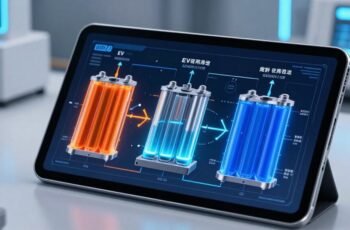
A 48V e-bike battery’s voltage rating alone doesn’t determine its range; usable watt-hours, discharge limits, and controller compatibility matter just as much. We’ll compare capacity, cell chemistry, lifespan, weight, mounting, charging requirements, BMS protection, weather resistance, price, and warranty coverage. By matching these specifications to our motor and riding conditions, we can avoid premature wear, unsafe operation, and disappointing range—but the best choice depends on trade-offs that aren’t obvious at first glance.
Key Takeaways
- Compare capacity in Ah and usable Wh; larger 48V packs generally provide longer range but add weight, size, and cost.
- Check continuous and peak discharge ratings against the controller’s demands, especially during acceleration, hills, and startup.
- NMC batteries offer higher energy density, while LiFePO₄ packs typically provide greater thermal stability and cycle life.
- Verify BMS protections, IP-rated enclosure quality, connector compatibility, dimensions, mounting security, and weather resistance.
- Compare charging time, certified charger compatibility, warranty coverage, cycle-life claims, and cost per usable watt-hour.
Compare 48V E-Bike Battery Capacity and Range
A 48V e-bike battery’s capacity, measured in amp-hours (Ah), determines its stored energy and strongly affects range: a 48V 10Ah pack stores about 480Wh, while a 48V 20Ah pack stores about 960Wh. We can estimate range by dividing watt-hours by average consumption; for example, at 20Wh per mile, those batteries theoretically provide 24 and 48 miles. Real results vary with rider weight, terrain, wind, tire pressure, temperature, speed, and stop-and-go traffic. We should treat manufacturer range claims as controlled-condition estimates, not guarantees. Larger-capacity packs generally weigh more, occupy more frame space, and cost more, so we should compare usable energy, mounting constraints, and carrying needs. We also shouldn’t routinely discharge a lithium pack completely. Following the battery maker’s charging, storage, and temperature guidance helps preserve capacity and reduces safety risks.
Match 48V Battery Output to Your Motor
To match a 48V battery to your motor, we should compare the battery’s continuous and peak current ratings with the controller’s demands, not just its voltage. A 500W motor may draw roughly 10–15A at nominal load, while acceleration, hills, and low-speed operation can demand considerably more. We should therefore check the controller’s maximum battery current and choose a pack whose continuous rating meets or exceeds it, with sufficient peak capability for brief surges. Undersizing the battery can cause voltage sag, premature BMS cutoff, heat buildup, and reduced performance. We should also verify connector, fuse, and wiring ratings, then confirm that the BMS permits the controller’s startup current. Don’t assume a higher amp-hour rating means higher output; capacity and discharge capability describe different limits. Follow the manufacturer’s specifications.
Weigh Lithium-Ion Cell Types and Lifespan
Once the pack meets the controller’s current demands, we should compare the cell chemistry and construction because they affect weight, usable capacity, safety, and service life. Nickel-manganese-cobalt (NMC) cells typically provide high energy density, so they can deliver strong range from a compact pack. However, their greater thermal sensitivity makes quality control, insulation, and a reliable battery-management system essential. Lithium iron phosphate (LiFePO₄) cells generally offer lower energy density but better thermal stability and considerably more charge cycles when operated within specified limits. Pouch, cylindrical, and prismatic formats also differ in cooling behavior, mechanical protection, and resistance to vibration. We should check the manufacturer’s cycle-life test conditions, continuous-current rating, temperature limits, and warranty rather than trusting chemistry labels alone. Proper charging and storage still determine whether either type reaches its expected lifespan.
Check Battery Size, Weight, and Mounting Style
Before comparing prices, we should verify that each battery’s dimensions, mass, and mounting interface suit the e-bike’s frame and handling characteristics. We should measure the available compartment, including clearance for cables, suspension movement, and protective covers. A pack that barely fits may rub, shift, or become impossible to remove safely.
Next, we should compare total mass and its position on the bicycle. A heavier battery mounted high or far rearward can increase steering effort, reduce stability, and overload the rack or seat tube. We should confirm the frame’s rated capacity rather than assume it can support the pack.
Finally, we should inspect the mounting system. Rails, straps, and brackets must resist vibration and impact without flexing. We should verify secure locking, proper fastener engagement, and compatibility with the frame before riding, especially on rough surfaces or during hard braking.
Compare Charging Time and Charger Options
We’ll compare standard charging times to identify how quickly each e-bike battery pack can safely recharge. We’ll also assess fast-charger options, weighing reduced charging duration against increased heat and battery stress. Before choosing a charger, we’ll verify voltage, current, connector type, and manufacturer compatibility.
Standard Charging Times
Charging time depends primarily on battery capacity, charger output, and the battery’s charge-management system. We estimate hours by dividing watt-hours by charger watts, then adding roughly 10–20% for tapering and conversion losses. For example, a 48V, 15Ah pack stores about 720Wh; a 2A charger typically needs 7–9 hours, while a 3A unit usually requires 5–7 hours.
| Pack capacity | Typical charger | Approximate time |
|---|---|---|
| 10Ah (480Wh) | 2A | 5–6 hours |
| 15Ah (720Wh) | 2A | 7–9 hours |
We should use the charger specified for the battery’s voltage and connector, verify polarity, and charge on a nonflammable surface with ventilation. The battery-management system may reduce current near full charge, so the final portion takes longer. We shouldn’t charge a damaged, hot, wet, or unattended pack, and we should confirm the manufacturer’s rated charging temperature before connecting it.
Fast Charger Options
How quickly can we recharge an e-bike battery without compromising its lifespan or safety? Fast chargers reduce downtime by delivering higher current than standard units, but charging speed depends on battery capacity, state of charge, and the battery-management system. For a 48V pack, a standard 2A charger commonly needs 6–10 hours, while a 4A charger may reduce that to roughly 3–5 hours. Some 5A options shorten charging further, yet they generate more heat and can accelerate cell aging when used continuously. We should compare chargers by rated output, thermal controls, efficiency, and manufacturer-approved charging limits. Smart chargers that taper current near full charge help control heat and prevent overcharging. We’ll gain the best balance by reserving maximum-current charging for urgent trips and using moderate rates for routine charging.
Charger Compatibility Considerations
Before comparing charging times, we should confirm that the charger’s voltage, connector polarity, plug size, and charging profile match the e-bike battery and its battery-management system. For a 48V lithium pack, we typically need a 54.6V charger; a different output voltage can prevent charging or create a fire hazard. We should also verify the battery’s specified maximum charge current. A 2A charger generally charges more slowly but produces less thermal stress than a 4A or 5A fast charger. To estimate time, divide battery capacity in amp-hours by charger current, then add roughly 10–20% for the constant-voltage phase. We shouldn’t rely on physical fit alone: incompatible connectors or polarity can damage electronics. Use the manufacturer-approved charger, inspect cables regularly, and charge on a nonflammable surface while monitoring unusual heat or swelling.
Look for BMS Safety and Weather Protection
We should verify that the battery’s BMS provides overcharge, over-discharge, overcurrent, short-circuit, and temperature protection. We’ll also check the enclosure’s weather-resistance rating, such as IP65 or higher, to assess protection from dust and water. These safeguards help us compare battery reliability under real riding conditions.
BMS Safety Features
A reliable battery management system (BMS) protects an e-bike lithium battery by monitoring cell voltage, temperature, current, and charge balance in real time. We should compare whether each 48V pack includes these safeguards and resets safely after a fault.
| BMS feature | Safety function |
|---|---|
| Overcharge cutoff | Stops charging above limits |
| Over-discharge cutoff | Prevents damaging cell depletion |
| Overcurrent protection | Interrupts excessive load |
| Thermal monitoring | Disconnects during overheating |
Cell balancing keeps individual cells within a narrow voltage range, reducing stress and preserving usable capacity. Short-circuit protection should react quickly without nuisance trips during normal acceleration. We’ll also check whether the BMS limits charging and discharging independently, since a pack may remain safe under one condition but unsafe under another. Prefer documented thresholds, temperature-sensor placement, and recovery behavior over vague “smart BMS” claims. These features help us assess real electrical protection, not marketing labels, when comparing packs.
Weather Protection Ratings
When comparing e-bike lithium battery packs, we should treat weather protection as a safety specification, not a convenience feature. An IP rating indicates resistance to solids and water, but it doesn’t guarantee safe operation after immersion, impact, or connector damage. We should verify the manufacturer’s test conditions and installation limits.
- Target rating: Choose at least IP54 for commuting; IP65 offers stronger protection against dust and water jets.
- Inspect sealing: Check gaskets, cable exits, charging ports, and case fasteners. A poorly sealed interface can defeat a high rating.
- Protect charging: We shouldn’t charge a wet or cold-soaked pack. Dry connectors fully, keep the port covered, and follow the BMS temperature limits.
Weather protection complements BMS safeguards. While the BMS manages overcurrent, overcharge, and temperature faults, proper enclosure design helps prevent moisture-driven shorts, corrosion, and unreliable protection.
Compare 48V Battery Prices and Warranty Coverage
Comparing 48V e-bike battery prices requires more than checking the upfront cost: we should evaluate watt-hours, cell quality, battery-management protections, charger certification, and warranty coverage together. A cheaper pack may provide fewer usable watt-hours, lower-grade cells, or minimal protection against overcharge, over-discharge, short circuits, and overheating. We should calculate cost per usable watt-hour rather than comparing sticker prices alone. Warranty terms also deserve close examination. We’ll check coverage length, cycle or mileage limits, excluded damage, shipping responsibility, and whether the manufacturer requires authorized installation. A meaningful warranty should address premature capacity loss and manufacturing defects, not merely replace visibly damaged parts. We should retain purchase records and follow charging instructions, since misuse can void coverage. Clear safety certifications and responsive support can justify a higher price without implying that every expensive battery performs better.
Choose the Best 48V E-Bike Battery for You
Which 48V e-bike battery suits us best depends on matching its voltage, capacity, discharge rating, dimensions, connector, and mounting system to our bike and riding demands. We should confirm controller compatibility before installation, because excessive current can overheat wiring or damage components.
- Range: We’ll estimate watt-hours by multiplying 48V by amp-hours, then compare that figure with our route, terrain, rider weight, and temperature. Higher capacity adds range but also weight and cost.
- Performance: We should select a battery whose continuous and peak discharge ratings meet the controller’s requirements without operating at its limit.
- Safety and fit: We’ll choose a certified pack with a battery-management system, secure locking hardware, protected terminals, and the correct charger. We shouldn’t modify connectors or charge unattended. After installation, we’ll inspect cables, verify polarity, and test braking and mounting security before riding.
Frequently Asked Questions
Can I Install a 48V Battery on Any E-Bike Frame?
No, we can’t install a 48V battery on every e-bike frame. We must verify controller voltage, motor compatibility, mounting dimensions, connector polarity, battery-management protection, wiring capacity, charger specification, and secure, weather-resistant attachment first.
How Should I Store a 48V Lithium Battery During Winter?
Store your 48V lithium battery cool, clean, and charged to 40–60%. We’ll remove it from the bike, prevent freezing, avoid moisture, inspect regularly, and keep terminals covered, away from heat, flames, children, and metal objects.
Can I Fly or Ship a 48V E-Bike Battery?
You generally can’t fly with a 48V e-bike battery in passenger baggage; airlines restrict lithium batteries above 160Wh. We’ll ship it only through certified carriers, declaring watt-hours, protecting terminals, and following dangerous-goods regulations.
How Do I Dispose of an Old 48V Battery Safely?
Like a medieval quest, we’ll dispose of your old battery through certified lithium-battery recycling, never trash or curbside bins. Don’t puncture, disassemble, or incinerate it; tape terminals, isolate damage, and contact local authorities.
What Signs Indicate a 48V Battery Needs Professional Replacement?
We recognize replacement needs when your 48V battery swells, leaks, overheats, smells chemical, loses capacity rapidly, shuts down unexpectedly, or shows physical damage. We’ll stop using it, isolate it safely, and consult professionals.
Conclusion
We’ve compared 48V e-bike batteries by capacity, output, chemistry, size, charging, safety, price, and warranty. We shouldn’t choose the largest pack automatically: we need enough watt-hours for our routes while confirming voltage, current, connector, and mounting compatibility. A quality BMS, suitable charger, weather protection, and credible warranty matter more than flashy specifications. By balancing range, weight, lifespan, and cost, we can select a dependable battery—the safest upgrade imaginable—for our motor and riding conditions.