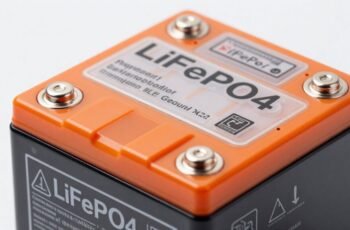
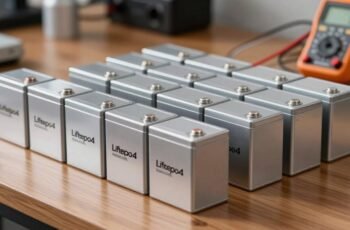
Finding the right LiFePO4 battery can feel like the difference between a dependable power system and an expensive failure. We should compare manufacturer stores, specialty battery retailers, major marketplaces, and local RV or solar dealers before we buy. Seller credentials, warranties, datasheets, BMS specifications, certifications, and system compatibility all matter. Prices alone can mislead us, especially when counterfeit cells or weak support remain hidden—so the next step is knowing which checks separate a genuine battery from a risky listing.
Key Takeaways
- Buy LiFePO4 batteries from established marketplaces, manufacturer websites, specialty battery retailers, or reputable local RV and solar dealers.
- Verify the seller’s reputation, warranty terms, return policy, technical support, business address, and independent customer reviews.
- Request documentation confirming specifications, including capacity, BMS limits, certifications, cycle-life testing, and safety standards such as UN 38.3 or UL.
- Confirm compatibility with your inverter, charger, system voltage, current demands, dimensions, terminals, temperature limits, and required usable capacity.
- Compare total ownership costs, including shipping, installation, support, warranty service, expected lifespan, and potential return or replacement expenses.
Where to Buy LiFePO4 Batteries Online
Where can we buy reliable LiFePO4 batteries online? We should begin with established e-commerce platforms that publish complete electrical specifications, certifications, warranty terms, and safety documentation. Reliable listings identify nominal voltage, amp-hour capacity, continuous and peak discharge ratings, operating-temperature limits, cycle-life testing conditions, and integrated battery-management-system protections. We should also verify whether the stated capacity reflects tested results, rather than marketing estimates, and confirm compatibility with our charger, inverter, and installation environment. Look for traceable product identifiers, clear shipping policies, and accessible technical support before ordering. Customer feedback can reveal recurring defects, but we should weigh it against documented test data. We shouldn’t select solely by price; inadequate cells, weak protection circuits, or poor quality control can create premature failure and safety risks during use.
Compare Manufacturer and Specialty Battery Stores
When comparing manufacturer websites with specialty battery stores, we should evaluate more than listed price and capacity. Manufacturer sites typically provide authoritative cell specifications, battery-management-system details, test documentation, warranty terms, and application guidance. They’re often the strongest source for confirming nominal voltage, continuous and peak current limits, operating temperatures, cycle-life conditions, and certifications.
Specialty stores can add practical value through curated product lines, technical support, system-level compatibility advice, and accessories such as chargers, cables, fuses, and monitoring equipment. We should assess whether staff can explain installation requirements and resolve warranty claims efficiently. Compare shipping methods, return windows, replacement policies, and documentation quality, not merely discounts. We should also verify that advertised ratings reflect test conditions and that the seller identifies the actual manufacturer. This approach reduces compatibility, safety, and service risks.
Find LiFePO4 Batteries on Major Marketplaces
We can find LiFePO4 batteries on Amazon, where broad inventory and customer reviews support initial product comparisons. Walmart also offers battery options through its online marketplace and selected retail channels. We should verify cell chemistry, capacity, certifications, warranty terms, and seller reputation before purchasing.
Amazon LiFePO4 Batteries
Amazon offers a broad selection of LiFePO4 batteries, making it convenient to compare capacities, form factors, brands, prices, and customer feedback in one marketplace. We should evaluate each listing beyond headline specifications, because quality and compatibility vary substantially among sellers.
- Confirm nominal voltage, amp-hour capacity, and usable energy.
- Check continuous and peak discharge ratings for our application.
- Verify integrated battery-management-system protections and low-temperature charging limits.
- Review warranty terms, certifications, seller history, and independent feedback.
We should also inspect product photographs and manuals for terminal type, enclosure dimensions, communication ports, and included hardware. Amazon’s search filters can narrow chemistry, capacity, and voltage, but they don’t validate advertised performance. We’ll gain better confidence by comparing cycle-life testing, charge parameters, and datasheet consistency across listings. Before ordering, we should confirm return conditions and verify the battery suits our charger, inverter, wiring, and installation environment.
Walmart Battery Options
Walmart can be a practical source for LiFePO4 batteries, but we shouldn’t treat marketplace availability as proof of quality or compatibility. We should verify chemistry, nominal voltage, capacity, continuous current, dimensions, and warranty before purchasing. Marketplace listings may combine multiple sellers, so we’ll inspect manufacturer documentation, certifications, return terms, and reviews that identify actual model numbers. For RV, solar, and backup systems, we must confirm the battery-management system supports required charging temperatures and inverter loads.
| Check | What we verify | Why it matters |
|---|---|---|
| Chemistry | LiFePO4, not lithium-ion | Prevents unsafe substitution |
| Electrical | Voltage, amp-hours, current | Ensures system compatibility |
| Seller | Warranty, returns, documentation | Reduces purchasing risk |
We’ll also compare Walmart’s delivered price with established battery suppliers; a lower price may reflect weaker cells, limited support, or missing test data. Use verified specifications—not search ranking—to select confidently.
Choose Local RV and Solar Dealers
When we choose local RV and solar dealers, we gain access to LiFePO4 battery expertise, installation support, and service after the sale. We can discuss system voltage, usable capacity, charging requirements, and physical fit with technicians who understand mobile and off-grid applications. Local purchasing also simplifies transportation, commissioning, and warranty communication.
Before we commit, we should ask whether the dealer provides:
Ask dealers about system assessments, compatibility checks, installation, configuration, troubleshooting, maintenance, and warranty support.
- Load and energy-use calculations
- Compatibility checks for inverters, chargers, and solar controllers
- Professional installation and configuration
- Troubleshooting, maintenance, and warranty assistance
We’ll benefit from seeing battery systems in person, confirming connector arrangements, and receiving guidance tailored to our RV or solar array. A dealer that documents the installation and explains monitoring procedures adds practical value. Compare labor charges, delivery timelines, return policies, and service coverage so the purchase supports reliable long-term operation.
Check Battery Quality Before You Buy
After a local dealer helps us match the battery to our system, we should verify its quality before paying. We’ll request the manufacturer’s datasheet and confirm nominal voltage, usable capacity, continuous and peak current limits, operating temperatures, and cycle-life testing conditions. The battery management system should provide protection against overcharge, overdischarge, excessive current, and temperature extremes. We should inspect the enclosure, terminals, seals, labels, and cable sizing for physical defects or undersized components. A reputable unit includes traceable model and serial numbers, documented cell chemistry, safety certifications relevant to our region, and clear installation instructions. We’ll also ask whether the dealer can provide test results or a capacity-verification report for the specific battery. If specifications remain vague or inconsistent, we shouldn’t purchase it.
Compare LiFePO4 Battery Prices and Warranties
We’ll compare LiFePO4 battery prices by evaluating total value rather than the upfront figure alone. We should calculate cost per usable amp-hour, include shipping, and assess expected service life. A cheaper pack may cost more if its warranty is shorter or excludes critical components.
- Compare cost per usable amp-hour, not advertised capacity alone.
- Check warranty length, coverage limits, and replacement procedures.
- Identify prorated versus full-replacement warranty terms.
- Confirm whether labor, shipping, and diagnostic fees are included.
We’ll favor suppliers that publish clear warranty exclusions and provide responsive support. Pay attention to cycle or calendar-life conditions, because warranty coverage may depend on operating limits and documented maintenance. A longer warranty has greater value when the seller remains established and honors claims efficiently. We should also compare return windows, restocking charges, and replacement timelines before ordering. This approach reveals the battery’s realistic ownership cost, not merely its purchase price, helping us select dependable value.
Verify Capacity, BMS, and Safety Certifications
Before comparing listings, we should verify that the stated capacity reflects usable energy under the battery’s specified discharge conditions, not merely its nominal amp-hour rating. We should examine test current, cutoff voltage, temperature, and cycle-life data, because each can materially affect delivered capacity. The battery management system (BMS) should specify continuous and peak current limits, cell-balancing method, low- and high-temperature protections, overcharge protection, short-circuit response, and communications features. We shouldn’t accept vague claims such as “built-in protection” without documentation. We should also request evidence of relevant certifications and test reports, including UN 38.3 for transport and applicable UL, IEC, or regional safety standards. Confirm that certificates identify the exact model and manufacturer; generic documents or mismatched model numbers deserve skepticism before we purchase.
Match the Battery to Your Power System
Once capacity, BMS performance, and certifications are verified, we should confirm that the battery fits the power system’s electrical requirements. Start by matching nominal voltage with the inverter, charger, and load specifications; a 12V battery won’t directly replace a 24V or 48V bank. Then evaluate continuous and peak current ratings against startup surges and sustained demand. Confirm charger compatibility, including lithium-specific voltage limits and charging profiles, rather than relying on lead-acid settings. Finally, check physical dimensions, terminal orientation, cabling, and allowable installation temperature.
Verify voltage, current, charging compatibility, physical fit, cabling, and temperature limits before integrating a battery into your power system.
- Match nominal battery voltage to system voltage.
- Verify inverter surge and continuous-current requirements.
- Confirm charger voltage, profile, and maximum amperage.
- Check terminals, enclosure space, and cable sizing.
We should also calculate usable energy from voltage, amp-hours, and recommended depth of discharge. This prevents runtime estimates from overstating real performance and helps us select a battery that operates within its manufacturer-defined limits.
Avoid Scams When Buying LiFePO4 Batteries
To avoid LiFePO4 battery scams, we’ll verify each seller’s business credentials, warranty terms, and independent customer reviews. We’ll also compare specifications such as cell chemistry, capacity, voltage, cycle life, certifications, and battery-management-system protection. If a listing lacks verifiable documentation or uses inconsistent specifications, we shouldn’t risk purchasing it.
Verify Seller Credentials
When we verify a LiFePO4 battery seller, we should confirm its legal business identity, physical address, contact details, and track record through independent sources. Don’t rely solely on testimonials published on the seller’s website. Check business registries, industry directories, consumer-protection databases, and established marketplace histories. We should also assess whether the company provides traceable invoices, written warranty terms, and responsive technical support.
- Match the company name across its website, invoice, payment account, and registration records.
- Confirm that its domain uses secure encryption and displays consistent ownership information.
- Search for unresolved complaints, counterfeit reports, and recurring delivery disputes.
- Prefer sellers offering verifiable return procedures and documented after-sales support.
We shouldn’t pay by irreversible methods, including cryptocurrency, wire transfers to personal accounts, or gift cards. A legitimate seller won’t pressure us with artificial deadlines or refuse basic credential checks. These safeguards reduce fraud risk before we place an order.
Check Battery Specifications
Before we buy a LiFePO4 battery, do we comprehend whether its specifications describe a tested product or merely a marketing claim? We should compare nominal voltage, rated capacity, continuous and peak discharge current, cycle life, operating temperature, and weight. Capacity claims require context: manufacturers should state test conditions, cutoff voltage, temperature, and discharge rate. We should also confirm the battery-management system’s protections and charger compatibility.
| Specification | What to verify | Warning sign |
|---|---|---|
| Capacity | Test rate and cutoff | No conditions |
| Cycle life | Depth of discharge | Unqualified number |
| Current | Continuous versus peak | “Maximum” only |
| BMS | Overcharge and thermal protection | No documentation |
We should request a datasheet, safety certifications, and independent test results. If the seller avoids specific measurements, mismatches labels, or promises unusually high capacity at a low price, we should walk away.
Frequently Asked Questions
How Long Do Lifepo4 Batteries Typically Last?
LiFePO4 batteries typically last 2,000–5,000 full cycles, equating to 5–15 years. We’ll maximize service life by avoiding extreme temperatures, overcharging, deep discharges, and prolonged storage at either full or empty charge.
Can Lifepo4 Batteries Be Used in Cold Temperatures?
Yes, we can use LiFePO4 batteries in cold temperatures, but charging below 0°C risks lithium plating. We should use low-temperature protection, insulated enclosures, and battery heating; discharge performance and capacity decrease as temperatures fall.
How Should Lifepo4 Batteries Be Stored When Not in Use?
For example, we’d store our unused LiFePO4 battery at 40–60% charge, in a cool, dry, ventilated location. We’d disconnect loads, prevent freezing, avoid heat, and check voltage periodically, recharging only with compatible equipment.
Are Lifepo4 Batteries Safe for Air Travel?
LiFePO4 batteries aren’t generally permitted in passenger-aircraft baggage; we must carry them only with airline approval, following watt-hour limits, terminal protection, and carry-on requirements. We should verify current airline and IATA regulations before traveling.
What Maintenance Do Lifepo4 Batteries Require?
With 2,000–5,000 typical cycles, we’ll maintain LiFePO4 batteries by avoiding full discharge, controlling temperature, checking terminals, balancing cells, monitoring voltage, and storing them partially charged; routine inspections help us detect damage early.
Conclusion
When we’re deciding where to buy LiFePO4 batteries, we should prioritize verified manufacturers, authorized dealers, and reputable marketplaces with transparent specifications, certifications, warranties, and reviews. Coincidentally, the cheapest listing often appears alongside the least complete documentation—a warning worth noticing. We’ll confirm capacity, BMS protection, safety testing, compatibility, and return support before purchasing. By comparing suppliers systematically and matching the battery to our system, we can secure dependable performance without gambling on counterfeit or unsuitable products.