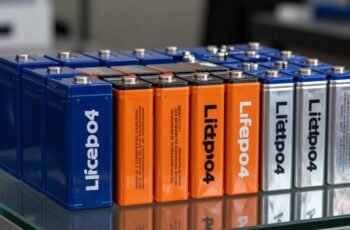
Choosing the best LiFePO4 battery for solar requires more than comparing amp-hours or upfront price. We need to assess cycle life, usable capacity, charge and discharge rates, BMS protection, temperature performance, warranty coverage, and inverter compatibility. These factors determine system efficiency, safety, and long-term sustainability across residential, RV, and off-grid applications. We’ll compare leading options by use case, then show how to size and integrate them—because the strongest specification may not suit your system.
Key Takeaways
- Choose LiFePO4 batteries with high usable capacity, suitable depth of discharge, and enough energy for daily and seasonal solar needs.
- Prioritize long cycle life, stable performance, low standby consumption, and warranties that support reliable long-term operation.
- Select batteries with robust BMS protection, cell balancing, temperature safeguards, and recognized safety certifications.
- Verify compatibility with your inverter, including voltage range, continuous and surge output, and CAN or RS485 communication.
- For RVs or off-grid systems, size batteries for autonomy, installation conditions, future expansion, and expected appliance demands.
Best LiFePO4 Batteries for Solar at a Glance
If you’re comparing LiFePO4 batteries for solar, we recommend focusing first on usable capacity, continuous power output, cycle life, temperature protection, warranty coverage, and system compatibility. We should also assess round-trip efficiency, depth-of-discharge limits, inverter communication, and installation requirements. These factors determine how effectively a battery stores surplus photovoltaic energy, supports household loads, and reduces reliance on grid electricity. For a practical comparison, match nominal capacity to your daily consumption, then verify whether the battery can deliver sufficient surge power for pumps, compressors, or other demanding appliances. Built-in battery-management systems should balance cells, prevent overcharging, and disconnect safely during abnormal conditions. We should favor repairable, recyclable products with transparent specifications, because longer service life reduces replacement frequency, material consumption, and the system’s overall environmental impact.
Best Overall LiFePO4 Battery for Solar
We’ll identify the best overall LiFePO4 battery by evaluating energy efficiency, usable capacity, safety, and system compatibility. For reliable solar storage, we’ll prioritize stable discharge performance and dependable operation across daily charge cycles. We’ll also assess long-term battery life, since durable cells reduce replacement waste and improve sustainability.
Top Overall Performance
The best overall LiFePO4 battery for solar balances usable capacity, round-trip efficiency, cycle life, safety, warranty coverage, and system compatibility rather than maximizing a single specification. We should compare batteries at the system level, including inverter matching, charge-rate limits, temperature controls, and continuous power output. A strong overall performer delivers high usable energy without excessive weight, maintains efficient operation across typical load profiles, and supports expansion as our electricity needs change. We should also evaluate the battery-management system’s cell balancing, state-of-charge accuracy, and communication protocols, since these features improve energy utilization and protect long-term performance. Selecting right-sized storage reduces curtailment, avoids unnecessary material consumption, and increases the solar array’s renewable-energy yield. We’ll favor transparent specifications, repairable designs, recyclable materials, and warranties with clearly defined throughput limits.
Reliable Solar Storage
Which LiFePO4 battery delivers dependable solar storage over years of daily cycling? We recommend a model with a proven battery-management system, balanced cells, and appropriately rated charge and discharge protection. These controls help us capture surplus photovoltaic energy safely, then deliver stable power when sunlight drops. For solar installations, we should prioritize continuous output capability, low standby consumption, wide operating-temperature tolerance, and compatibility with the inverter’s charging profile. Clear state-of-charge reporting also improves dispatch decisions and prevents avoidable reserve depletion. A robust enclosure, credible certifications, and responsive technical support further reduce installation and operational risk. By selecting these characteristics, we can improve system availability, reduce dependence on backup generation, and use more renewable electricity on site. This approach supports sustainable operation without compromising practical energy resilience for households.
Long-Lasting Battery Life
Long-lasting battery life determines how effectively a solar system can deliver reliable energy over its service life. We should evaluate LiFePO4 chemistry by cycle life, usable capacity, depth-of-discharge limits, and thermal stability—not marketing claims. A quality battery can sustain thousands of cycles while retaining substantial capacity, reducing replacements, material consumption, and lifetime costs. We’ll also verify that its battery-management system balances cells and prevents overcharge, overheating, and excessive discharge.
| Measure | Why it matters | Target |
|---|---|---|
| Cycle life | Indicates replacement frequency | 4,000+ cycles |
| Usable capacity | Reflects practical stored energy | 80–100% |
| Retention | Tracks aging performance | ≥80% capacity |
We should size storage conservatively, avoid prolonged full or empty states, and keep temperatures within manufacturer specifications. With appropriate charging, ventilation, and monitoring, LiFePO4 batteries deliver dependable solar storage while supporting a lower-impact, more sustainable energy system. Their durability also improves resilience during outages and seasonal production changes.
Best Budget LiFePO4 Battery for Solar
For budget-conscious solar systems, we recommend the LiTime 12V 100Ah LiFePO4 battery as a practical starting point because it combines a low upfront cost with a 2,000–4,000-cycle service life, an integrated battery-management system, and usable capacity that typically exceeds comparable lead-acid models. We find its 1,280Wh nominal capacity suitable for modest daily loads, while its lighter construction simplifies installation and reduces structural demands. The BMS helps protect against overcharge, over-discharge, overcurrent, and temperature-related faults, supporting safer operation. Although you’ll need to verify inverter compatibility, charging parameters, and cold-weather limits, those checks apply to any lithium battery. Over its service life, reduced replacement frequency can lower material consumption and lifecycle cost. We’d choose it for cost-sensitive systems that prioritize dependable storage without paying for unnecessary capacity or advanced connectivity features.
Best LiFePO4 Battery for RV Solar Systems
We’ll assess RV solar capacity needs by matching LiFePO4 storage to daily loads, charging conditions, and expected autonomy. We’ll prioritize batteries with high cycle life, reliable battery-management systems, cold-temperature protection, and efficient usable capacity. We’ll also cover installation and maintenance practices that improve safety, service life, and overall sustainability.
RV Solar Capacity Needs
How much battery capacity does your RV solar system need? We can estimate it by totaling daily energy consumption in watt-hours: lights, refrigeration, water pumps, electronics, heating controls, and inverter losses. Multiply each device’s wattage by operating hours, then add a 15–20% allowance for conversion and wiring losses. Next, account for solar variability. If we expect two low-production days, multiply daily consumption by two for the required usable storage. We should then divide that figure by the battery’s recommended depth of discharge to determine nominal capacity. For example, 2,000 Wh of usable energy at an 80% discharge limit requires 2,500 Wh, or roughly 208 Ah at 12 volts. Matching capacity to actual loads prevents unnecessary weight, cost, and resource use while preserving reliable off-grid operation.
Best Battery Features
After sizing storage around your RV’s daily loads and low-sun periods, we should evaluate the battery features that determine whether that capacity performs reliably. We’ll prioritize LiFePO4 batteries with a robust battery-management system (BMS) that provides cell balancing, overcharge, over-discharge, short-circuit, and temperature protection. Low-temperature charge cutoff matters because charging below freezing can permanently damage cells. We should compare continuous and peak discharge ratings against inverter demands, not just advertised amp-hour capacity. A high cycle-life rating, supported by a clear test standard and warranty, indicates better lifetime value and fewer replacements. Integrated state-of-charge monitoring improves energy decisions, while Bluetooth or display connectivity helps us track performance. Finally, we’ll favor batteries with high round-trip efficiency, recyclable components, and credible safety certifications, reducing wasted energy and environmental impact over years of solar use.
Installation And Maintenance
Once we’ve selected the best LiFePO4 battery for an RV solar system, correct installation protects performance, safety, and service life. We should mount it securely in a dry, ventilated compartment, away from heat sources and combustible materials. Verify polarity before connecting cables, then use appropriately sized conductors, fuses, and disconnects to limit fault energy. We’ll configure the solar charge controller for lithium chemistry, including recommended absorption and low-temperature charging limits. A battery-management system should provide overcharge, over-discharge, temperature, and short-circuit protection. During maintenance, we should inspect terminals for looseness or corrosion, review charging data, and keep connections clean and tight. We shouldn’t charge below freezing unless the battery includes active protection. Periodic capacity checks reveal degradation early, extending usable life and reducing replacement waste.
Best LiFePO4 Battery for Off-Grid Homes
For off-grid homes, we recommend LiFePO4 batteries because their long cycle life, high thermal stability, and usable depth of discharge support reliable energy storage with less replacement waste. We should select a model with an integrated battery-management system (BMS) that balances cells, limits charging and discharging, and provides fault protection. Verify compatibility with your inverter, solar charge controller, and system voltage before installation. Low-temperature charging protection matters in cold climates, while adequate continuous and surge ratings help power pumps, refrigerators, and other essential loads. We also favor batteries with clear state-of-charge monitoring, enclosure protection appropriate for the installation area, and credible safety certifications. Proper ventilation, secure mounting, and temperature-aware charging improve service life. Choosing repairable, warrantied equipment can further reduce material consumption over the system’s lifespan.
Best High-Capacity LiFePO4 Battery for Solar
When an off-grid system must run larger loads or bridge longer periods of low solar production, we recommend a high-capacity LiFePO4 battery bank sized around daily energy use, inverter demand, and required autonomy. We favor modular 48V systems because they reduce current, cable losses, and parallel-string complexity while supporting efficient inverters. Choose capacity by usable energy, not nominal amp-hours: LiFePO4 chemistry typically permits a deeper discharge without the rapid degradation associated with lead-acid batteries.
| Design factor | Sizing focus | Sustainability benefit |
|---|---|---|
| Daily consumption | Usable kWh | Fewer replacement cycles |
| Peak demand | Continuous and surge watts | Efficient inverter operation |
| Autonomy | Reserve days | Less generator fuel |
We also prioritize integrated battery management, thermal protection, and scalable communication interfaces. Proper ventilation, fusing, and manufacturer-approved parallel connections remain essential for safe expansion and reliable long-term service in demanding solar installations.
How We Compare LiFePO4 Solar Batteries?
We compare LiFePO4 solar batteries by examining capacity, cycle life, and safety features. We assess usable energy storage alongside service longevity to estimate lifetime value and reduce replacement waste. We also evaluate protections such as thermal management, overcharge control, and short-circuit safeguards.
Battery Capacity
Battery capacity determines how much solar energy a LiFePO4 battery can store and deliver, thus we compare usable watt-hours rather than nominal amp-hours alone. We assess each model under realistic operating limits, including depth-of-discharge settings, inverter efficiency, and manufacturer-specified voltage.
- Usable energy: We calculate the watt-hours available for daily loads.
- Rated capacity: We record amp-hours and nominal voltage for transparent comparisons.
- Scalability: We note whether parallel expansion supports larger solar systems.
- Power matching: We compare capacity with continuous and peak inverter demands.
- Efficiency: We consider charging and discharging losses when estimating delivered energy.
This approach helps you avoid oversized or undersized storage, improving system economics and reducing material waste. We also distinguish advertised capacity from independently verified performance, since temperature, wiring, and protection settings can reduce practical output. Our comparison therefore reflects the energy you can reliably use, not merely the number printed on the label.
Cycle Life
Capacity shows how much energy a battery can deliver today; cycle life indicates how long that storage performance can remain useful. When we compare LiFePO4 solar batteries, we examine the manufacturer’s rated cycles, typically measured until capacity reaches 80% of its original value. A higher rating generally supports longer service, but we also evaluate the test conditions: discharge depth, charge rate, temperature, and maintenance requirements can considerably affect results.
We favor batteries rated for deep daily cycling because they can deliver more lifetime energy and reduce replacement-related material use. To estimate practical longevity, we divide the rated cycle count by expected annual cycles, then adjust for your operating profile. A battery rated at 6,000 cycles could provide roughly 16 years at one full cycle per day, though real-world performance varies. Warranty cycle limits and retained-capacity guarantees help us verify durability claims.
Safety Features
How safely a LiFePO4 battery operates depends on more than its chemistry; we compare the protection systems that manage charging, discharging, temperature, and electrical faults. We assess each battery’s battery-management system (BMS), because reliable safeguards protect performance, users, and long-term material value.
- Overcharge and over-discharge cutoffs prevent cell damage and capacity loss.
- Temperature sensors suspend operation during unsafe charging or excessive heat.
- Overcurrent and short-circuit protection limit fault energy and fire risk.
- Cell balancing keeps voltage differences controlled, supporting consistent aging.
- Surge protection, insulation, and secure enclosures improve installation safety.
We also examine whether manufacturers publish protection thresholds, certifications, and testing evidence. A robust BMS should recover predictably after a fault, not merely disconnect. Although LiFePO4 chemistry offers strong thermal stability, correct fusing, ventilation, wiring, and installation remain essential. These features reduce replacement frequency, improve system resilience, and support more sustainable solar storage.
What Battery Size Does Your Solar System Need?
To size a solar battery correctly, we need to compare your household’s daily energy use with the system’s production, backup duration, and usable depth of discharge. Start by measuring average daily consumption in kilowatt-hours (kWh), then decide how many hours or days of autonomy you want. Divide required stored energy by the battery’s usable capacity, not its nameplate rating. For example, 10 kWh of demand with 80% usable capacity requires 12.5 kWh nominal storage.
| Household profile | Typical battery size |
|---|---|
| Efficient apartment | 5–8 kWh |
| Small home | 10–15 kWh |
| Average home | 15–25 kWh |
| High-demand home | 25–40 kWh |
We should also compare seasonal solar output and account for inverter losses. Right-sizing prevents unnecessary material use while preserving resilience, self-consumption, and long-term system value.
Which LiFePO4 Battery Features Matter Most?
When we compare LiFePO4 batteries for solar, we should prioritize usable capacity, cycle life, safety, temperature tolerance, and battery-management-system (BMS) quality. These features determine reliability, lifetime emissions, and total ownership cost.
We compare LiFePO4 solar batteries by prioritizing usable capacity, longevity, safety, temperature tolerance, and dependable BMS performance.
- Usable capacity: We should evaluate rated energy alongside the recommended depth of discharge, not nominal capacity alone.
- Cycle life: A high cycle rating can extend service life and reduce replacement waste.
- Safety: Stable chemistry, cell balancing, overcurrent protection, and thermal safeguards matter.
- Temperature tolerance: We’ll favor batteries with low-temperature charging protection and verified operating ranges.
- BMS quality: Accurate monitoring, fault isolation, and transparent data help protect cells and maintain performance.
We should also examine warranty terms, enclosure durability, certifications, and repairability. A robust battery uses materials efficiently over many years, supporting lower lifecycle impacts. These criteria help us compare products objectively without relying on marketing claims.
How to Match Batteries With Your Solar Inverter?
The battery’s performance depends on more than its chemistry and BMS; it must also match the solar inverter’s electrical requirements. We should compare nominal voltage, operating voltage range, maximum continuous charge and discharge current, and inverter power ratings. A 48V LiFePO4 battery, for example, needs an inverter designed for that voltage—not merely one labeled “48V.” We’ll also verify peak-current compatibility, since startup loads can exceed continuous ratings and trigger protection shutdowns. Capacity matters, but usable energy should align with the inverter’s charging profile, daily load, and recommended depth of discharge. Confirm communication compatibility, including CAN or RS485 protocols, so the inverter can receive accurate state-of-charge limits. Finally, we should size cables, fuses, and disconnects for worst-case current. Proper matching improves efficiency, safety, lifespan, and renewable-energy utilization.
Frequently Asked Questions
How Should Lifepo4 Batteries Be Stored During Extended Periods of Inactivity?
Store LiFePO4 batteries at 40–60% charge in a cool, dry, ventilated location, disconnect loads, and prevent freezing. We’ll inspect terminals periodically, avoid full discharge, and recharge every three to six months to minimize degradation.
Can Lifepo4 Batteries Be Safely Installed Indoors?
Yes, we can safely install LiFePO4 batteries indoors when we provide ventilation, temperature control, protection from moisture, and compliant wiring. We’ll use certified equipment, maintain clearances, install fuses, and follow local electrical and fire codes.
What Maintenance Do Lifepo4 Solar Batteries Require Over Their Lifespan?
Like a quiet heartbeat, LiFePO4 batteries need little maintenance: we’ll inspect terminals, cables, ventilation, and enclosure periodically; monitor voltage, temperature, and state-of-charge; keep firmware updated; and avoid extreme heat, freezing, and deep discharge.
How Should Damaged or Depleted Lifepo4 Batteries Be Recycled?
Recycle damaged or depleted LiFePO4 batteries through certified battery recyclers, not household trash. We’ll isolate terminals, prevent short circuits, and disclose damage. Professionals recover metals, manage electrolytes, and process cells under regulated environmental and safety controls.
Do Lifepo4 Batteries Perform Well in Freezing Temperatures?
They perform well in freezing temperatures, but charging below 32°F can permanently damage cells. We should insulate batteries, use low-temperature cutoff protection, and warm them before charging, preserving capacity, safety, and service life.
Conclusion
Choosing the best LiFePO4 battery for solar means balancing capacity, cycle life, safety, cost, and compatibility. We should size storage around our energy demand, solar production, backup goals, and inverter limits rather than focus on price alone. With the right BMS, temperature protection, and scalable design, these batteries become the backbone of a resilient system—a steady heartbeat for cleaner energy. By matching specifications carefully, we’ll reduce waste, extend service life, and make renewable power more dependable for homes, RVs, and off-grid applications.