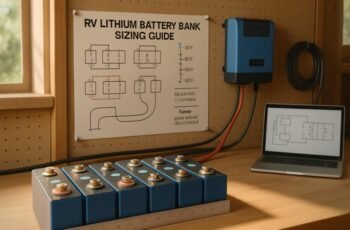
We approach lithium motorcycle batteries with caution, balancing high performance against safety risks. We’ll walk you through selecting a charger compatible with lithium chemistry, enforcing manufacturer limits, and avoiding overnight or high-current sessions. By keeping terminals clean, mounting secure, and logs of voltage and temperature, we minimize failure modes. This overview sets the groundwork for practical steps on charging, storage, and maintenance that you can apply right away, but there’s more to cover before you act.
Key Takeaways
- Use a charger designed for lithium chemistry and match it to your pack’s voltage and current limits; avoid overnight high-rate charging.
- Log each session (voltage, temperature, duration) and perform periodic capacity checks to track aging.
- Maintain stable ambient temperatures (ideally 20–25°C) with good airflow and separate high-heat sources from storage.
- Inspect connections for corrosion, secure mounting, clean contacts, and verify proper polarity and BMS signaling.
- Monitor temperature during charging top-offs and precondition or defer charging in extreme heat or cold.
How Lithium Motorcycle Batteries Differ From Lead-Acid
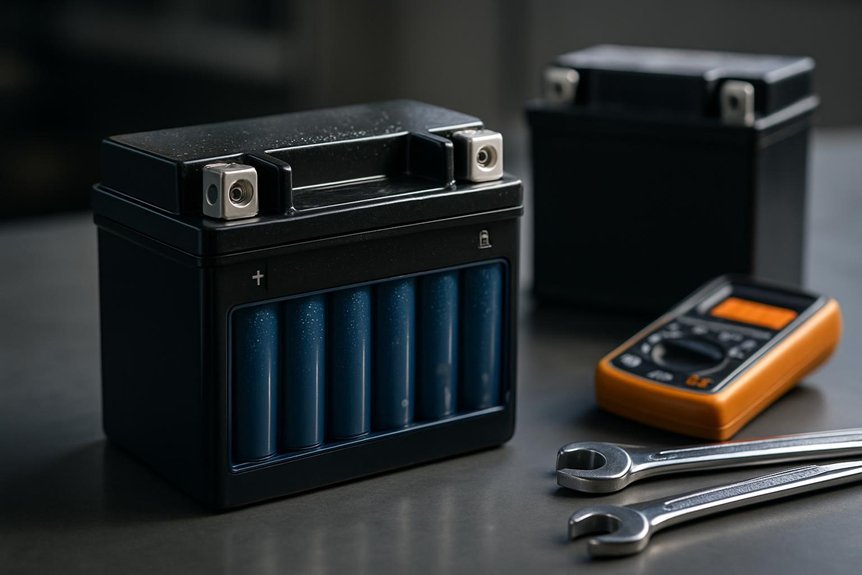
Lithium motorcycle batteries differ from lead-acid cells in everything from chemistry to charging behavior. We compare their fundamental material properties, response to temperature, and energy density, then translate those differences into practical implications for daily use. Our focus is battery chemistry, where lithium chemistry enables lighter packs, higher specific energy, and slower self-discharge, but also demands tighter protection and careful BMS integration. We assess charging cycles, noting lithium cells tolerate high-current ramps and deeper cycles better than lead-acid, yet cycle life depends on precise voltage and current limits. We emphasize thermal management as a reliability factor, since temperature affects performance and longevity. In short, lithium cells require different monitoring, fault protection, and charging discipline to maintain peak performance and safety.
Establishing Your Primary Charging Method for Lithium Packs
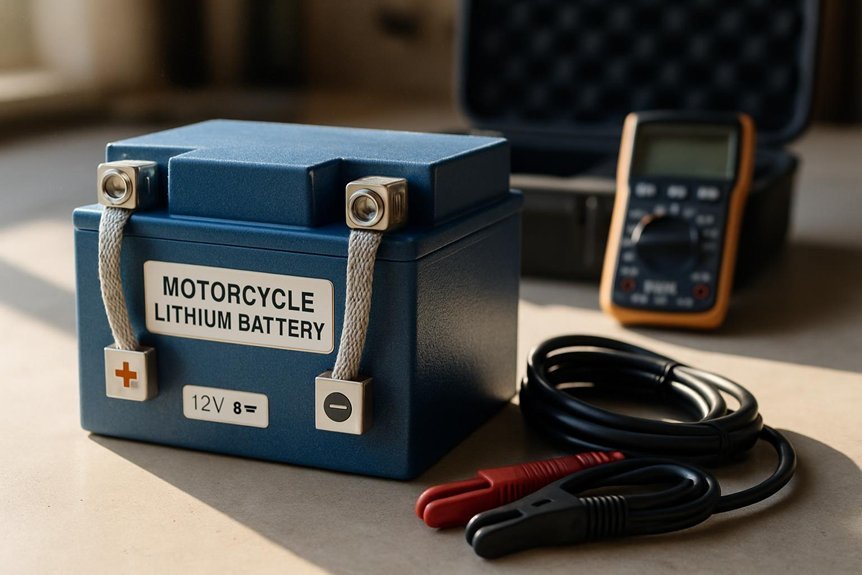
We establish a clear primary charging method to guarantee consistent lithium pack maintenance and performance. We’ll outline recommended practices for safe charging, monitoring pack health, and choosing a charger compatible with lithium chemistry. Our goal is a concise, reliable approach that you can follow to minimize risk and maximize longevity.
Primary Charging Method
To establish a primary charging method for lithium packs, we start by selecting the charger type, voltage window, and current limits that match your motorcycle’s battery specification. We document the chosen parameters to ensure reproducibility across sessions and setups. Our approach emphasizes safety margins, heat management, and proper termination. We assess charger compatibility with cell chemistry, balance taps, and BMS signaling to prevent overvoltage or undercurrent events. In practice, we define a baseline charging protocol that prioritizes stability, avoids aggressive ramp rates, and maintains pack integrity during long-term storage. We explicitly differentiate primary charging routines from auxiliary tactics, focusing on reliability and repeatability. Alongside, we monitor charging balance to verify uniform cell behavior, adjusting only within manufacturer guidelines and documented tolerances. This method reduces variance and supports predictable performance.
Lithium Pack Maintenance
Establishing a primary charging method for lithium packs hinges on consistent procedure and vigilant monitoring. We outline a disciplined approach to maintain pack health and reliability, while minimizing risk to the rider. Our method centers on repeatable charging cycles, monitored parameters, and documented practice to avoid drift in performance.
1) We select a single charger and adhere to its specified current and voltage limits, avoiding mixed sources that can stress cells.
2) We log each session, noting voltage, temperature, and duration to detect trends and intervene early.
3) We conduct periodic capacity checks and terminations at safe thresholds, respecting brief safety and warranty implications to preserve coverage.
Consistency, traceability, and proactive monitoring keep packs reliable and riders confident.
Safe Charging Practices
Selecting a single charger and sticking to its rated current and voltage limits reduces cell stress and avoids drift across packs. We present a methodical approach to establishing your primary charging method for lithium packs. We begin by identifying compatible charging cords and confirming connector standards align with the pack’s battery chemistry. Next, we verify charger specifications match the exact nominal voltage, maximum charging voltage, and recommended charge current from the pack manufacturer. We implement a controlled charging routine, avoiding fast- or ultra-fast modes unless explicitly supported. We monitor temperature rise, termination criteria, and state of charge bounds to prevent overvoltage and overdischarge. Finally, we document the setup, revisit performance after maintenance, and replace any degraded cords or adapters promptly to maintain safety and consistency. Consistency mitigates risks and preserves pack longevity.
Safe Charging Habits for Lithium Motorcycle Batteries
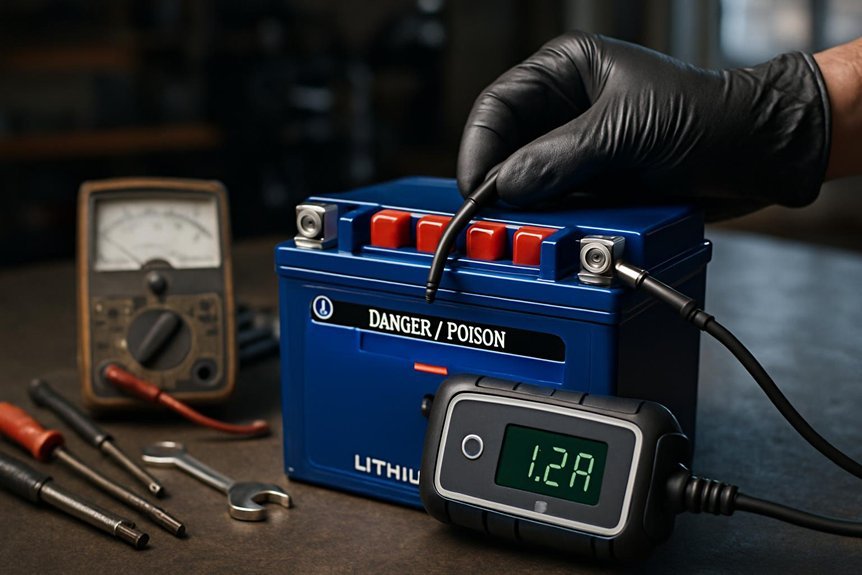
Charging lithium motorcycle batteries safely hinges on disciplined habits. We approach charging with precision, focusing on battery chemistry and charging impedance to maintain health and performance. Our method is straightforward: monitor voltage, limit current, and use appropriate, certified chargers.
Charging lithium motorcycle batteries safely relies on disciplined habits and smart charging.
1) Use chargers designed for lithium chemistry and matched to your pack’s specifications.
2) Avoid overnight charging or high-rate pulses; unplug once full, and never leave a connected charger unattended.
3) Inspect connections for corrosion, secure mounting, and clean contacts to minimize resistance and heat buildup.
Storage Guidelines to Maximize Longevity
We’ll outline how to optimize storage by maintaining proper charge levels, applying stable temperature control, and adopting long-term storage practices. We’ll keep cells within ideal charge ranges, monitor ambient temperature, and follow step-by-step routines for seasonal or extended inactivity. This discussion sets the framework for precise, repeatable guidelines you can apply to preserve battery longevity.
Proper Charge Levels
What charge level should you maintain to maximize longevity? We advise a precise, repeatable routine that preserves capacity without overtaxing the cells. We monitor resting voltage and target a specific state of charge window during storage and use. Our approach minimizes degradation from full discharge or prolonged high capacity.
- Maintain a mid-range SOC: avoid extremes (too low or too high) to reduce calendar aging.
- Use a compatible charger with automatic termination and temperature compensation to prevent overcharge.
- Periodically check voltage after rest, re-balance if needed, and reapply storage charge per manufacturer guidance.
This guidance stays focused on charge levels; irrelevant topic, off topic discussion, and similar diversions have no place here. Stay disciplined, measure consistently, and document each cycle for traceability.
Temperature Control Tips
Temperature control is essential for storage longevity; by maintaining stable, manufacturer-specified ambient and cell temperatures, we minimize accelerated aging and capacity fade. We implement temperature regulation through controlled environments and regular monitoring, avoiding temperature swings that stress chemistries. Our approach prioritizes ambient cooling to keep storage areas within recommended ranges, typically around 20–25°C, while ensuring airflow and humidity stay within manufacturer specs. We separate high-temperature sources, insulate against external heat, and use passive or active cooling as needed. We verify charger and storage devices have proper thermal thresholds, and we log temperatures during idle periods. If temps drift, we pause long-term storage and reassess placement, insulation, and ventilation. Precise, consistent temperature management maximizes cycle life and preserves usable capacity over time.
Long-Term Storage Practices
Long-term storage requires disciplined practices that minimize degradation and preserve pack health over months or years. We approach storage with controlled conditions, precise state monitoring, and documented handling to reduce risk of capacity loss. Our guidance emphasizes storage isolation from environmental fluctuations and consistent charging discipline to maintain balanced cells. We also consider electrolyte dynamics to prevent dendritic growth during idle periods.
- Maintain a mid-range state of charge and store in a sealed, ventilated enclosure.
- Disconnect loads, isolate circuitry, and verify connectors remain clean and dry.
- Schedule periodic, minimal-impedance checks to confirm voltage and temperature stay within targets.
Adherence to these steps yields predictable performance on restart and minimizes long-term degradation risks.
Temperature Effects on Lithium Packs and Coping Strategies
Maintaining lithium packs within optimal temperatures is critical for performance and longevity. We examine how temperature affects chemistry, then apply practical coping strategies that readers can follow. Temperature stability minimizes voltage sag, capacity loss, and cycle fatigue, so we prioritize steady environments and controlled charging. We adjust the charging cadence to align with ambient conditions, avoiding rapid ramps in heat or cold, and we monitor pack temperature during top-offs. If ambient extremes occur, we precondition packs or defer charging to safer windows. Implementing thermal management, insulating storage, and ventilated mounting helps sustain consistency. Regular checks prevent runaway heating and preserve capacity over time.
| Situation | Action | Expected Outcome |
|---|---|---|
| High ambient heat | Use shaded, ventilated mounting | Maintains temperature stability |
| Cold startup | Gentle preconditioning, slow current | Reduces internal resistance |
| Rapid charging | Reduce rate, monitor temp | Protects cells from stress |
| Idle storage | Moderate temperature, airflow | Preserves pack health |
| Ride-time heat | Stop-and-cool intervals | Maintains performance |
Seasonal Riding Routines for Battery Health
We’ll outline seasonal battery health routines with targeted checks each season, focusing on battery condition and charging practices. We’ll cover seasonal battery checkups and storage temperature guidelines to prevent capacity loss and cold-weather issues. We’ll keep procedures clear and repeatable so you can apply them consistently across riding seasons.
Seasonal Battery Checkups
Seasonal battery health checks should be integrated into our riding routine, with a clear, repeatable process for spring, midseason, and winter changes. We approach this with a technical, methodical cadence, focusing on actionable steps that preserve seasonal maintenance and battery storage integrity.
- Inspect terminals and connections for corrosion; clean and reseal as needed to prevent impedance.
- Measure voltage and resting state; compare against manufacturer specs, documenting deviations for timely adjustments.
- Verify charge/discharge cycles match riding patterns; schedule top-offs or conditioning during changes to sustain capacity.
Together, we maintain consistent performance, minimize surprises, and extend life through disciplined seasonal checkups. This routine emphasizes method, measurement, and discipline—critical for reliable battery storage and peak seasonal readiness.
Storage Temperature Guidelines
Do storage temperature ranges matter for battery health, especially when riding seasons shift? Yes, they do. We examine seasonal effects on lithium packs, focusing on safe storage windows and charge states. For long gaps, keep modules between 0°C and 25°C when practical, avoiding extreme heat or freezing. In warmer periods, store with a partial state of charge to reduce cycling stress; in cold periods, keep above freezing and insulated from direct cold exposure. Adhere to battery chemistry guidelines to minimize degradation, avoiding high-voltage holds during storage and regularly monitoring voltage. Our charging etiquette emphasizes completing a stable, balanced state before storage and using manufacturer-recommended chargers. Documented procedures reduce self-discharge risks and ensure rapid, safe readiness when the riding season returns.
Warning Signs Lithium Battery Aging or Failing
What are the clear indicators that a motorcycle lithium battery is aging or failing? We observe consistent performance drops, slower cranking, and reduced overall capacity. These lithium aging signs appear even with proper charging and storage, signaling degraded cells or internal resistance. We also see unpredictable voltage behavior and charging faults that persist despite normal charger operation.
1) We experience longer cranking times and slower engine start, indicating fading stored energy.
2) We notice erratic voltage readings or sudden total losses under load, signaling weakening cells.
3) We encounter recurring charging faults or alarm indicators that recur after routine maintenance and verified connections.
Cleaning, Mounting, and Basic Maintenance to Prevent Drain
We regularly inspect and clean the motorcycle’s electrical connections to prevent drain and guarantee reliable starts. We explain cleaning techniques that minimize moisture and corrosion, using a soft brush, contact cleaner, and a lint-free cloth. Disconnect power, remove the battery if accessible, and wipe terminals, connectors, and mounting posts in a single direction to avoid pushing grime inward. Dry thoroughly before reassembly, ensuring no cleaner residue remains. For mounting considerations, verify correct orientation, snug bolts, and vibration isolation, as improper torque can loosen connections and raise resistance. Inspect straps, brackets, and foam insulators for deterioration, replacing as needed. Reconnect battery, test voltage under load, and confirm consistent cranking without hesitation. Schedule periodic checks aligned with riding frequency and climate exposure to sustain performance.
Lithium-Specific Accessories to Protect and Extend Life
From here, we’ll cover lithium-specific accessories that protect and extend battery life, focusing on practical implementations and proven benefits. We’ll outline essential gear and how it translates to reliability and longevity for riders.
Lithium accessories that safeguard life, reliability, and longevity for riders.
- Protective cases and mounts — guard against vibration and drops while simplifying access and inspection.
- Proper charging modules and connectors — ensure correct voltage, prevent overcharge, and enable safe field topping.
- Battery recycling and safe disposal accessories — support responsible end-of-life handling and environmental compliance, reinforcing long-term sustainability.
Shipping safety notes: use certified packaging and labeled containers when transporting cells or packs. By adopting these accessories, we minimize thermal stress, moisture ingress, and mechanical wear, delivering consistent performance and extended service life.
Troubleshooting Startup and Charging Issues
When a lithium motorcycle battery won’t start or fails to charge, the issue almost always traces to a few repeatable causes. We start with a voltage check at the battery terminals, then verify connections for corrosion, looseness, or damage. Next, we test the charging system output with a multimeter, ensuring the charger matches the battery chemistry and isn’t delivering excessive voltage. If startup remains problematic, inspect for parasitic drains, including ECU and accessory loads, disconnecting nonessential circuits to isolate the culprit. For charging failures, confirm polarity, charger compatibility, and user error. Safety protocols require wearing eye protection and avoiding sparks near venting cells. Document observed voltages, currents, and temperature, then correlate with manufacturer specs to guide replacement or repair decisions.
Frequently Asked Questions
Can Lithium Batteries Be Recycled Safely for Motorcycles?
Yes, we can recycle lithium batteries for motorcycles safely. We follow strict recycling safety protocols and proper handling, disposal, and repurposing steps, minimizing environmental impact while maintaining compliance with regulations and industry standards.
How Often Should I Replace a Lithium Motorcycle Pack?
We replace lithium motorcycle packs every 2–4 years, depending on usage and cycles, like a relay passing smoothly. We monitor lifecycle expectations and warranty considerations to plan replacements proactively and minimize downtime for readers.
Do Lithium Batteries Require a Dedicated Charger for Every Ride?
Do lithium batteries require a dedicated charger for every ride? Not necessarily. We do, however, recommend using a charger compatible with lithium chemistry and avoid general adaptors for long-term health; many riders carry a dedicated charger for convenience.
What Tones of Cold-Weather Riding Affect Capacity the Most?
We’ll answer: cold-weather riding reduces capacity most due to voltage drop from chemical slowdown and internal resistance. In cold weather, voltage drop accelerates, and capacity loss worsens; we adjust riding style and charging to mitigate this.
Can Lithium Batteries Be Jump-Started Like Lead-Acid Packs?
Yes, lithium batteries can be jump-started like lead-acid packs, but with caution. We emphasize jump start compatibility, avoid high current surges, and follow charging etiquette to prevent damage while protecting battery life and electronics.
Conclusion
We’ve shown you the edge where safe charging meets peak performance, and we’re not exaggerating when we say: neglect it, and you’ll feel the two-minute slowdown of a dying pack; embrace it, and your ride becomes a smooth, almost musical tour of reliability. By following lithium-specific methods, monitoring temps, and keeping connections clean, you’ll turn every ride into a controlled test of endurance. Trust the process, respect the limits, and ride with confidence.