We regularly examine golf cart lithium batteries with a focus on reliability and longevity, using a structured routine that covers charging, SOC tracking, and temperature profiles. We’ll outline proper charging habits, cleanliness, terminal care, and seals, then flag when data trends prompt calibration or seasonal checks. Our approach is proactive, precise, and grounded in metrics you can trust. Stay with us as we connect the dots between maintenance actions and dependable power, and uncover the practical steps that keep you powered up.
Key Takeaways
- Use a proper lithium battery charging routine with compatible chargers, avoiding deep discharges and prolonged trickle charging.
- Monitor SOC, voltage under load, and pack temperature to detect anomalies and prevent degradation.
- Maintain clean, secure connections and inspect terminals regularly to prevent heat buildup and failures.
- Store batteries at stable temperatures and approved SOC, with moisture control and sealed vent paths maintained.
- Schedule seasonal calibration and maintenance to adjust parameters, track health indicators, and optimize longevity.
Understanding Golf Cart Lithium Batteries: Basics and Benefits
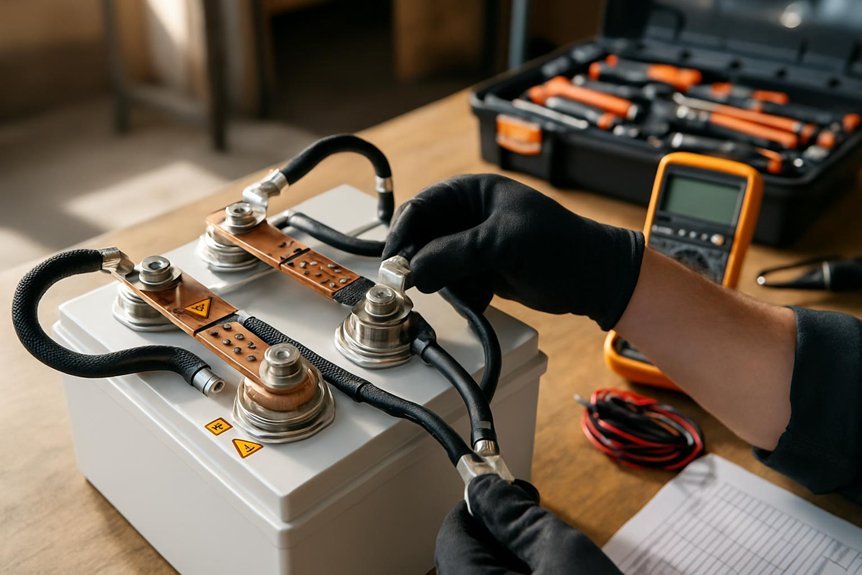
Understanding golf cart lithium batteries begins with their fundamental chemistry and how it differs from lead-acid packs. We approach this topic with a precise lens, outlining core principles and tangible benefits for users. Lithium chemistry delivers higher energy density, faster charging, lighter weight, and deeper discharge limits, translating to longer cycles and improved range per charge. We emphasize stable voltage profiles and fewer maintenance chores, reducing downtime and total cost of ownership. Installation considerations matter: proper enclosure, thermal management, and secure wiring are essential to performance and safety. We also note battery management systems, cell balancing, and fault indicators that protect longevity. By grasping these fundamentals, you gain a clear framework for selecting, integrating, and leveraging lithium-powered carts without compromising reliability.
Daily Care for Peak Battery Performance
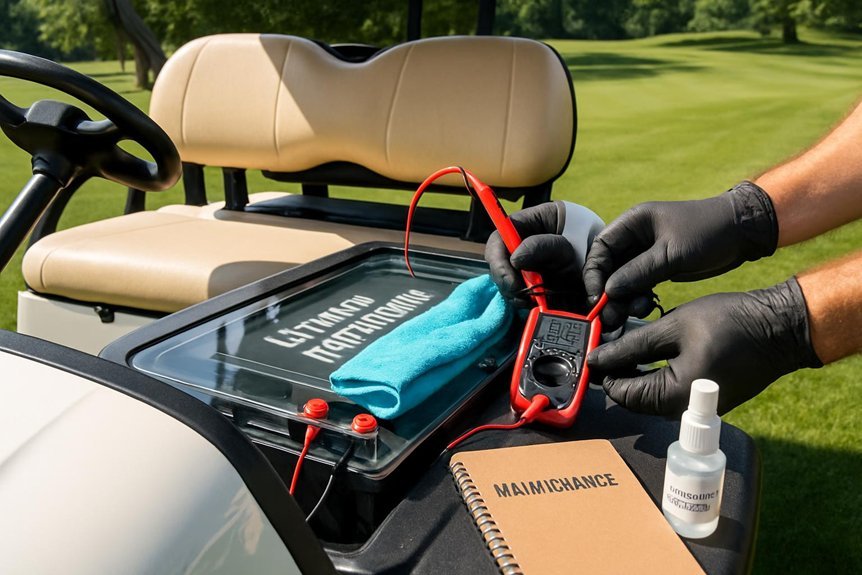
We establish a regular charging routine to maintain peak performance, ensuring consistent voltage and cell balance for our lithium packs. We keep temperature-aware storage to minimize capacity loss, guarding against exposure to extreme heat or cold during downtime. We also perform clean connection practices, inspecting terminals and cables for corrosion or looseness to sustain reliable power delivery.
Regular Charging Routine
A regular charging routine is the backbone of peak performance for a golf cart’s lithium battery. We outline a disciplined schedule to maximize longevity, efficiency, and readiness for daily use. Consistent timing reduces voltage swings, while proper endpoint charging conditions protect capacity. Adhere to battery storage and charging etiquette by connecting promptly after use, avoiding partial cycles, and using recommended chargers. We monitor temperature, current, and SOC thresholds to prevent stress. Our routine emphasizes full-but-safe top-offs, avoiding deep discharges and prolonged trickle charging. Regular calibration checks ensure accurate SOC readings, supporting precise maintenance decisions. Below is a quick guide to reinforce our approach.
| Column A | Column B |
|---|---|
| Purpose | Practice |
| Action | Monitor |
| Benefit | Longevity |
Temperature Aware Storage
How temperature shapes storage matters: we keep lithium golf-cart batteries at optimal ranges to preserve capacity and readiness. We monitor ambient and pack temperatures to prevent drift beyond recommended limits. In practice, temperature storage requires stable, moderate conditions; extremes accelerate degradation and boost self-discharge. We establish a controlled environment that minimizes fluctuation, especially during long-term idle periods. Our approach accounts for proximity to charging or discharging activity, since heat from recent use alters stored state and voltage. We document routine checks, verify insulation, and employ thermal barriers when permissible. We recognize cold impact can reduce apparent capacity and slow chemical kinetics, so we warm storage areas modestly if needed. By maintaining consistent temperature storage, we sustain lithium resilience and readiness for daily operation.
Clean Connection Practices
Do clean connections truly translate to peak performance? We say yes, and we’ll show you how. Regular inspection and deliberate tightening prevent resistance spikes that reduce voltage and cause uneven discharge. We clean terminals with approved contact cleaner, then dry and reconnect, ensuring a snug, contamination-free seal. Apply dielectric grease to prevent moisture ingress and corrosion, keeping metal-to-metal contact pristine. Schedule monthly checks and after any high-vibration ride to sustain peak efficiency. Document findings to track patterns and preempt failures. By maintaining clean connections, we minimize heat buildup and extend cycle life. Your maintenance routine becomes a data-driven safeguard against performance drift.
| Step | Action | Outcome |
|---|---|---|
| Inspect | Visual check for corrosion | Early detection |
| Clean | Use contact cleaner | Restored conductivity |
| Treat | Dielectric grease | Moisture protection |
| Verify | Tighten terminals | Consistent contact |
Charging Habits That Extend Battery Life
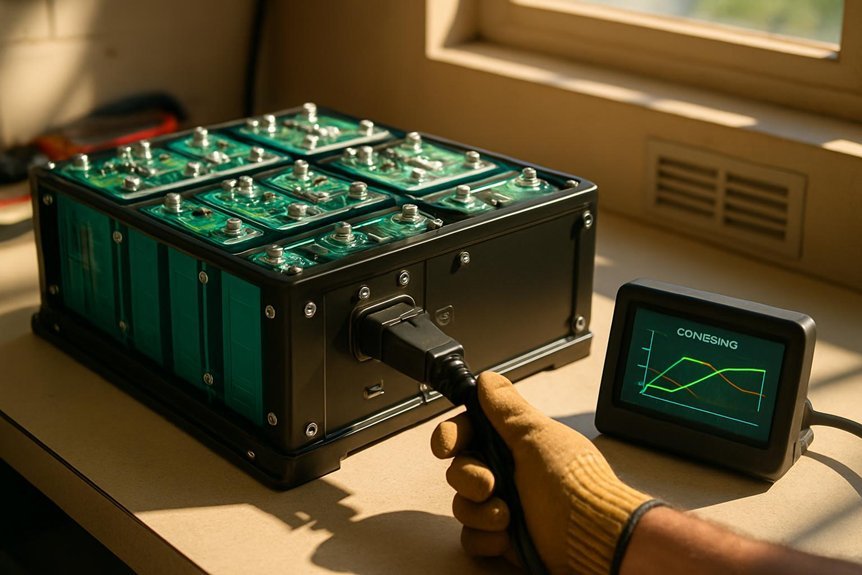
We optimize charging by adopting smart charging habits that align with our battery chemistry and charger capabilities. Temperature affects charging efficiency and safety, so we monitor ambient conditions and adjust schedules accordingly. We establish a regular charge routine to maintain consistent state of charge and reduce capacity fade over time.
Smart Charging Habits
Smart charging habits are essential for maximizing the lifespan and reliability of golf cart lithium batteries. We implement disciplined charging routines that minimize stress on cells and balance pack health. Prioritize using a compatible charger with proper voltage, current limits, and termination thresholds to avoid overcurrent or undercharge scenarios. We schedule regular full cycles only when calibration benefits the pack, and we avoid partial top-offs that disrupt state of charge accuracy. We practice smart charging by monitoring pack voltage and current during initiation, maintaining a stable temperature window, and confirming successful termination. Battery calibration is performed periodically to align the charger’s SOC reading with actual capacity, improving navigation of discharge events. Together, these practices sustain performance, safety, and long-term reliability.
Temperature Affects Charging
Temperature directly influences charging efficiency and battery longevity. We monitor how ambient temperature and pack heat interact during charging to preserve capacity and cycle life. In practice, temperature fluctuations can slow chemical reactions and shift internal resistance, reducing available energy during top-offs. Wind chill matters only when exposed to drafts or external cooling, as it lowers cell surface temperature and can mislead the charger’s safety thresholds. We optimize by aligning charging with optimal temp windows, avoiding extremes that drive unnecessary aging. Consistent enclosure management and preconditioning routines help maintain stable conditions, improving current uptake and level settling.
- Temperature fluctuations impact charge rate and long-term capacity
- Wind chill can create misleading cell temps at connection points
- Maintain stable ambient and pack temperatures during charging
- Preconditioning reduces damage from sudden temperature shifts
Regular Charge Routine
Regular charging habits directly influence pack health and longevity. We establish a consistent routine so cycles stay balanced and capacity loss slows. Our approach emphasizes a daily top-up when feasible, avoiding deep discharge and prolonged idle states. We recommend charging after each use to maintain a stable state of charge within the optimal window, typically around 20–80%, unless manufacturer guidance differs. Monitor charger compatibility and ensure proper termination to prevent partial charging drift. Integrate a clear maintenance schedule that records voltages, temperatures, and cycle counts to detect early anomalies. Seasonal calibration sessions help align capacity estimates with real performance, refining the schedule as conditions vary. Consistency, documentation, and timely recalibration keep pack health predictable and extend operational life.
Storage Tips to Prevent Degradation
How can we prevent degradation during storage? We prepare our lithium systems for long-term inactivity by controlling environment and connections. We adopt a disciplined, proactive approach to minimize stored energy loss, corrosion risk, and electrolyte stress. Our protocol emphasizes stable temperature, clean terminals, and periodic checks to verify insulation integrity without cycling the pack unnecessarily. We document storage conditions and verify the absence of moisture ingress or contaminants. We align with manufacturer guidelines for storage state of charge to reduce self-discharge and voltage drift. By maintaining visibility of the pack’s health, we prevent subtle degradation that compromises performance when returned to service. This yields longer life and reliable readiness for next use.
- Maintain stable temperature and monitor humidity levels
- Ensure terminals are clean and corrosion-free
- Use approved storage-state-of-charge and avoid overcharging
- Inspect seals and venting paths for moisture ingress
Battery Monitoring: What Metrics Matter
What metrics truly matter for battery monitoring, and why do they guide our maintenance decisions? We track state of charge accuracy, voltage under load, and temperature profiles to detect anomalies early. We rely on nonvolatile data and trend analysis to distinguish transient fluctuations from systematic decline. Battery health indicators—capacity fade, internal resistance rise, and cycle analytics—tell us when replacement or active balancing is warranted. We monitor calendar age, depth of discharge patterns, and charging efficiency to optimize longevity. Short-term spikes may signal connection issues or thermal stress, while gradual shifts indicate degradation rates we can counter with targeted conditioning or schedule adjustments. By prioritizing these metrics, we maintain predictable performance and safer operation.
Common Mistakes to Avoid (and Quick Fixes)
Common mistakes in golf cart lithium battery upkeep often derail performance long before a failure point becomes obvious, so we target the pitfalls and prescribe fast, reliable fixes. We act as your technical partners, outlining concrete pitfalls and immediate, practical quick fixes you can implement today. By prioritizing data-driven checks and disciplined practices, we minimize downtime and extend pack life. Stay mindful of warning signs, avoid overthinking symptoms, and apply focused remedies that restore efficiency without costly downtime.
- tips pitfalls: avoid undercharging, overdischarging, and deep cycling without protection
- quick fixes: verify balance, replace worn connectors, and recalibrate SOC accurately
- tips pitfalls: monitor temps during charging and storage
- quick fixes: implement consistent charging routines and verify firmware updates
Seasonal Maintenance Schedule You Can Actually Follow
We’ve covered common mistakes and quick fixes, and now we map out a practical seasonal maintenance schedule you can actually follow. Our approach blends data-driven checks with pragmatic timing so you stay ahead of degradation. Each season, we perform a concise follow up checklist: verify battery voltage consistency, inspect terminals for corrosion, and test charge efficiency with a calibrated meter. In spring, recalibrate charge parameters after storage, and in summer monitor temperature effects on performance. Autumn focuses on electrolyte balance and connector cleanliness, while winter prioritizes insulation and load management. Document results, note anomalies, and schedule rechecks at fixed intervals. This routine minimizes downtime, extends life, and enables rapid diagnosis—keeping your golf cart reliable, safe, and ready for the next round.
Frequently Asked Questions
How Do I Reset Battery Management System Alarms?
We reset alarms by powering down, disconnecting, and reinitializing the BMS; then we run a full BMS diagnostics to confirm no faults remain, and we clear fault codes before resuming operation. We’ll monitor voltages and temperatures continuously.
Can You Mix Lithium and Lead-Acid Batteries?
Answering: we don’t mix lithium with lead-acid batteries. We avoid cross-chemistry pairing due to safety, performance, and longevity risks. Two word discussion ideas? battery mixing, safety considerations. We’ll guide you proactively, with precise, technical steps and clear cautions.
What’s the Best Charger Type for Travel Use?
Travel-friendly chargers with automatic shutoff are best for travel use, we recommend portable charging options that minimize weight and ensure safe storage. We’ll prioritize rugged, compliant units, smart regulation, and rapid, efficient recharging for your lithium setup.
Are There Signs of Aging Beyond Capacity Loss?
Yes, aging signs extend beyond capacity loss, including increased internal resistance, slower charging, voltage sag under load, and reduced cycle life. We monitor for capacity degradation and these aging signs to proactively schedule maintenance and battery balance checks.
How Often Should You Calibrate the Battery Gauge?
We calibrate the gauge monthly, like tuning a precise instrument, to preserve calibration integrity. Calibration frequency and gauge accuracy are central; we’ll schedule reminders, verify readings against known loads, and adjust as needed for reliable performance.
Conclusion
We’ve built a practical, proactive approach to golf cart lithium battery care, and you’re now equipped to apply it with confidence. Regular charging aligned with temperature, vigilant SOC and voltage checks, and clean terminals lock in performance while preventing failures. We’ll tailor conditioning and seasonal checks to data trends, ensuring reliability year-round. Ready to protect your power and extend range? If you treat the battery like a precision system, its longevity will follow. Are you prepared to commit to this disciplined routine?