We all need reliable, portable power that moves with us. Modern lithium batteries, particularly with durable LiFePO4 chemistry, have revolutionized what’s possible off-grid and in emergencies. Their incredible cycle life and safety make them essential. But with so many models boasting different outputs and features, the best choice depends on your specific needs. Let’s examine which units truly deliver on their promise of unstoppable power.
Key Takeaways
- LiFePO4 batteries deliver thousands of charge cycles for years of reliable service.
- High-wattage AC outputs, like 1800W or 2000W, power heavy appliances and tools.
- Fast recharging to 80% in under an hour minimizes downtime between uses.
- Compact, lightweight designs under 30 pounds maintain true off-grid portability.
- Multiple ports, including USB-C PD, simultaneously charge numerous essential devices.
Jackery Explorer 300 Portable Power Station
For adventurers needing reliable off-grid power, the Jackery Explorer 300’s 292Wh LiFePO4 battery and ultra-light 7.5-pound design make it a top choice. We get over 4,000 charge cycles from its durable battery. It’s compact and easily fits in our packs. We power our laptops, cameras, and even CPAP machines with its 300W output and six ports. Recharging is a breeze; we can use a 100W solar panel to hit 80% in under three hours. It’s our silent, fume-free companion for every campsite or emergency, backed by strong reviews and a solid warranty.
Best For: Adventurers, campers, and those needing portable, reliable off-grid power for small electronics and emergency backup.
Pros:
- Extremely lightweight and compact design for easy portability.
- Durable LiFePO4 battery providing over 4,000 long-life charge cycles.
- Versatile with 300W output, six ports, and fast solar recharge capability.
Cons:
- Solar panel must be purchased separately.
- Lacks smart home integration capabilities.
- 300W output may be insufficient for higher-wattage appliances.
Anker SOLIX C300 Portable Power Station
The Anker SOLIX C300 Portable Power Station is ideal for adventurers needing robust off-grid power. Its 288Wh capacity and 300W output reliably run laptops, cameras, and drones. We get eight versatile ports, including three AC outlets, for charging multiple devices at once. It’s 15% smaller than comparable units, making it easy to carry on spontaneous trips. We recharge it to 80% in about 50 minutes via an outlet, or use solar panels for sustainable power. Its durable LiFePO4 battery lasts for thousands of cycles and it operates quietly, all backed by a five-year warranty.
Best For: Adventurers and outdoor enthusiasts needing reliable, portable power for essential devices like laptops, cameras, and drones during off-grid activities or emergencies.
Pros:
- Offers versatile charging with eight ports, including three AC outlets, for powering multiple devices simultaneously.
- Features a compact, portable design that is 15% smaller than comparable models and recharges quickly to 80% in about 50 minutes.
- Built with a durable, long-life LiFePO4 battery, operates quietly, and is backed by a five-year warranty.
Cons:
- The 300W rated output may be insufficient for high-power appliances beyond essential electronics.
- Requires a separately sold strap for optimal carrying convenience.
- Solar panel compatibility is limited, as it does not work with certain low-voltage USB-C panels.
GOLDENMATE 600VA Lithium UPS Battery Backup & Surge Protector
Users seeking durable backup power find an ideal solution in the GOLDENMATE 600VA Lithium UPS. Its LiFePO4 battery promises over a decade of maintenance-free use, saving us significant replacement costs. It delivers 360W of clean, simulated sine wave power through five protected outlets to run critical devices. We can connect it to our computer for automatic safe shutdowns and charge phones via its USB ports. A built-in emergency light activates during outages, and its compact, wall-mountable design fits our workspace. With industry certifications and a 2-year warranty, it provides reliable safety for our home and office systems.
Best For: Users in home and office environments needing a long-lasting, cost-effective UPS for protecting critical electronics and data during power outages.
Pros:
- Exceptionally long-lasting LiFePO4 battery with over 10-year lifespan and significant long-term cost savings.
- Includes valuable features like automatic safe shutdown, USB charging ports, and an automatic emergency light.
- Compact, wall-mountable design with five battery backup outlets and robust surge protection.
Cons:
- Simulated sine wave output may not be fully compatible with some sensitive or high-performance electronics.
- Limited to 360W of output power, which may not suffice for powering larger desktop setups or multiple high-draw devices.
- The 2-year warranty is relatively short compared to the advertised 10+ year battery lifespan.
EF ECOFLOW DELTA 2 Portable Power Station
EF ECOFLOW DELTA 2’s 1800W output can run most household appliances, making it an ideal choice for camping or home backup power. Its 1024Wh LiFePO4 battery expands to DunWh and lasts over 3,000 cycles. We recharge it to 80% in 50 minutes via AC or use solar input up to 500W. The unit provides 15 outlets for simultaneous device charging. At 27 pounds, it’s portable for RVs or emergencies. A five-year warranty and sophisticated battery management system guarantee its safety and longevity, offering us reliable power wherever we need it.
Best For: Campers, RV travelers, and households seeking reliable emergency backup power or portable off-grid electricity.
Pros:
- Extremely fast recharge capability (80% in 50 minutes) via AC and supports high-wattage solar input.
- High power output (1800W) with numerous outlets (15 total) to run and charge multiple devices simultaneously.
- Durable LiFePO4 battery with a 3000+ cycle lifespan backed by a 5-year warranty.
Cons:
- The base unit’s 1024Wh capacity may be insufficient for prolonged high-drain use without purchasing expensive expansion batteries.
- At 27 pounds, it is portable but not lightweight compared to some smaller power stations.
- High-wattage solar charging requires compatible panels, adding to the overall system cost.
Anker SOLIX C1000 Gen 2 Portable Power Station
For anyone needing reliable home backup or off-grid power, this portable lithium battery station delivers 2,000W output from a durable 1,024Wh LiFePO4 pack. Its standout feature is ultra-fast recharging; we can power it from zero to full in just 49 minutes via AC. It’s also impressively compact and powers up to 10 devices at once. With a 10ms UPS function, it keeps our critical electronics safe. The LiFePO4 chemistry guarantees a long life, maintaining 80% capacity after thousands of cycles. For solar integration and smart app management, this unit provides robust, unstoppable power wherever we need it.
Best For: Homeowners and outdoor enthusiasts needing reliable, high-output emergency backup power and fast recharging for off-grid use or critical device protection.
Pros:
- Ultra-fast 49-minute full recharge via AC and compact, portable design.
- High 2,000W output with 10 ports and 10ms UPS backup for critical electronics.
- Long-lasting LiFePO4 battery maintaining 80% capacity after 4,000 cycles.
Cons:
- Heavier than small power banks at 11.3 kg (24.9 lbs) for its capacity.
- Premium price point compared to basic portable power stations.
- Solar charging requires separate, additional purchase of panels.
GOLDENMATE 1000VA/800W Lithium UPS Battery Backup
This powerhouse UPS relies on LiFePO4 batteries for a lifespan exceeding a decade. Its 800-watt output and eight outlets guarantee our critical gear stays on during outages. We get around 30 minutes at full load, with real-time status on its LCD screen. Its integrated safety systems and UL certifications mean we trust its reliable, maintenance-free operation. The compact design houses a robust 230Wh battery, offering a lower total cost than lead-acid. We use it to protect computers and network equipment, confident its alarms and protections guard against surges and fluctuations.
Best For: Users needing long-term, reliable backup power with low maintenance for computers, network equipment, and telecom devices.
Pros:
- Exceptionally long lifespan (10+ years, 5000+ cycles) using cost-effective LiFePO4 battery technology.
- Comprehensive safety features with integrated BMS, multiple UL certifications, and real-time status monitoring via LCD.
- Provides substantial runtime (approx. 30 min at full load) and connectivity with eight protected outlets.
Cons:
- Limited battery capacity (230.4 Wh) may not support high-draw equipment for extended periods beyond its rated load.
- Runtime at full load is relatively short (30 minutes) compared to some larger UPS systems.
- The integrated cooling fan, while relatively quiet (<50 dB), adds a potential point of failure and noise absent in fanless models.
BLUETTI Elite 30 V2 600W Portable Power Station
Ideal for storm power outages or camping trips, the BLUETTI Elite 30 V2 is a lightweight portable battery championing powerful on-the-go energy. Its 600W output with Power Lifting handles essentials from CPAP machines to small kettles. We appreciate the fast charge, reaching 80% in故, and the safety of its durable LiFePO4 battery. The built-in 10ms UPS switch provides essential backup for sensitive electronics. With versatile solar and car charging, plus a compact 9.4 lb build, it’s our reliable pick for keeping devices powered wherever we venture.
Best For: Those needing a compact, rapidly-charging emergency and outdoor power source for essentials like CPAP machines, laptops, and small appliances during storms, camping, or road trips.
Pros:
- Extremely portable at 9.4 lbs with a fast recharge (0-80% in 45 minutes).
- Reliable 600W output with 1500W surge and a critical 10ms UPS switch for sensitive electronics.
- Durable LiFePO4 battery with versatile solar, car, and wall charging options.
Cons:
- Limited capacity (288Wh) may not run high-wattage devices for extended periods.
- Power Lifting mode’s 1500W surge is less than some competitors for heavy-duty tools.
- Standby power draw, while low, still slowly depletes the battery when not in active use.
MARBERO 88Wh Portable Power Station with AC Outlet
The MARBERO 88Wh Portable Power Station combines high capacity with a compact, 3.2-pound design, making it an excellent choice for campers and road-trippers who need reliable off-grid power. We get eight versatile output ports, including a valuable 110V AC outlet and fast-charging USB-C. Its built-in BMS safeguards against overloads, and it recharges fully in just a few hours via a wall outlet or compatible solar panel. We find its integrated LED flashlight with an SOS mode particularly useful for emergencies, ensuring we have both power and light wherever our adventures take us.
Best For: Campers, road-trippers, and outdoor adventurers needing a compact, versatile power source for charging devices and running small appliances off-grid.
Pros:
- Compact and lightweight (3.2 lbs) with eight versatile output ports, including a 110V AC outlet.
- Features safety protections (BMS) and recharges quickly from wall or solar.
- Includes a built-in LED flashlight with multiple modes, adding utility for emergencies.
Cons:
- AC outlet wattage (80W continuous) is limited, unable to power larger appliances.
- Battery capacity (88Wh) is relatively small for extended multi-day use without recharging.
- Solar panel required for solar charging is not included in the base package.
TalentCell 12V 6Ah LiFePO4 Rechargeable Battery Pack
Consider portable power solutions if you need reliable, lightweight energy for DIY projects or digital devices. We recommend the TalentCell 12V 6Ah LiFePO4 Battery Pack for its versatility and compact, 700-gram design. Its 12.8V, 6000mAh capacity reliably powers LED strips, routers, CCTV cameras, and various 12V electronics. We appreciate its built-in safety protections against over-charging and short-circuits, ensuring safe operation. With over 3000 life cycles, it’s a durable, long-term power source that outperforms traditional batteries. This pack integrates seamlessly into solar systems or portable setups, backed by a one-year warranty for dependable, everyday use.
Best For: DIY enthusiasts and users needing a compact, durable 12V power source for LED lighting, routers, CCTV cameras, and portable electronics.
Pros:
- Compact and lightweight design (approx. 700g) with a high cycle life (3000+ charges).
- Integrated safety protections (over-charge, over-discharge, short-circuit).
- Versatile 12V output compatible with a wide range of devices and solar systems.
Cons:
- Relatively low capacity (6Ah/76.8Wh) may not suit high-power or extended applications.
- Requires compatible charger and cables (DC 5521 port).
- Higher upfront cost compared to traditional lead-acid batteries.
Jackery Explorer 2000 Portable Power Station 2042Wh Solar Generator
Jackery Explorer 2000 v2, with its 2042Wh capacity, suits adventurers and remote workers who demand substantial off-grid power. It delivers 2200W continuously through three AC outlets and a fast USB-C port. Weighing just 39.5 pounds, its compact design maximizes portability. We can recharge it from 0-80% in only 66 minutes via AC or use solar for full independence. Its durable LiFePO4 battery lasts up to 10 years and operates silently as an emergency UPS. With a five-year warranty, it’s our reliable, high-capacity foundation for any campsite, job site, or home backup need.
Best For: adventurers, remote workers, and homeowners needing a high-capacity, portable, and durable power source for off-grid use, job sites, or emergency home backup.
Pros:
- High capacity (2042Wh) and powerful output (2200W continuous) suitable for demanding appliances.
- Very portable for its class at 39.5 lbs and features ultra-fast AC charging (80% in 66 minutes).
- Durable LiFePO4 battery with a 10-year lifespan and operates as a silent emergency UPS with a 5-year warranty.
Cons:
- While lighter than some competitors, 39.5 lbs is still substantial and may not be considered truly lightweight for all users.
- Full solar recharge requires specific 400W panels for the advertised 6-hour time, adding to the overall system cost.
- The price point for this capacity and technology is likely high compared to basic portable power stations or gas generators.
Factors to Consider When Choosing Portable Lithium Battery Backup Solutions
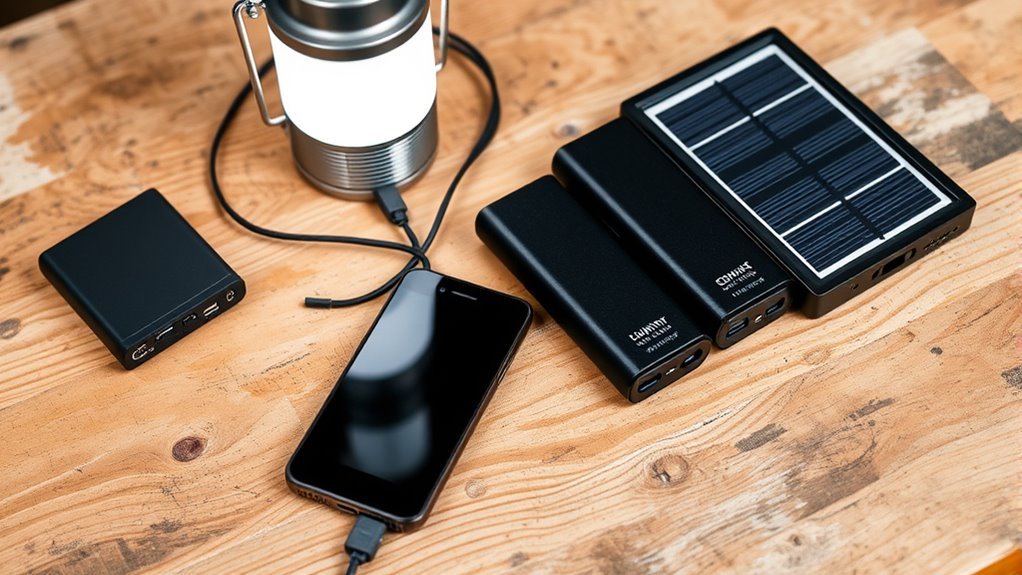
We need to evaluate several key factors when selecting a portable lithium battery backup. These include its power capacity, weight, and output variety. We’ll also consider charging speed and overall battery lifespan.
Power Capacity And Duration
How long do you need your backup power to last? The answer dictates our capacity choice, measured in watt-hours (Wh). This figure tells us the total available energy. To calculate runtime, we simply divide the battery’s Wh rating by our device’s wattage. For example, a 288Wh unit runs a 60W device for roughly 4.8 hours. We also must check the continuous output in watts; it needs to exceed our total connected load for everything to function. For long-term needs, we look for expandable systems that let us add capacity. Additionally, we consider battery chemistry. Lithium Iron Phosphate (LiFePO4) cells, for instance, offer exceptional cycle life, ensuring the capacity lasts for thousands of charges.
Weight And Portability
Along with capacity, we consider how easy it is to move and carry our backup power. A 300Wh-class unit often weighs about 7.5 lbs, making it quite portable. For true grab-and-go use, ultra-portable models under 4 lbs easily fit in a backpack. However, scaling up capacity increases weight substantially; a 1000Wh power station can weigh 27 to 40 lbs. That often requires two-handed carrying or integrated wheels. Modern designs help mitigate this trade-off, using advanced cell-to-body tech to slash weight. For instance, new 2kWh units are over 40% lighter than older ones. We always match the unit’s portability to our intended transport method and use case.
Output Ports Variety
While the physical heft of a power station matters, the variety of its output ports dictates what you can actually power. We must consider both the types and the quantity. High-wattage AC outlets are essential for small appliances, while powerful USB-C PD ports are indispensable for fast-charging modern laptops. The sheer number of ports, from standard USB-A to 12V car sockets, dictates how many gadgets we can run simultaneously—some units offer over a dozen. We also need to think about specialized functions, like a communication port for safe computer shutdowns. Ultimately, we have to match the specific port combination to our individual needs, whether that’s multiple AC outlets for tools or a focus on high-speed USB for personal electronics.
Charging Speed Methods
Since a power station is only useful when it’s charged, we need to evaluate the various methods available for getting energy back into the unit, as their speed and practicality differ greatly. Fast AC wall charging is often the quickest method, with high-wattage units reaching an 80% charge in under an hour. For off-grid scenarios, solar compatibility is critical, where supported input wattage directly dictates your replenishment speed. We can also use a 12V car port for slower, mobile charging while traveling. The fastest solutions often combine methods, using dual-input charging from both solar and AC to drastically cut total recharge times, with some advanced models achieving a full charge in around 70 minutes.
Battery Chemistry And Lifespan
Beyond how quickly we can recharge them, the underlying battery chemistry determines how long a portable power station will last. We must focus on Lithium Iron Phosphate (LiFePO4) cells for their exceptional lifespan. These batteries typically deliver 3,000 to over 5,000 full charge cycles before degrading to about 80% of their original capacity. This stability stems from their superior thermal and chemical safety. That high cycle count means we can use the same unit for many years, possibly over a decade, without a significant drop in performance. Ultimately, this longevity translates directly into lower long-term costs and less waste, as we won’t need a replacement nearly as often as with older battery types.
Intended Use Scenario
Our choice of a portable lithium battery starts with defining exactly what we need it to do. For emergency home backup, we’ll prioritize a high-capacity unit with UPS functionality and fast switching to keep critical devices running. Mobile outdoor recreation demands an ultra-lightweight design under ten pounds with multiple output ports. Stationary telecom or professional use requires rack-mountable units offering long runtime under heavy loads and communication ports. If we’re building a sustainable off-grid system, efficient solar recharging and a high cycle life are non-negotiable. Finally, a versatile workshop backup needs pure sine wave output to safely run tools and a wide array of outlet types. Matching the scenario to the spec is key.
Safety And Warranty Coverage
Having chosen the right battery for our needs, we must then confirm its safe operation and protection over time. We prioritize inherent safety, seeking stable chemistries like LiFePO4 for their lower thermal runaway risk. We also verify industry certifications, such as UL 1642 or UL 1778, which confirm rigorous testing. A robust Battery Management System (BMS) is non-negotiable; it must guard against over-charge, over-discharge, and short circuits. Finally, we scrutinize the warranty. A longer term, like 5 years, shows manufacturer confidence. We specifically check for capacity retention guarantees, ensuring the battery will retain a defined percentage, such as 80%, of its original capacity after its stated cycle life, securing our long-term power investment.
Frequently Asked Questions
What Are the Fire Risks of Lithium Batteries?
Let’s discuss their main fire risks: they can short-circuit, overheat, and go into “thermal runaway,” which we can’t easily stop. Damaging or charging them improperly also increases the danger substantially.
Can These Be Used During Air Travel?
Like legendary forbidden treasures, these batteries face strict rules. We can use them while flying, but we’ll need to pack them in our carry-ons and adhere tightly to the airline’s specific watt-hour limits.
Are They Safe for Indoor Use Overnight?
We’ve designed our batteries with safety in mind, so they’re generally safe for overnight indoor use when you follow our guidelines, like using the correct charger and keeping them in open, dry areas.
How Long Do They Last Before Replacement?
We treat them like marathon runners, lasting years with care. Their lifespan isn’t measured by a single calendar but by thousands of cycles; we typically see five to ten years before needing a replacement.
Can I Connect Multiple Brands Together?
We don’t recommend mixing brands when you connect multiple batteries. Different internal electronics can create charging or performance issues, so we’d stick to one brand for your safety and the best power.
Conclusion
We consider our portable batteries not as boxes, but as seeds. Plant one in your backpack or your pantry, and it quietly grows into a camp, a home office, or a safe harbor in a storm. That’s the harvest of modern energy: the power to cultivate confidence and adventure from a single, steadfast source, season after season.