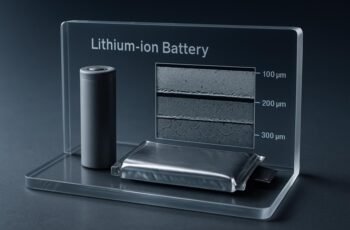
We understand portable lithium packs age from chemistry, depth of discharge, and temperature, so we monitor cycle life, calendar aging, and internal resistance with steady precision. We’ll discuss how heat, rapid charging, and deep discharges accelerate fade, and how controlled temperature, gradual charging, and prudent storage slow it. Our goal is a practical framework you can apply, but the nuances mean you’ll still need to check ongoing signals and adjust usage as conditions shift.
Key Takeaways
- Lifespan depends on cycle life, depth of discharge, temperature, and charging rates; harsher conditions shorten it.
- End-of-life indicators include capacity loss, higher impedance, and erratic temperature changes signaling aging.
- Proper storage (40–60% SOC, 15–25°C, <50% humidity) slows calendar aging and SEI growth.
- Use safe charging practices (avoid deep discharges, moderate currents, certified chargers) to extend lifecycle.
- Manufacturer ratings are often optimistic; real-world lifespan varies with usage patterns and environmental conditions.
How Lithium Batteries Work and Why Cycle Life Matters for Portables
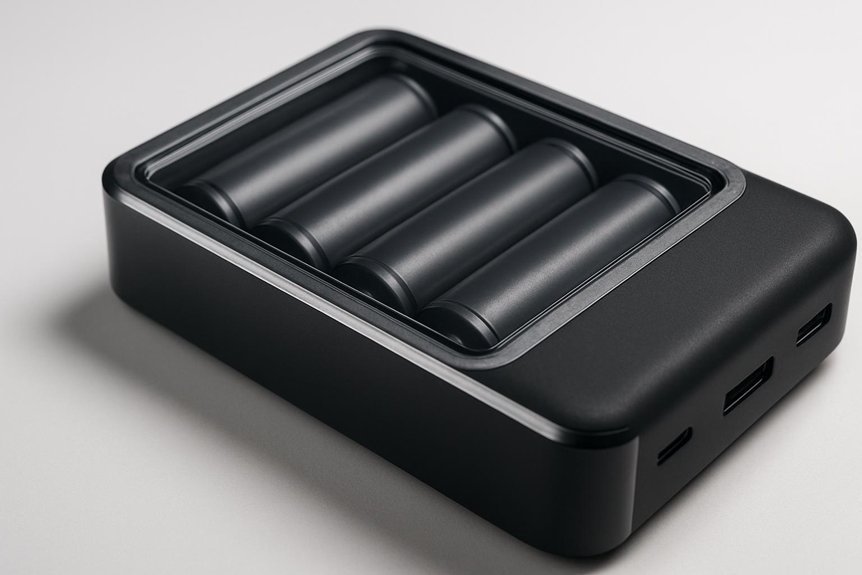
Lithium batteries store energy through chemo‑chemical reactions between a graphite anode and a metal oxide cathode, separated by an electrolyte that enables lithium ions to shuttle back and forth during charging and discharging. We, as researchers and designers, track the fundamental processes that convert chemical energy to electrical work. In this system, battery chemistry governs ion transport, interfacial reactions, and structural integrity of active materials. We quantify capacity, voltage, and impedance to characterize performance under defined test conditions. Cycle life emerges from cumulative structural and kinetic changes that reduce reversible capacity and increase polarization over time. Understanding these mechanisms lets us optimize electrode materials, electrolyte formulations, and separators, delivering predictable, repeatable performance for portable devices while meeting safety and reliability targets.
What Shortens Portable Battery Cycle Life (Chemistry, Heat, Deep Discharges)
What shortens portable battery cycle life? We observe that chemistry, heat, and deep discharges collectively drive shortened cycles. From a chemistry perspective, material limits impose transient voltage swings and electrode degradation, constraining usable capacity each cycle. Ion transport bottlenecks and SEI growth rate translate to higher impedance, accelerating capacity fade. Thermal effects compound these processes: elevated temperatures increase reaction rates and accelerate electrolyte decomposition, while cold exposure reduces electrode kinetics, effectively stressing the same chemistry limits. Deep discharges remove active lithium and destabilize lattice structures, causing irreversible loss per cycle. Across chemistries, we quantify shortened cycles by capacity fade and impedance rise, with failure modes tied to material phase changes and interfacial instability. Understanding these factors helps frame limits without overestimating usable life.
How to Maximize Cycle Life Without Damaging Cells
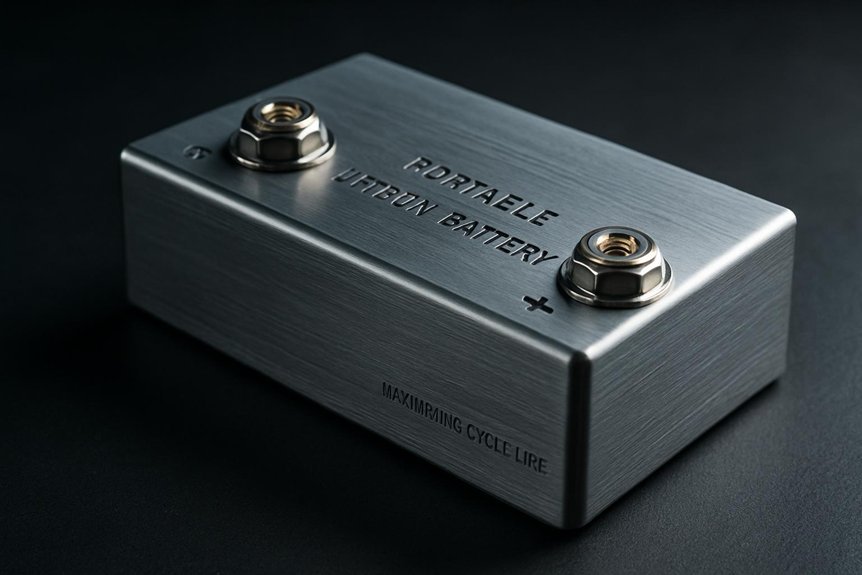
How can we maximize cycle life without damaging cells? We approach this by controlling operating conditions that directly influence battery chemistry and cycle health. We define safe upper and lower state-of-charge windows, avoiding extended peaks near 100% or deep discharges below 20%. We emphasize gradual charging currents, temperature moderation, and consistent thermal management to minimize impedance growth and electrolyte degradation. Our protocol favors partial, not full, discharges for routine use, with calibrated charging profiles that respect cell balance in multi-cell packs. We recommend monitoring tools that track voltage recovery, internal resistance, and temperature across cycles, enabling early intervention. By documenting cycle data, we quantify improvements, revealing how disciplined charging, temperature control, and balanced packs extend overall cycle life.
Signs Your Portable Battery Pack Is Nearing End of Life
We observe a clear capacity decline, which reduces usable runtime and signals reduced pack health. We also see fewer charging cycles before the device hits low-state thresholds, indicating aging cells and increased internal resistance. Additionally, higher or erratic temperature changes during use or charging can reveal nearing end-of-life behavior.
Battery Capacity Decline
Battery capacity decline is a primary, measurable indicator that a portable lithium battery pack is nearing end of life. We quantify this decline via capacity loss as a function of cycle count and calendar aging, observing both absolute ampere-hour reduction and relative percentage deterioration. Our measurements reveal that capacity fades due to electrochemical degradation within cells, tab wear, and electrolyte impedance growth, all modulated by temperature and usage profiles. We distinguish initial abrupt drops from gradual, long-term losses, attributing the former to manufacturing variance and the latter to irreversible SEI growth. For reliability, we track remaining capacity against design specifications, compute effective energy density as usable energy per volume or mass, and compare to baseline battery chemistry targets. This objective trend signals imminent replacement or refurbishment needs.
Charging Cycles Reduction
Charging cycles reduction manifests as a faster-than-expected drop in usable capacity per cycle and a shorter overall cycle life than design targets. We observe this when discharge capacity per cycle declines beyond nominal estimates, reducing total energy delivered over the device’s life. We attribute it to imbalanced wear across cells, imperfect wear leveling, and shifts in battery chemistry under operational stress. Our analysis tracks cycle life metrics, with emphasis on charge-discharge efficiency, calendar aging, and calendar-to-cycle coupling. We assess heat mitigation effectiveness, since elevated temperatures accelerate degradation pathways and skew cycle counts. Practical indicators include rising internal resistance and more frequent top-off events. We recommend controlled charging profiles, thermal management improvements, and periodic balance checks to preserve cycle life and minimize premature end-of-life signals.
Performance Temperature Changes
As a pack ages, temperature behavior becomes one of the clearest indicators of nearing end of life. We observe that elevated, localized heat during modest loads signals degraded internal impedance, while cold spots indicate uneven cell performance. Thermal shifts correlate with capacity loss and faster resistance rise, reducing effective energy delivery. Consistent over-temperature events often precede abrupt voltage sag, confirming risk of failure under load. We present a concise table to illustrate practical implications for diagnosis and mitigation.
| Condition | Implication |
|---|---|
| Sustained high temp | Impedance rise, reduced runtime |
| Uneven heat distribution | Cell imbalance, hotspots risk |
Two word idea1, two word idea2.
How Temperature Impacts Longevity and Safe Use for Portables
How temperature affects both longevity and safe use in portable lithium battery packs can be quantified by the Arrhenius relationship, which links reaction rates to ambient conditions. We quantify how elevated temperatures accelerate degradation mechanisms such as SEI growth, electrolyte instability, and capacity fade, while subfreezing conditions impair ionic mobility and usable capacity. Temperature effects on cycle life are nonlinear, with optimal ranges around mid-20s Celsius for many chemistries; outside this window, degradation rates increase markedly. We translate this into practical safe use guidelines, noting that stable temperatures reduce risk of thermal runaway and swelling. We present empirical thresholds derived from accelerated aging data and emphasize monitoring, insulation, and avoidance of prolonged exposure to extreme heat or cold to preserve longevity.
Safe Charging Practices to Extend Battery Health
Are we maximizing safety without compromising longevity by adopting disciplined charging practices? We approach charging with data-driven discipline to protect cycle longevity while respecting battery chemistry. Practical strategies reduce stress and heat, extending usable life without sacrificing usability.
- Maintain recommended charge currents and avoid aggressive fast charging when not required
- Keep cell temperatures within safe operating range during charging
- Use certified chargers and cables tailored to the pack specifications
- Avoid deep discharges; top off between 20%–80% when feasible
- Monitor voltage and temperature trends to detect anomalies early
These practices align with empirical findings on cycle longevity and reflect how chemistry dictates safe limits. By adhering, we minimize degradation mechanisms and preserve performance across charge cycles. Consistency matters as much as precision in this disciplined charging routine.
Storage Habits That Protect Portable Battery Health
What storage conditions best preserve portable battery health, and why do they matter? We present evidence-based habits that minimize calendar aging and C-rate stress, preserving portable viability. We avoid storage myths by citing operational ranges, chemistry-aware targets, and temperature control. In practice, we keep packs at partial state-of-charge, moderate temperatures, and stable, dry environments to limit SEI growth and dendrite risk. Regular, minimal cycling is preferred over prolonged inactivity, reducing voltage drift. The table below summarizes key parameters and outcomes.
| Parameter | Recommended Range | Expected Effect |
|---|---|---|
| Temperature | 15–25°C | Slows degradation |
| State of Charge | 40–60% | Minimizes aging |
| Humidity | <50% | Reduces corrosion |
| Storage Duration | Less is better for high-DOA packs | Improves long-term viability |
| Power-off | Yes, disconnect loads | Reduces self-discharge |
Choosing a Portable Battery Pack Based on Lifespan and Durability
We examine lifespan expectations and durability metrics to guide you in selecting a portable battery pack. We quantify cycle life, depth of discharge tolerance, charge/discharge efficiency, and environmental durability to compare performance across models. Our aim is to present clear, empirical criteria you can apply when evaluating packs for long-term reliability and sustained capacity.
Lifespan Expectations
When choosing a portable battery pack, lifespan and durability should guide both initial selection and long-term use. We present clear, empirical expectations to help you compare packs by measurable life indicators rather than generic claims.
- Cycle life estimates vary with lithium chemistry and depth of discharge
- Realistic cycle counts differ between nominal and actual operating conditions
- Temperature and charge rate materially influence longevity
- Manufacturer ratings often overstate practical lifespan
- End-of-life criteria should match your usage pattern and warranty
We emphasize repeatable testing data, not marketing. By focusing on cycle life under typical usage, you can select a pack that maintains usable capacity across years, reducing premature replacements and optimizing total cost of ownership.
Durability Metrics
Durability metrics for portable battery packs hinge on measurable, repeatable tests that reflect real-world use. We compare cycle life, thermal stability, and mechanical resilience to establish objective durability metrics and align with lifespan expectations. We assess capacitance retention, internal impedance growth, and voltage sag under simulated load to quantify long-term performance. The results guide selection by confirming expected endurance under typical usage patterns and environmental conditions.
| Criterion | Methodology |
|---|---|
| Cycle life & capacity retention | Accelerated discharge and recharge cycles, 1C–2C rates |
| Thermal and mechanical resilience | Temperature cycling, drop tests, vibration, and crush simulations |
Troubleshooting Longevity Issues and When to Replace
How can you tell when a portable lithium battery pack is losing value, and what steps determine whether it needs replacement? We assess capacity decline, internal resistance rise, and cycle count relative to lifecycle benchmarks. We compare usable energy to rated capacity under standard load and note voltage sag during discharge. Temperature behavior, self-discharge, and swelling indicate degradation beyond normal aging. We corroborate with manufacturer guidelines and independent lifecycle benchmarks to avoid longevity myths. Replacement decisions hinge on performance under typical use, safety risks, and cost of repairs versus a new pack. If efficiency drops below 80% and cycles exceed spec, we plan phase-out.
- Capacity loss assessment and load testing
- Internal resistance tracking
- Cycle-count comparison to benchmarks
- Temperature, swelling, and safety checks
- Cost-benefit decision and replacement timing
Frequently Asked Questions
How Many Cycles Does Different Lithium Chemistries Typically Offer?
We typically see lithium chemistry cycle counts around 300–500 for Li-ion, 500–1,000 for NMC, and 1,500–2,000+ for solid-state, depending on design; we, however, stress real-world conditions alter performance, and our measurements reflect practical, empirical results.
Do Battery Packs Have a Guaranteed Lifespan or Only a Typical Range?
We guarantee a range, not a single moment of truth. Our testing shows typical lifespans with aging indicators and clear warranty expectations; packs can fail outside spec, so numbers exist, but buffers protect users in real-world use.
Can Using High-Drain Devices Shorten Portable Battery Life?
Yes, high-drain usage can shorten cycles and accelerate wear. We assess high drain risk by monitoring heat and voltage; practice proper charging etiquette, limit rapid discharges, and avoid excessive near-full drains to preserve lifespan.
Do Environmental Factors During Storage Affect Cycle Stability?
Yes, environmental aging during storage affects cycle stability; storage temperature drives chemical changes that alter capacity retention and impedance growth. We observe that elevated temperatures accelerate degradation, while low, stable temperatures mitigate drift and preserve long-term performance.
Are There Telltale Indicators Before Packs Fail Completely?
Before usage signals, yes—we can spot clear pre-fail indicators. We note storage temperature warnings and gradual capacity decline, plus rising internal resistance. We monitor cells for swelling and voltage drift to act before complete failure.
Conclusion
We’ve walked through chemistry, heat, and usage patterns that quietly dictate a pack’s lifespan. If you ignore those signals, you’ll learn throughput the hard way—more heat, deeper discharges, and faster aging. But respect the data: moderate temps, gradual charging, sensible storage, and vigilant monitoring quietly extend cycles and cap impedance growth. So yes, we’ll outlive the ticking clock by following disciplined practices—satirically noting that neglect is the loudest, least efficient charger of all.