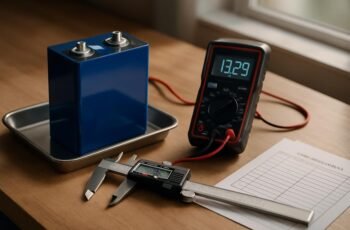
We need careful handling and disciplined routines to keep Lithium Polymer packs safe and reliable. We’ll cover certified chargers, current limits, temperature and cell-voltage monitoring, and regular balancing to prevent skew. Storage at safe voltages and moderate temperatures, plus routine visual checks, will reduce hazards and extend life. We’ll document procedures and cycle data for traceability and isolate any damaged packs promptly, following proper disposal guidelines. There’s more to examine before you apply these practices.
Key Takeaways
- Regularly monitor cell voltages and temperature, and balance cells to maintain safe LiPo operation and extend cycle life.
- Use certified chargers with appropriate current limits, temperature sensing, and spark-free grounding for safe charging.
- Inspect packs for damage, corrosion, leaks, and vent integrity; log any anomalies and disconnect if issues appear.
- Store batteries at 3.0–3.8 V per cell with mid-capacity, in a cool, dry place and avoid overcharging.
- Track impedance rise and capacity fade, perform periodic resting voltage tests, and document charging cycles for traceability.
Why LFP Batteries Need Care: Benefits and Maintenance Goals
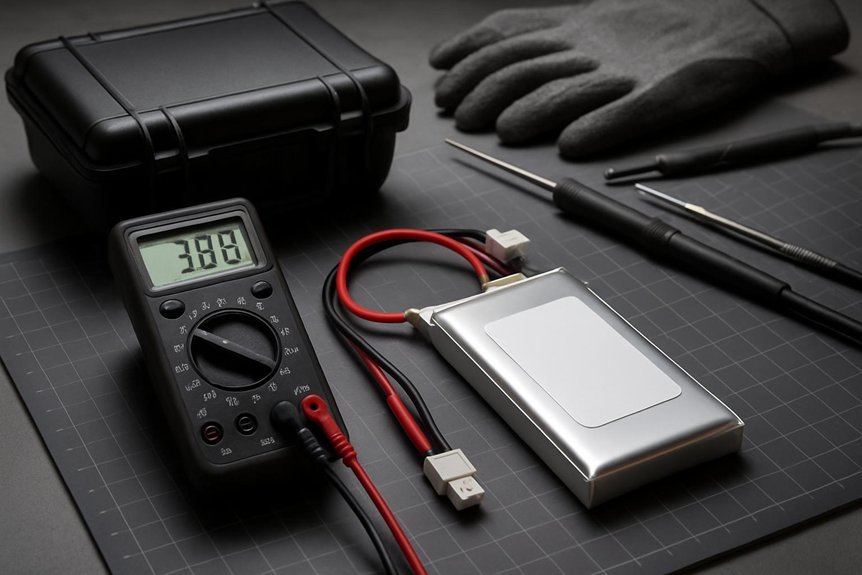
LFP batteries require careful handling because their chemistry offers higher safety margins but benefits from consistent maintenance to preserve capacity and lifespan. We, as technicians and users, recognize that proactive care minimizes performance drift and extends usable cycles. We monitor state-of-health indicators, balance cells when needed, and store packs within recommended temperature and voltage ranges to reduce irreversible capacity loss over time. Our goal is predictable performance, reliable recovery after discharges, and durable energy delivery. We acknowledge that improper degradation paths can lead to reduced capacity asymmetry and unexpected impedance growth. While LFP chemistry lowers certain risks, we remain vigilant for signs of thermal anomalies that could precipitate thermal runaway if mismanaged. Systematic inspection, proper handling, and maintenance discipline are essential to sustain long-term reliability.
Safe Charging Practices for LFP Packs
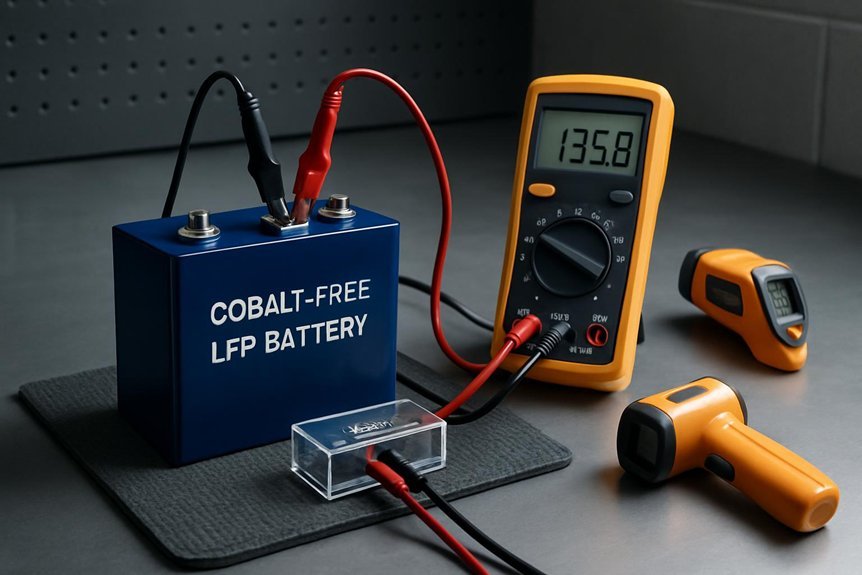
We’ll cover safe charging protocols for LFP packs, emphasizing temperature-aware limits and correct charger selection. We’ll outline acceptable charging ranges, monitoring steps, and what to do if indicators show deviation from spec. By sticking to these temperature rules and recommended charging profiles, we reduce risk while maintaining pack health.
Safe Charging Protocols
Are you charging safely and reliably? We approach charging protocols with rigor, ensuring every step aligns with safe operating margins for LFP packs. Our protocol defines rated voltage, current limits, and end-of-discharge thresholds, verified before any connection. We insist on using certified power supplies, impedance tracking, and consistent monitoring of temperature and voltage per cell, preventing runaway conditions. We recommend serialized, well-labeled adapters to avoid cross-compatibility errors, and favor spark free environments during setup to reduce ignition risks. Implement procedures that require grounding and inspection of connectors, cables, and packs prior to charge. For production considerations, we reference cleanroom manufacturing practices to minimize contamination and ensure stable contact. Finally, we document charging cycles, fault events, and corrective actions for traceability and continuous safety improvements.
LFP Pack Temperature Rules
To ensure safe charging, we monitor pack temperature closely during each step of the process; excessive heat warns of potential impedance rise and cell imbalance, so we halt charging and verify cooling, connection integrity, and power supply stability before proceeding. LFP packs exhibit limited but meaningful temperature variability under load, requiring tight tolerance management. We track ambient influence, cell surface, and internal resistance changes to prevent unexpected aging. If temperatures deviate beyond defined thresholds, we pause and recheck thermistor readings, cooling efficiency, and enclosure airflow. Moisture ingress remains a critical risk; ensure seals, connectors, and cabinet humidity control are intact before resuming. Only after stable temperatures, verified connections, and consistent power supply should charging continue, preserving pack longevity and safety.
Storage Rules to Extend Battery Life
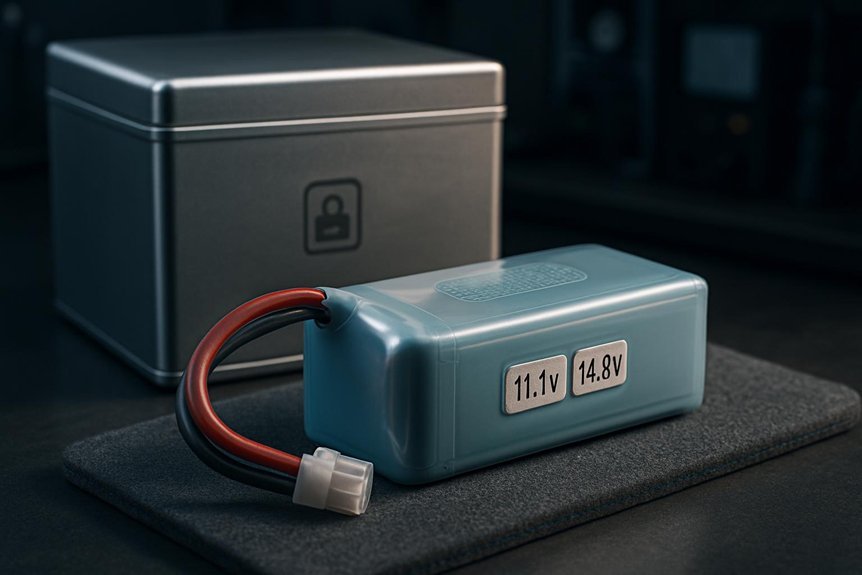
Storage rules to extend battery life require disciplined handling of charge state, temperature, and timing. We operate with clear constraints: avoid overcharging, maintain 3.0–3.8 V per cell, and store at mid-capacity when not in use. We establish regular check intervals and implement conservative charging windows to minimize drift. Our protocol emphasizes accurate state-of-charge estimation, validated by repeatable testing methods that compare resting voltage against known profiles. We track health indicators such as impedance rise and capacity retention to detect early degradation. Remote monitoring provides alerts for out-of-range conditions, enabling timely interventions. We document each cycle to support traceability and long-term planning. By applying these storage rules, we systematically extend battery life while preserving safety and performance margins. Continuous review ensures our practices stay aligned with evolving specifications.
How Temperature Affects LFP Performance
What temperature ranges optimize LFP performance, and why do deviations matter? We, as stewards of reliability, note that moderate temperatures preserve capacity and longevity, while extremes accelerate aging. Temperature variance drives kinetic changes in electrode reactions and electrolyte stability, altering internal resistance and cycle life. Below-freezing conditions raise impedance and risk lithium plating; excessive heat accelerates electrolyte degradation and safety concerns. Practical operation should target a narrow window to balance performance and safety.
- Stable, moderate temps create smooth charge-discharge curves and predictable capacity
- Avoid rapid heating during fast charging to limit electrolyte volatility
- Shield cells from external cold to prevent increased resistance and delayed response
- Monitor ambient and pack temps to keep electrolyte stability within spec
Visual Inspection Checklist for LFP Batteries
We perform a visual scan of the pack and its surroundings to identify obvious signs of damage or contamination. We then inspect terminals and the case for corrosion, looseness, swelling, or cracks, documenting any deviations from baseline. Our checklist ensures we address both surface observations and secure connections before proceeding with further testing.
Visual Scan Checklist
How should you conduct a visual scan of an LFP battery pack to spot issues before they escalate? We adopt a disciplined, methodical approach, documenting each observation and comparing against baseline norms. We focus on surface integrity, color shifts, and physical alignment, remaining alert for subtle cues of irreversible degradation or electrolyte leakage. We exclude speculation and escalate anomalies promptly to maintenance protocols.
- Surfaces: uniform coloration, no blistering, swelling, or cracks
- Terminals: clean, firm connections, no corrosion or discoloration
- Cables: intact insulation, strain relief intact, no fraying or deformation
- Vent areas: clear, unobstructed, no residue or odor
If any deviation appears, halt further handling and log details for follow-up.
Terminal and Case Check
Before proceeding, perform a focused visual check of all terminal connections and the battery case to ensure secure, clean interfaces and enclosure integrity. We approach terminal and case assessment with care, noting any discoloration, corrosion, or loose hardware before energizing. Inspect battery connectors for signs of wear, fraying insulation, or pin misalignment, and verify that each connection seats fully without gaps or excessive torque. Examine case seams, fasteners, and gaskets for cracks, deformation, or moisture ingress that could compromise containment. Look for electrolyte residue or a sour odor indicating leakage. Confirm labeling and safety features are intact, including venting paths and protective covers. If any anomaly is observed, isolate the unit, document findings, and consult a qualified technician. Routine checks protect performance, safety, and enclosure integrity.
Choosing and Using Charging Gear Safely
Selecting charging gear for a lithium polymer battery requires careful attention to compatibility, safety standards, and verified performance. We approach charging gear with precision, ensuring each component supports the pack’s chemistry, capacity, and balance. We emphasize charging safety and controlled conditions, never bypassing protections or manufacturer guidance. Proper equipment reduces risk during storage, charging, and test cycles, while protecting pack handling from mechanical stress.
- Verifies connector compatibility and polarity before connection
- Uses a reputable charger with appropriate current limits and temperature sensing
- Employs fire-safe placement and enclosure, plus venting awareness
- Monitors status indicators and stops if anomalies appear
We stay disciplined, documenting procedures and adhering to limits. By selecting and using gear meticulously, we minimize hazards and maintain pack integrity.
Battery Balancing and State of Charge You Should Know
Maintaining proper battery balance and knowing the state of charge (SoC) are foundational to safe, reliable LiPo operation. We monitor cell voltages during balancing to prevent capacity skew that reduces performance and increases heat. SoC tracking informs charge limits, discharge thresholds, and cycle timing, preventing premature aging. We adhere to manufacturer tolerances and avoid deep discharges; when balancing, we ensure cells converge within narrow voltage spreads before completing a pack full. We consider fast charging implications, verifying that balance leads and BMS components can handle elevated currents without thermals or voltage runaway. For solar pairing, we account for intermittent input by scheduling balancing and SoC checks during stable sun windows, avoiding overcharge risks. Communicate clearly, log measurements, and adapt procedures to pack chemistry and age.
Common LFP Symptoms and Practical Troubleshooting
We’ll walk through common LFP symptoms and practical troubleshooting by focusing on battery health indicators, identifying patterns in performance issues, and applying safe handling practices. When symptoms arise, we reference clear health indicators, isolate likely causes, and pursue targeted corrective steps without overreaching. We’ll emphasize safety, accuracy, and concise actions to support reliable operation and proper risk management.
Battery Health Indicators
What are the telltale signs that an LFP battery isn’t performing as it should, and how can we troubleshoot them effectively? We monitor battery health indicators with a precise, cautious approach, linking symptoms to underlying battery chemistry while respecting charging etiquette. Early warning signs are subtle but measurable, guiding conservative corrective steps.
– Capacity fade without rapid discharge
-Unexpected voltage sag under load
-Longer recharge times or inconsistent peak voltage
-Temperature rises during modest use
We document metrics, avoid overinterpretation, and preserve safety margins. We avoid speculative remedies and prioritize verifiable data. If indicators trend negative, we reassess usage patterns, ensure proper ambient conditions, and revalidate charging routines. Clear records support future decisions. By staying disciplined about data and charging etiquette, we minimize risk and preserve longevity without introducing unnecessary interventions.
Troubleshooting Performance Issues
Are the symptoms of a tired LFP pack actually predictable, and can we nail down practical steps to verify and correct them? Yes, we can approach this systematically. We’ll assess symptoms, isolate likely causes, and apply targeted remedies to preserve battery health. Start with baseline measurements, then compare current performance to specs. Prioritize gradual, safe testing: voltage under load, impedance, and temperature at known currents. Document deviations, then adjust charging, capacity checks, and cycle counts before replacing cells or packs. Avoid risky fast-discharge practices. Consistent records help diagnose trends and prevent escalation. If in doubt, pause aggressive testing and consult manufacturer guidance.
| Symptom Observations | Immediate Checks / Actions |
|---|---|
| Reduced runtime | Verify capacity, recheck C-rate during charge/discharge |
Safety and Handling Tips
Could common LFP symptoms signal deeper safety concerns, and how should we handle them promptly? We respond with disciplined caution, outlining practical steps we take together. Early signs demand systematic assessment: temperature rise, swelling, leakage, or unusual odors. We act to isolate the pack, avoid puncture, and consult guidelines rather than guesswork. Our focus remains on preventing escalation through careful handling and documentation.
- Inspect connections and terminals with clean gloves, noting corrosion or looseness
- Perform controlled cooling and store in a fire-safe, non-combustible location
- Follow disposal guidance for damaged cells and avoid improvisation
- Record symptom onset, measurements, and actions for maintenance records
We emphasize cleaning terminals carefully when safe, and using proper disposal guidance for compromised packs to minimize risk.
How to Cycle and Discharge Like a Pro
To cycle and discharge a lithium polymer battery properly, we should first understand that controlled depth of discharge and appropriate resting intervals preserve cell balance and overall longevity. We approach cycling cadence with disciplined, repeatable steps: set a conservative discharge depth, monitor cell voltages, and avoid abrupt current spikes. We document a consistent pattern, ensuring that each cycle finishes at a safe termination voltage and that a brief rest period follows before any reapplication of load. We track temperature and impedance to detect early signs of imbalance or stress. We emphasize that discharge depth varies by pack chemistry and application, but stays within manufacturer-specified ranges. Precision in timing, voltage limits, and logs minimizes degradation and sustains capacity over time.
When to Recycle or Replace Your LFP Battery
Determining when to recycle or replace an LFP battery hinges on measurable performance and safety indicators rather than a fixed calendar date. We assess capacity fade, internal resistance growth, and charge retention to decide replacements, always prioritizing safety and regulatory compliance. When indicators cross defined thresholds, we act promptly to minimize risk and environmental impact.
- Diminished usable capacity prompts evaluation for reuse or retirement, with care labeling guiding next steps
- Excessive internal resistance signals inefficiency and potential thermal risk, triggering professional assessment
- Loss of voltage under load indicates degraded health, informing disposal ethics and recycling channels
- Visible swelling, leakage, or abnormal odors mandates immediate isolation and compliant disposal
We document findings, ensure proper care labeling, and follow approved disposal ethics to protect people and the planet.
Frequently Asked Questions
How Do I Identify Counterfeit or Fake LFP Cells?
We identify fakes by verifying label consistency, pack integrity, and serial data; we avoid counterfeit sources and cross-check with manufacturer databases, test internal resistance, capacity, and cell balance均; we report anomalies immediately and discontinue use if uncertain.
Can I Mix Different Brands in a Single LFP Pack?
We don’t recommend mixing different brands in a single LFP pack. Two word discussion ideas include “cell consistency” and “pack safety,” subtopic irrelevant to other h2s; we caution that mismatched cells can cause imbalance, reduced capacity, and safety risks.
What Are the Audible Warning Signs of Failure?
We hear audible indicators like popping, hissing, or crackling that signal impending failure warnings; we stop, assess, and respond. We’ll document temperature rises, voltage drops, and unusual currents, treating them as alarms urging cautious, precise actions.
Do LFPS Require Periodic Firmware or BMS Updates?
Yes, LFPS require periodic firmware maintenance and BMS updates. We monitor voltage and thermals, perform cautious calibrations, and verify firmware integrity; we proceed with controlled steps and document findings. We advise readers to track two word ideas: firmware maintenance.
How Long Does a Monthly Self-Test Take?
We estimate the monthly self test duration at about 5–15 minutes, depending on system complexity; test procedures run quickly, with thorough checks. We, as technicians, caution that results may vary, and document deviations for accurate diagnostics.
Conclusion
We know you’ll rush to “just use it,” yet we’ll insist on patience. Proper care isn’t glamorous, it’s boringly exact: certified chargers, balanced cells, monitored temps, and storage at 3.0–3.8 V per cell. Go ahead, ignore the visual checks at your peril; we’ll be here, logging every cycle and avoiding hazards with clinical restraint. Irony aside, neglect shortens life, increases risk, and defeats the point of a precise maintenance routine. Respect the process, and your packs will thank you.