Imagine a couple who keeps their RV’s lithium pack within the safe window using a dedicated charger and a solid BMS; that setup minimizes drift and avoids voltage creep. We’ll walk you through practical, proven steps—from charging discipline and temperature control to monitoring a trusted SOC meter and routine checks—so you stay ahead of issues. Stay with us as we outline actionable habits that protect capacity, extend cycles, and keep your travels worry-free.
Key Takeaways
- Use a charger matched to your lithium chemistry with correct voltage, current, and proper termination to avoid overcharging.
- Monitor SOC with a reliable battery monitor and track voltage/current trends for early anomaly detection.
- Keep charging connections clean, secure, and corrosion-free; inspect cables and fuses regularly.
- Maintain temperatures within manufacturer-specified ranges; pause charging if temps drift outside targets.
- Schedule routine full/boarded top-offs and equalization as recommended, and document deviations for trend analysis.
How RV Lithium Batteries Work and Why They Matter
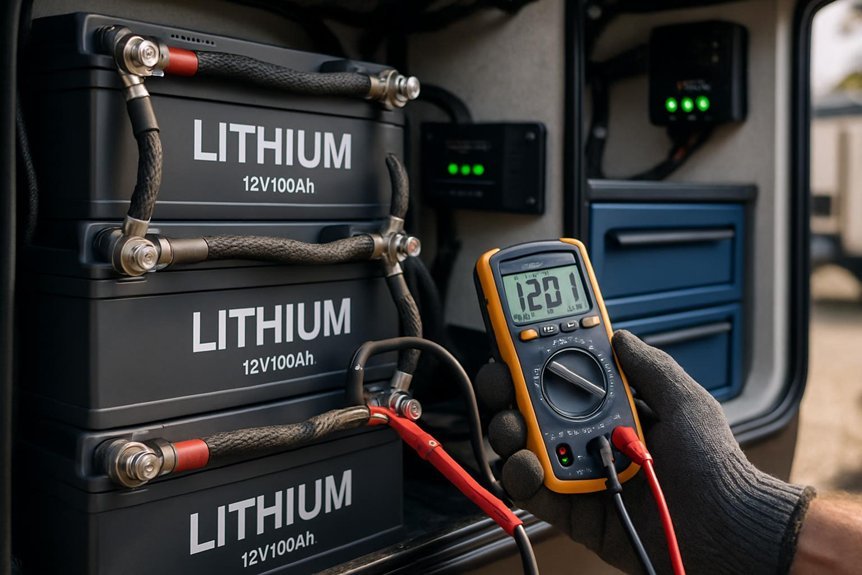
Lithium batteries in RVs store and release energy through a stable chemistry that delivers higher capacity, longer life, and faster charging than lead-acid packs. We explain how lithium works by examining the core cells, voltage windows, and BMS safeguards that keep cells balanced. In practice, charge efficiency, low self-discharge, and lightweight packs translate to more usable capacity on the road. We rely on a chemistry that tolerates deeper discharges without damage, yet still requires proper management to prevent overcurrent, overtemperature, or voltage drift. This matters because reliability and safety hinge on predictable performance across varying loads and temperatures. In short, how lithium works underpins predictable ranges, quicker recharges, and longer service life, which is why they matter for RV comfort and independence.
Safe Charging Habits to Extend RV Battery Life
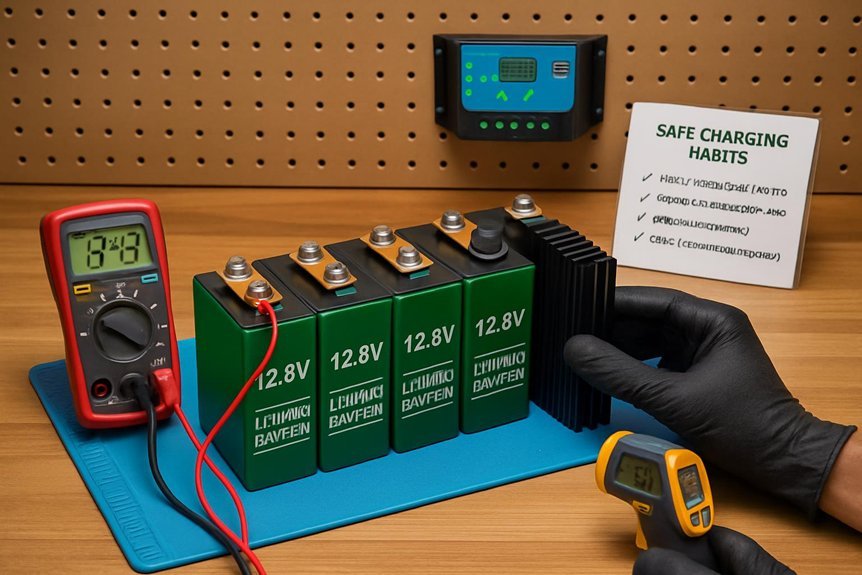
We’ll cover safe charging practices to protect our lithium RV battery life, starting with proper charge routines and using a quality charger. We’ll monitor charging temperatures and adjust settings if they rise outside the recommended range, so we don’t stress cells. We’ll also guard against overcharging by using automatic termination and regular checks to prevent risk and extend overall life.
Safe Charging Practices
Do you want to maximize RV lithium battery life? We’ll keep charging simple and reliable. First, use a charger matched to our battery chemistry, ensuring correct voltage, current, and termination. Avoid aggressive C-rates that stress cells; lean toward gentle, steady charging during daily cycles. Always connect to a dedicated, well-grounded power source with proper safety features and fusing. We scrutinize charging cables for wear and ensure secure, clean connections, preventing resistance heat. Monitor state of charge with a trusted battery monitor, keeping routine checks on voltage and current trends. We favor high manufacturing quality components, including connectors and BMS wiring, to minimize parasitic losses. Finally, schedule regular peak-charge windows and avoid long-term, full-tilt charging when not needed. These practices reduce wear and extend life.
Monitor Charging Temperatures
Ever wonder how temperature affects charging safety and longevity? We monitor charging temperatures to ensure consistent performance and avoid stress on cells. We establish acceptable ranges for each phase—bulk, absorption, and float—and verify that our charger and BMS keep within them. We track ambient and pack temps, watching for spikes that could signal airflow issues, coil warming, or impedance changes. When temps drift outside targets, we pause charging, allow cooling, and resume only after readings stabilize. We implement alarms and automatic retries to minimize manual intervention, and we document excursions for trend analysis. Our approach emphasizes proactive steps, not reactive fixes. With monitoring temperatures and real time alerts, we preserve cycle life and maximize safety during RV adventures.
Prevent Overcharging Risks
After maintaining stable temperatures, we shift focus to preventing overcharging risks by enforcing safe charging habits that extend RV battery life. We start with a smart charger that matches our lithium battery’s profile and automatically terminates at full capacity to minimize overcharging risk. Next, we verify charger settings, avoiding high-current fast charging unless specified by the manufacturer. Regularly inspect connections for corrosion, loose terminals, or damaged cables, since poor contacts amplify lithium safety concerns. Use a dedicated battery management system that monitors voltage, current, and temperature, and alerts us to anomalies. Schedule routine full and equalized charging only as recommended, and never charge outdoors in extreme conditions. Document charging history to spot trends, and prioritize gradual, consistent cycles to preserve long-term capacity.
Temperature Management: Keeping RV Batteries Within Safe Ranges
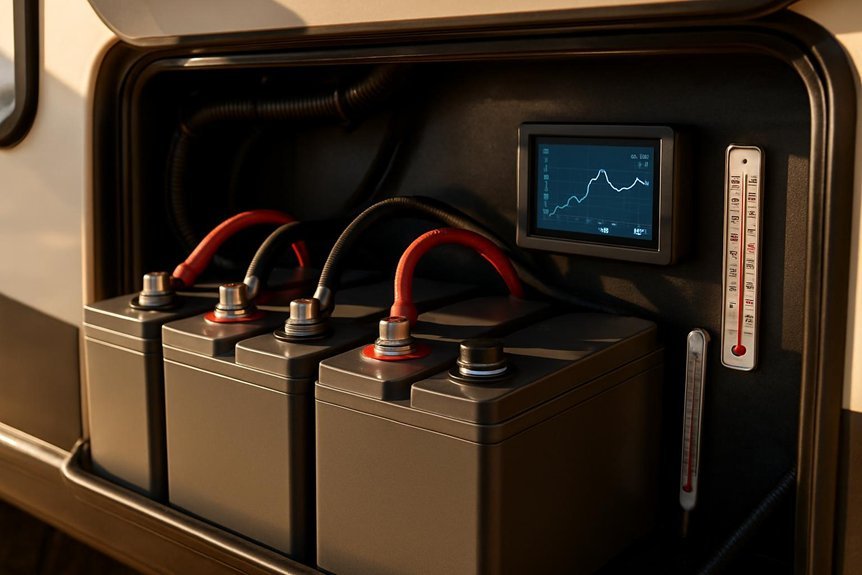
We keep a close eye on Battery Temperature Bounds and apply solid Thermal Management Practices to stay within safe ranges. We’ll monitor ambient and pack temps, use venting or cooling as needed, and avoid heat buildup during charging or fast discharge. By maintaining consistent temps, we protect performance, longevity, and safety for our RV lithium systems.
Battery Temperature Bounds
Maintaining RV battery temperature within safe bounds is essential for performance and longevity, so we start by knowing the exact operating window for your specific battery type. We map the lower and upper limits from the manufacturer: typically around -20°C to 60°C for many lithium chemistries, but we verify your model’s spec sheet. We monitor ambient and pack temperatures, noting any excursions beyond recommended ranges. When temperatures run high, we shorten charge pulses and allow cooling, avoiding high-current draws that amplify heat. In cold conditions, we enable preconditioning and gentle charging to minimize resistance. We consider battery chemistry and its thermal sensitivities, adjusting expectations accordingly. Moisture management remains crucial—keep vents clear of condensation, and prevent moisture ingress that could skew readings or damage seals.
Thermal Management Practices
To keep RV batteries safe and reliable, we implement targeted thermal management that works in tandem with the temperature bounds we’ve set. We continuously monitor ambient and pack temperatures, using passive cooling where possible and active cooling when needed to prevent thermal runaway. Our approach prioritizes efficiency, reliability, and a compact footprint that respects aesthetic design and weight optimization. We limit heat sources near batteries and optimize airflow with directional baffles. We select components rated for RV use, and we test setups under real-world vibration and incline conditions. Regular audits confirm performance stays within safe ranges, and we adjust strategies as seasons shift. This disciplined routine keeps our systems durable and user-friendly for long trips.
- Continuous monitoring and adaptive cooling
- Space-efficient, aesthetically conscious layouts
- Weight-conscious, vibration-tolerant configurations
Tools and Metrics for Monitoring RV Battery Health
What tools and metrics should we rely on to monitor an RV battery’s health, and how do we use them effectively? We rely on a few key instruments and clear benchmarks. A good multimeter or battery monitor tracks voltage, current, and state of charge, while a specialized Li-ion battery monitor yields deeper data like temperature and cycle counts. Record open-circuit voltage after rest, then compare to the manufacturer’s healthy range. Track battery capacity through a controlled discharge test and log energy in/out over a typical day to verify remaining capacity. Observe charging efficiency by comparing input energy to usable output during charging cycles, noting any decline over time. Keep alerts for voltage drops and temperature spikes, and schedule periodic capacity tests to confirm long-term performance.
Practical Charging Profiles to Prevent Deep Discharge
We can prevent deep discharge by following practical charging profiles tailored to Li-ion RV batteries. We, as storytellers for your rig, outline clear steps that lock in longevity while supporting daily needs. Start with moderate, consistent charging voltages to avoid stress, and set a high-precision balance window to keep cells harmonized. Prioritize solar integration when sun is available, then switch to a controlled charger during cloudy periods. Tailor profiles to usage patterns, considering driving ergonomics and idle time to minimize cycles. Implement cutoffs that prevent the pack from hitting low SOC, and verify temperature limits during full charge. Document deviations, then adjust profiles seasonally.
- Profile presets aligned with daily driving and camp patterns
- Temperature-aware charging windows for stability
- Solar + grid transitions to maintain optimal SOC
Routine Maintenance Checklist for RV Lithium Packs
Routine maintenance isn’t optional if you want long-lasting lithium packs in an RV; it’s a set of repeatable checks you perform regularly to prevent small issues from escalating. We start with a visual inspection: cables, connections, and enclosures for corrosion, looseness, and heat. We verify battery state of charge and balance, ensuring cells stay within recommended voltage windows to minimize batttery aging. We review BMS logs for abnormal temps or voltage shifts and confirm firmware is up to date. We test charging and discharging cycles at the manufacturer’s specified depths, noting cycle depth and capacity trends. We document any deviations, then implement corrective actions before they worsen. Finally, we schedule preventative service reminders, field-testing safety reliefs, and recalibrations to sustain performance and reliability.
On-The-Road Troubleshooting for Lithium Battery Issues
How can we quickly narrow down lithium battery issues on the road and keep the RV moving? We’ll approach each symptom with a disciplined checklist, starting with quick tests and safe handling. Our goal is to confirm if the problem is electrical, thermal, or connection-related, then apply targeted fixes on the spot. On-the-road diagnostics rely on portable meters, visual inspection, and careful load tests, avoiding risky disassembly. If we detect battery corrosion, we stop, power down, and clean terminals with approved solutions, then recheck connections before resuming. When symptoms persist, we isolate the pack unit, monitor temperatures, and plan a safe roadside stop for deeper evaluation.
- Practical, on-site checks that differentiate causes
- Quick terminal inspection and corrosion handling steps
- Safe, actionable steps to resume movement promptly
Long-Term Care, Replacement Planning, and Recycling for RV Batteries
As we plan for longer trips and more miles between stops, long-term care, replacement timing, and responsible recycling become part of the RV battery routine. We approach maintenance with a clear schedule: monitor state of health quarterly, track cycle counts, and verify cell balance during top-offs. Replacement timing depends on capacity loss, safety margins, and charging profile compatibility with our system. When it’s time, we choose reputable cells and warranties, document serials, and recycle obsolete packs through certified programs. For long life, prioritize corrosion prevention: keep terminals clean, apply dielectric grease, and protect connections from moisture and vibration. Integrate solar efficiency checks into routine: inspect panels, regulators, and shading. Commit to responsible disposal and reuse where possible.
Frequently Asked Questions
How Often Should I Refresh Battery Firmware or Firmware Updates?
We refresh firmware annually, as part of our firmware lifecycle review, and follow a strict update cadence. We monitor release notes, test compatibility, and document changes, then apply updates promptly to assure stability and performance for your system.
Can Lithium Packs Be Safely Wired in Parallel With Other Models?
Yes, lithium packs can be wired in parallel only if their chemistries, capacities, and voltages match; always verify lithium parallel compatibility and model to model wiring safety before proceeding, and use proper fusing and balanced BMS monitoring.
Do Lithium Batteries Require Rare Earth Magnet Clocking for Longevity?
We don’t require rare earth magnet timing for longevity, and lithium batteries don’t rely on clocking longevity. We recommend consistent charging, proper temperature, and verified BMS settings, then monitor performance with methodical checks and practical endurance tests.
What Are Signs of Micro-Cracks in Battery Cells?
Micro cracks show as fine, visible or rough-edged fractures in cells, plus sudden voltage drops and rising internal resistance. We monitor battery health with regular impedance checks and capacity tests, then isolate suspect modules and perform delayed diagnostics.
Is Solar Charging Required for Optimal Long-Term Health?
Solar charging isn’t strictly required for optimal long term health, but it significantly extends your pack’s lifespan. We recommend steady, moderate solar input, monitor temps, prevent overcharging, and balance cells regularly for reliable long-term health.
Conclusion
We’ve covered practical, precise steps to keep RV lithium batteries healthy, safe, and long‑lasting. Follow a trusted charger and BMS, monitor SOC, and keep voltages and temperatures within spec. Practice gentle charging, inspect cabling, and schedule regular equalization per manufacturer guidance. Maintain cooling, airflow, and preconditioning for hot or cold days. Track cycles, perform routine checks, and plan replacements and recycling when needed. Anachronism: when in doubt, consult your “oracle” of the charger—your BMS’s instructions.