We should acknowledge a few realities here before we proceed, and that awareness guides our approach. We work through how temperature, SOC/SOH tracking, and disciplined charging shape long-term reliability. We’ll stay precise about ambient conditions, coolant needs, and end-of-charge voltages, then map routine checks that catch issues early. If you’re aiming for consistent performance and extended life, there’s a method that keeps us aligned—and it starts with a clear plan, strong records, and careful calibration. Let’s outline the path forward.
Key Takeaways
- Regularly monitor and manage temperature; keep ambient around moderate levels to preserve capacity and cycle life.
- Use proper charging practices with compatible chargers, correct end-of-charge voltage, and avoid voltage sag during acceptance.
- Maintain SOC in storage around 40–60% and monitor resting voltages, temperature, and humidity to minimize degradation.
- Perform weekly inspections of cells, connections, venting indicators, and enforce data-driven maintenance routines.
- Balance cells routinely to prevent over/under charging, reduce hotspots, and extend overall lifecycle reliability.
Why Your Deep Cycle Lithium Battery Needs Regular Maintenance
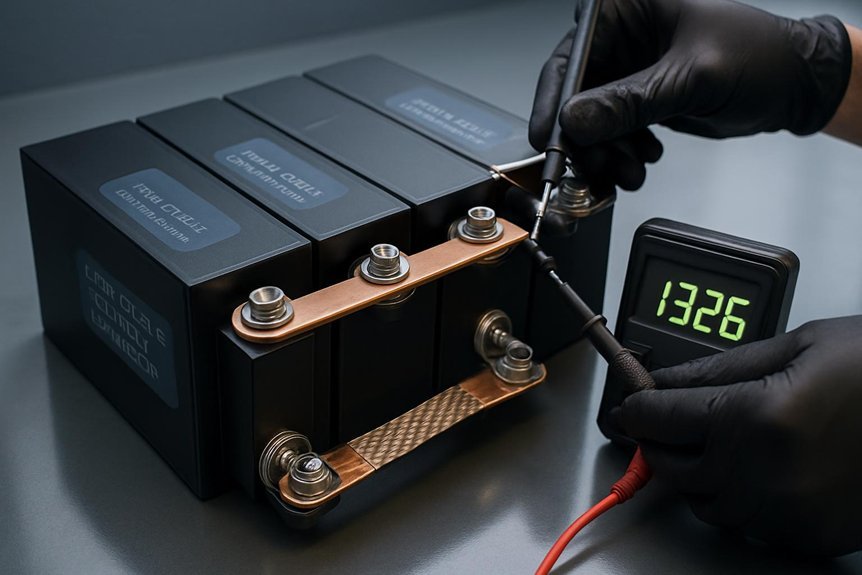
Regular maintenance helps prevent capacity loss, safety issues, and unexpected downtime in deep cycle lithium batteries. We approach this topic with a technical mindset, outlining why consistent care matters for performance and longevity. Regular checks catch degradation trends, ensure proper cell balance, and verify connection integrity, all of which preserve usable capacity. We address maintenance myths so readers aren’t misled by hype or misinformation that could lead to improper handling or premature replacement. Our routine includes baseline measurements, terminal cleanliness, and state-of-charge verification aligned with manufacturer guidelines. We also acknowledge battery recycling as part of responsible lifecycle management, guiding readers to proper disposal channels when replacement becomes necessary. By staying proactive, we minimize risk, maximize reliability, and extend the useful life of your system.
How Temperature Affects Performance and Lifespan

Temperature variations directly impact both capacity and cycle life, so we monitor how ambient and internal temps influence performance. We’ll compare temperature ranges and quantify heat rise to predict efficiency losses and accelerated aging. By framing these effects, we can optimize charging, discharging, and thermal management to extend lifespan.
Temperature Range Effects
How does temperature shaping performance and lifespan in deep cycle lithium batteries? We analyze operational ranges to ensure reliability without sacrificing capacity. Within this window, moderate ambient temps preserve electrochemical balance, minimize self-discharge, and sustain cycle life. Extreme highs accelerate electrolyte degradation and increase impedance, while lows slow ion mobility and reduce available capacity. We quantify performance through voltage recovery, state of charge consistency, and charge acceptance under each condition, then translate findings into practical limits for charging and discharging. We prioritize temperature stability during operation, implementing controlled environments and monitoring to prevent excursions. Proactive heat mitigation strategies, such as spacing, venting, and insulation where appropriate, help sustain predictability. Our approach emphasizes documented limits, routine checks, and proactive adjustments to protect longevity and reliability.
Heat Rise Impact
What happens when heat rises inside a deep cycle lithium battery system, and how does that shift performance and lifespan? We observe core effects: elevated internal resistance, reduced capacity, and diminished cycle life. Heat rise accelerates electrolyte decomposition and electrode degradation, eroding energy density and voltage stability under load. We monitor temperature gradients across modules to prevent hotspots and ensure balanced cooling. When temperatures exceed design limits, we risk thermal runaway, a catastrophic escalation that can propagate through packs. Our proactive controls deploy active cooling, thermal barriers, and insulation strategies tuned to duty cycles and ambient conditions. We verify safe operating envelopes with regular thermography checks and resistance tracking. By maintaining uniform temperatures and prompt mitigation, we preserve efficiency, extend calendar life, and safeguard system reliability.
Safe, Effective Charging Practices You Can Follow
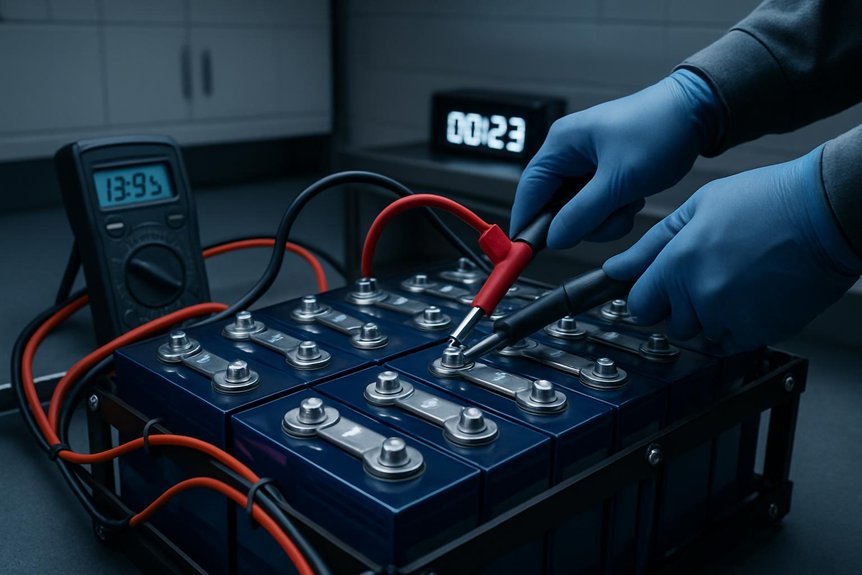
We’ll start with a charging routine that minimizes stress on the cells and maximizes cycle life. We outline disciplined steps: use a compatible charger, monitor voltage, and avoid tricks that push current beyond spec. Set an appropriate end-of-charge voltage and float duty when required, then remove loads to prevent voltage sag during acceptance. Maintain stable ambient conditions, keep connections clean, and verify insulation integrity to prevent heat buildup. We pair temperature checks with current limits, because excessive heat undermines capacity retention. Document cycle counts and alerts, so early signs of degradation are caught. Emphasize cycle safety and charging etiquette—never mix chemistries, avoid daisy chaining, and respect manufacturer’s guidelines. In practice, planned top-offs and regular balance checks sustain performance and extend life.
Why Balancing Cells Extends Battery Life
Balancing cells is the practical counterpart to the disciplined charging routine we just covered. When we equalize each cell’s voltage, we prevent overcharging and undercharging that cause irreversible capacity loss. Balanced cells share load evenly, reducing stress hotspots that accelerate aging. This harmonization supports consistent cell chemistry, minimizing impedance growth and temperature differentials during operation. We monitor balancing events as part of a proactive maintenance plan, ensuring every cell contributes its rated capacity. By sustaining uniform state-of-charge distribution, life extension goals become attainable, and overall pack longevity improves. Regular balancing sessions prevent cells from drifting out of spec, preserving usable energy and avoiding early replacements. In short, balancing cells is a targeted practice that directly reinforces durability, reliability, and sustained performance over the battery’s lifecycle.
How to Read State of Charge and State of Health
State of Charge (SOC) and State of Health (SOH) are the two anchors we use to gauge a deep-cycle lithium battery’s current performance and remaining capacity. We read SOC to estimate available runtime, while SOH indicates overall cell condition and degradation. SoC vs SoH are monitored together to avoid misinterpretation; a high SOC with poor SOH signals risk. We track charge efficiency during charge/discharge cycles to validate sustained performance, not just peak voltage. Use precise instruments and reference the manufacturer’s SOC-SOH curves for similar temperatures. Table below summarizes key indicators you’ll monitor.
| Indicator | Method | Action |
|---|---|---|
| SoC | Voltage/OCV and current integration | Target balanced SOC range |
| SOH | Capacity fade & impedance | Schedule maintenance |
| Charge efficiency | Coulomb input vs output | Restore and optimize cycles |
Storage Protocols That Preserve Capacity and Safety
We’ll outline storage practices that preserve capacity and safety by prioritizing precise charge level guidelines, disciplined temperature control, and clear storage duration limits. By keeping charge within recommended ranges, maintaining stable temperatures, and avoiding excessive storage times, we reduce degradation and risk. This discussion starts with concrete thresholds and operational tempo to support reliable, safe long-term performance.
Charge Level Guidelines
How should you set charge levels to maximize longevity and safety for a deep cycle lithium battery in storage? We target a storage state of charge that minimizes degradation and prevents dendrite formation. Our guideline is to keep these cells at roughly 50% to 60% of full capacity when stored for extended periods, with periodic checks every few months. Avoid full charges or complete discharges, which stress the chemistry. Use stable, manufacturer-approved chargers and maintain a clean, temperature-controlled environment during any reconditioning cycles. Document usage scenarios to tailor intervals and SOC targets, and challenge charging myths that suggest high-SOC storage is always better. We emphasize consistent monitoring, gentle rebalances, and prompt restoration if voltage drifts. This disciplined approach preserves capacity and safety.
Temperature Control Practices
Maintaining the right temperature is as important as SOC management when storing deep cycle lithium batteries. We implement precise temperature control practices to preserve capacity and safety. We monitor ambient and cell temperatures, adjust charging rates, and employ active cooling when thresholds are exceeded. Our protocol includes coolant systems integration and selective heating where needed, keeping cells within optimal bands to minimize degradation. We validate thermal margins with routine checks and document results for traceability. We also apply thermal imaging during inspections to identify hotspots before they become failures. Table below guides our rhythm of actions, ensuring consistency across scenarios.
| Action | Threshold | Result |
|---|---|---|
| Monitor temp | 0–25°C | Stable SOC |
Storage Duration Limits
Storage duration limits are set to preserve capacity and safety without compromising performance. We monitor resting voltages, state of charge, and temperature to define safe storage intervals. Our protocol recommends maintaining a moderate state of charge, typically around 40–60%, and avoiding extended periods at full charge or full discharge. We document environmental conditions, including ambient temperature and humidity, because they influence self-discharge and electrolyte stability. We schedule periodic checks during storage, confirming connector integrity and insulation resistance, then adjust the SOC if shipments or long-term idle periods occur. We avoid exposing cells to rapid temperature shifts, which can accelerate degradation. By adhering to storage duration guidelines, we minimize capacity fade, mitigate dendrite formation risks, and preserve safety margins for return-to-use cycles.
Weekly Checks That Protect Longevity
Weekly checks are our first line of defense against performance drift and unexpected outages. We stay proactive by aligning each inspection with our maintenance cadence, documenting findings, and addressing variances before they become failures. Our routine focuses on cells, connections, and balances, ensuring smooth charge-discharge cycles and consistent capacity. We also perform safety drills to verify proper venting, PPE use, and off-gassing alerts, which keeps everyone prepared without complacency. Time-boxed checks help flag trends early, guiding parts replacement and software updates. This disciplined approach minimizes risk and extends life. Below is a quick grid to structure your weekly cadence and reinforce discipline.
| Area of Review | Action |
|---|---|
| Electrical Integrity | Inspect wiring, connectors, and fuses |
| System Status | Validate BMS logs, temperature, and SOC accuracy |
Troubleshooting Common Battery Issues Calmly and Safely
When a battery hiccups, we approach it methodically to pinpoint causes and restore performance without compromising safety. We begin with a calm diagnostic sweep: verify connections, inspect for corrosion, and confirm that cell balance aligns with the pack’s specifications. For calibration drift, we recalibrate instruments and cross-check with a known reference, documenting any deviation and its potential impact on state-of-charge readings. If capacity loss or unexpected voltage sag appears, we assess sulfation repair options, prioritizing reversible steps like gentle charging profiles and rest periods before invasive measures. We isolate suspected faulty modules, monitor thermal behavior, and rule out external load anomalies. Throughout, we communicate findings succinctly, apply corrective actions promptly, and verify results with repeat tests to ensure stable, safe operation.
Building a Simple, Sustainable Maintenance Routine
We’ve covered the signs and fixes for common battery hiccups, and now we’ll establish a simple, sustainable maintenance routine that keeps a deep-cycle lithium pack reliable over time. Our approach is deliberate, data-driven, and repeatable, emphasizing proactive checks, documented practices, and tight control of variables that affect longevity. By codifying maintenance scheduling and outdoor integration, we minimize drift and surprises.
We implement a concise, proactive maintenance cadence that preserves deep-cycle lithium reliability through data-driven, repeatable practices.
- Establish a weekly quick inspection protocol, noting terminal cleanliness, connections, and venting indicators.
- Schedule monthly capacity and voltage checks, aligning results with manufacturer specs and aging trends.
- Document charge/discharge cycles, ambient conditions, and any anomalies for trend analysis.
- Integrate environmental safeguards for outdoor deployment, including enclosure cooling, corrosion resistance, and moisture management.
Frequently Asked Questions
How Often Should a Deep Cycle Lithium Battery Be Cycled Fully?
We should cycle deeply about every 3–5 weeks under normal use, but avoid fully discharging; we occasionally fully discharge for health checks, and safeguard with overnight storage when inactive, to maintain balanced cells and battery longevity.
Can You Mix Different Lithium Chemistries in One System?
Mixing chemistries isn’t advisable; we won’t risk system compatibility. We caution readers: separate controllers and chemistries, or dedicated systems only. We’ll assess voltage, BMS alignment, and thermal management before attempting any mixed-battery configuration.
Do Solar Charging Methods Affect Long-Term Cycle Life?
Yes, solar charging methods influence longevity, and we monitor solar charging longevity to protect lithium chemistry compatibility. We actively optimize charging profiles, prevent over-discharge, and implement temperature controls, ensuring long-term cycle life and reliable system performance for you.
What Is the Impact of High C-Rate Charging on Longevity?
High c-rate charging accelerates degradation, reducing longevity. We observe elevated temperatures and accelerated SEI growth. We quantify effects under high temperature and rapid charging, implementing strict current limits, thermal management, and profiling to preserve cycle life.
Is It Necessary to Use a Battery Management System for Storage?
We think it’s necessary to use a BMS for storage, with tight monitoring. We assess storage implications, how often it’s checked, and depth of discharge planning, ensuring balance, safety, and longevity for optimal performance.
Conclusion
We’ve walked the line between care and consequence, and you can feel the tension building. As we close, the next few days hinge on disciplined checks, precise voltages, and balanced cells. If you don’t act, hotspots creep in and capacity slips—quietly stealing reliability. But if we stay proactive, log every cycle, and fine-tune temperatures, we’ll unlock safer charging and longer life. Stay vigilant, keep notes, and let the data lead our steps forward. The outcome depends on our routine.