In a typical case, a ten-cell LiPo pack showed rising under-load cell imbalances that skewed peak capacity estimates. We approach balancing method selection, charger criteria, and step-by-step verification with disciplined, real-world checks, not guesswork. We’ll outline safe setup, real-time monitoring, and firm limits to avoid puffing or thermal runaway, then calmly address symptoms and maintenance. Stay with us as we connect theory to practice and highlight the key decisions that keep packs healthy and predictable.
Key Takeaways
- Balancing LiPo packs equalizes cell voltages to maximize usable capacity and prevent overcurrent stress.
- Choose a balance method and charger by cell topology, capacity, chemistry, and automatic rebalancing features.
- Follow a step-by-step process: prep, safe limits, real-time monitoring, deviation checks, and post-run verification.
- Recognize puffing or overheating as a red flag; isolate, cool, and inspect cells before resuming.
- Prioritize safety: regular inspections, proper storage, firmware updates, temperature monitoring, and fire-safe handling.
Understanding LiPo Balancing: Why It Matters for Pack Health
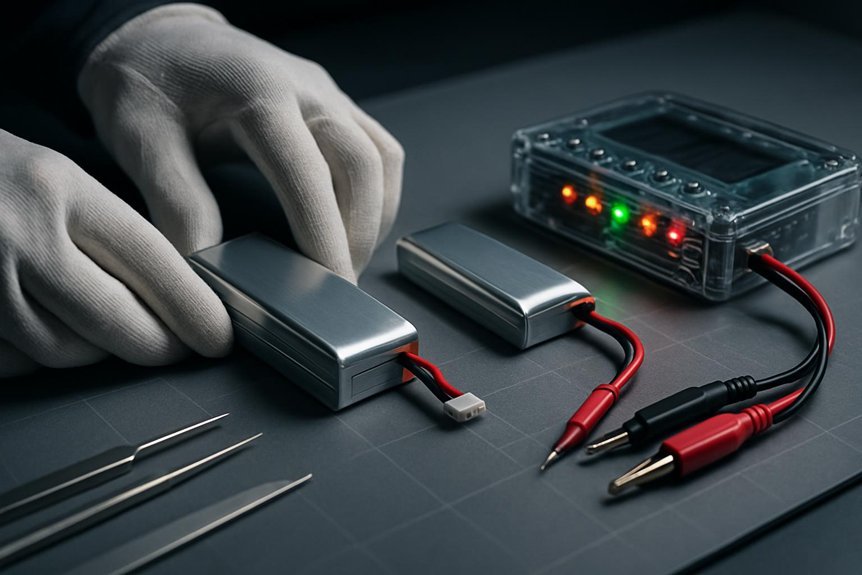
Balancing LiPo cells ensures each cell in a pack reaches the same voltage, which is essential for accurate capacity use and long-term health. We approach understanding balance as a core diagnostic step, guaranteeing cells age cohesively rather than drifting apart. By aligning voltages, we prevent overcurrent stress on individual cells and preserve overall pack efficiency. This process directly supports consistent discharge readings and predictable performance under load. We emphasize charging safety as an integral consideration: balanced packs reduce the risk of runaway conditions and thermal hotspots during charging cycles. Our methodical checks verify cell voltage uniformity, monitor incremental voltage changes, and confirm end-of-charge consistency across all cells. Informed balancing sustains pack longevity, maintains usable capacity, and anchors reliable operation in demanding applications.
Choosing a Balance Method and Charger: Criteria and Options
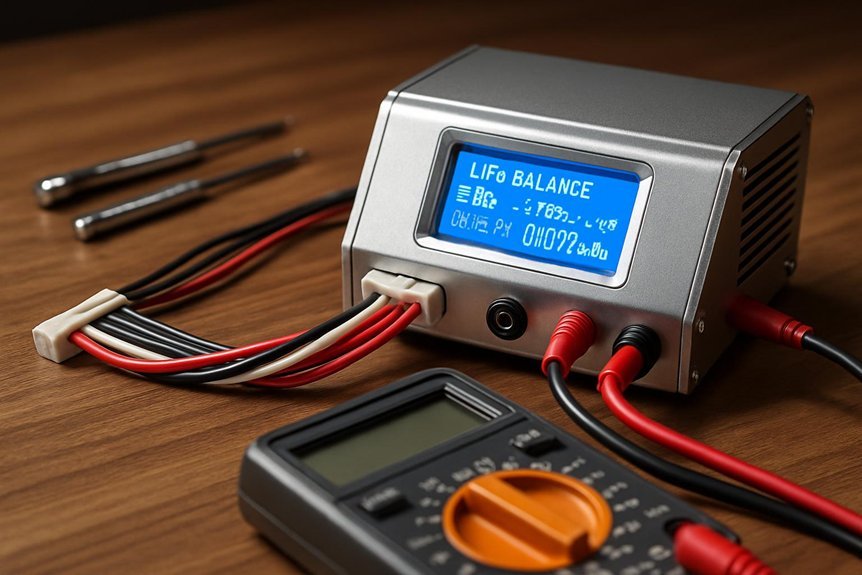
Choosing a balance method and charger requires aligning technique with pack design and application demands. We assess balancing methods by cell topology, capacity, and chemistry, selecting approaches that minimize stress and maximize consistency. Our charger selection focuses on accuracy, timing, and reliability, favoring devices with appropriate voltage cutoffs, current limits, and automatic rebalancing features. We evaluate balanced charging implications for pack health, ensuring the method maintains cells within tight tolerances during every cycle. Key considerations include charger compatibility with LiPo packs, firmware updates, and protection functions that prevent overcharge and short circuits. We document safety practices, temperature monitoring, and proper handling procedures, as well as storage guidelines that preserve integrity between deployments. This disciplined, evidence-based approach prevents degradation and extends overall system performance.
Step-by-Step Balancing: Setup, Run, and Verification
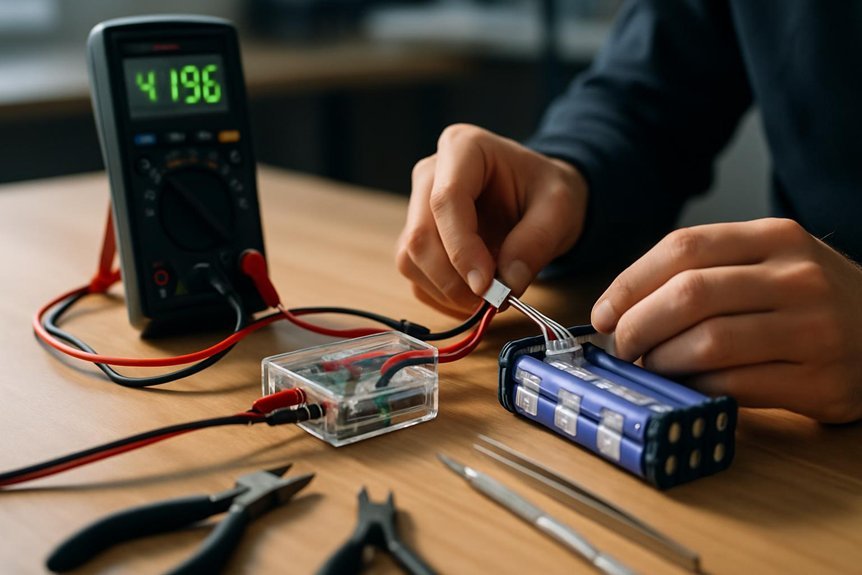
To begin step-by-step balancing, we prepare the pack, verify measurements, and establish safe operating limits. We then follow a disciplined sequence: pre-charge check, cell voltage snapshot, and current limiter validation. We execute balance runs using a compatible charger, monitoring cell voltages in real time and recording deviations. If any cell diverges beyond tolerance, we pause, recheck connections, and adjust timeout or current settings as required. Throughout, we address balancing misconceptions by separating measurement artifacts from true cell health indicators, ensuring we don’t overinterpret transient spikes. We also account for charger limitations, selecting a profile that matches pack chemistry and capacity. Verification concludes with a post-run voltage balance report and a final voltage and temperature lockout check to confirm stable, safe equilibrium.
Troubleshooting LiPo Imbalance and Puffing: Symptoms, Risks, and Fixes
During balancing, we may encounter symptoms that indicate imbalances or cell distress, including puffing, swelling, or heat buildup in individual cells or the pack as a whole. When these signs appear, we assess balancing considerations to determine whether to continue, suspend, or terminate the process. Puffing risks indicate internal gas buildup or cell degradation, requiring immediate action to prevent thermal runaway. We verify cell voltages, impedance, and balance lead integrity, then isolate any suspect cell or parallel group. If puffing or rapid temperature rise is observed, we discontinue balancing, disconnect the pack, and cool it in a controlled environment before further inspection. Post-event, inspect for damaged cells, electrolyte leakage, or seal failures. Document the incident, review charging parameters, and adjust procedures to mitigate recurrence.
Longevity and Safety: Maintenance, Storage, and Best Practices
Longevity and safety hinge on disciplined maintenance, careful storage, and adherence to best practices. We, as editors, guide you through precise steps that minimize risk and extend pack life. Regular inspection, cell balance checks, and firmware updates ensure longevity and maintenance stay aligned with performance goals. Store LiPo packs at recommended voltages and in climate-controlled environments to prevent degradation. Use proper charging protocols, monitor temperature, and avoid puncture hazards. The table below highlights key considerations that support longevity and safety.
| Topic | Recommendation | Rationale |
|---|---|---|
| Storage voltage | 3.7–3.85V per cell | Minimizes self-discharge and degradation |
| Temperature | 5–25°C | Reduces aging effects |
| Handling | Use fireproof containers | Reduces fire risk |
| Charging cadence | Regular, not opportunistic | Preserves capacity |
| Inspection | Visual + voltage check | Early fault detection |
Frequently Asked Questions
How Often Should I Balance to Maintain Peak Performance?
We balance monthly or after every 2–3 cycles for peak performance, we plan balanced charging and storage monitoring to minimize drift. We monitor cell voltages, temperature, and impedance, adjusting schedules to maintain consistent pack health and safety.
Can Lipo Balance Charges Cause Cell Reversal Risks?
Yes, balance charges can carry reversal risk if cell voltages swing unevenly; we mitigate this with careful monitoring. We prioritize charging safety, balanced cell checks, and strict discharge limits, ensuring we minimize reversal risk through precise, methodical procedures.
Do Different Brands Require Separate Balancing Procedures?
Yes, brand differences exist, so we tailor procedures; we acknowledge that charging techniques vary. We recommend verifying manufacturer specs, using brand-specific balancing profiles, and following consistent monitoring to ensure safe, accurate cell balancing across brands.
Is It Necessary to Balance During Storage or Only Charging?
Yes, we balance primarily after charging, not for storage; we follow storage tips to keep cells balanced and safe, while debunking charging myths with precise procedures. We’ll emphasize methodical checks and consistent practice for reliability, reader.
Can Low-Cost Chargers Balance Cells Effectively?
Low-cost chargers can’t reliably balance cells; they propagate balancing myths and risk cell reversal. We strongly advise proper balancing gear, monitor each cell, and verify accuracy before storage or charging. We’ll guide you through safe, precise procedures.
Conclusion
We’ve mapped how balance keeps packs healthy, and we’ve tested the theory that even tiny imbalances compound into performance loss. The truth is it’s not magic—consistent cell voltages, proper charging, and strict safety limits preserve capacity and reliability. When you balance regularly, monitor temps, and store correctly, you’ll see fewer puffing events and steadier runs. So, we stay methodical: verify, adjust, and verify again, knowing disciplined care yields predictable, long-lasting LiPo performance.