We optimize lithium-ion life with smart charging, cautious handling, and proactive monitoring. We’ll use manufacturer-approved chargers, keep charge around 20–80%, and avoid overnight fills for high-discharge devices. Inspect cables and seals regularly, store in cool, dry places with partial charge, and label timelines. Watch temperature, performance, and swelling, recalibrating only if the device asks. If you want dependable results, you’ll want to consider every step—and you’ll see why soon.
Key Takeaways
- Use manufacturer-approved chargers and avoid aftermarket adapters to prevent damage and reduce risks.
- Maintain charge between 20% and 80% when feasible to minimize cycle stress and heat buildup.
- Regularly inspect cables, connectors, seals, and ports for wear, debris, and corrosion; replace as needed.
- Store batteries in a cool, dry environment with stable temperature and partial state of charge; label storage date.
- Monitor temperature and performance; pause use if swelling, unusual heat, or rapid capacity loss is observed and seek support if needed.
Extend Lithium-Ion Life With Smart Charging
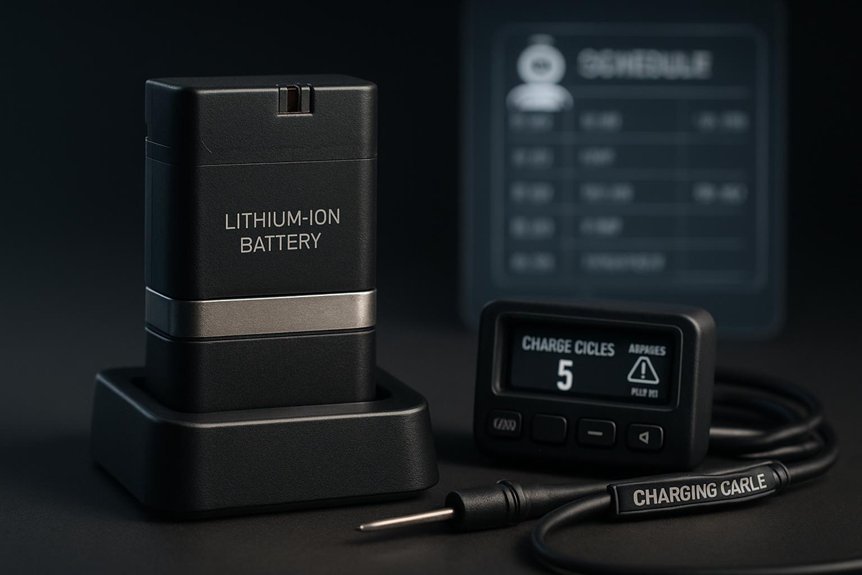
Smart charging extends lithium-ion life by minimizing stress during charging. We implement controlled charging profiles that limit peak currents and taper voltage as cells approach full charge. By keeping C-rate modest and avoiding fast-charging bursts, we reduce electrolyte decomposition and electrode polarization, preserving capacity over cycles. We monitor temperature, state of charge, and cell balance to prevent overheating and imbalanced cells, which erode battery longevity. Our approach prioritizes gradual voltage steps, top-off strategies, and alignment with manufacturer guidelines. We emphasize avoidance of deep discharges, unnecessary high ambient temperatures, and exposure to heat sources during charging. In practice, smart charging translates to defined schedules, compatible hardware, and firmware that adapts to usage, ensuring consistent battery longevity while meeting performance requirements.
Store Lithium-Ion Batteries by Season

We store lithium-ion batteries by season to control temperature exposure and storage duration. We’ll outline season-specific targets: keep temperatures stable, limit extended idle periods, and adjust storage length to ambient conditions. This approach helps preserve capacity and reduces degradation across differing environments.
Store By Season Tips
Storing lithium-ion batteries by season helps minimize degradation and extend service life. We’ve learned that seasonal strategies preserve capacity and reduce self-discharge, while respecting humidity considerations and seasonal shelf life expectations. By aligning storage conditions with cycle timing, we limit stress on cells and maintain usable energy.
- Store in a cool, dry place with controlled humidity to protect active materials
- Target partial charge levels appropriate for the season to balance chemistry balance
- Use sealed containers or cases to minimize moisture ingress and condensation
- Label packs with date and season for accurate rotation and shelf life tracking
- Inspect for corrosion, swelling, or leaks regularly, and rehearse safe handling procedures
These steps help sustain performance between use cycles and address seasonal storage nuances.
Temperature And Storage Period
Temperature and storage period go hand in hand when stocking lithium-ion batteries by season. We ensure temperature stability during handling and keep storage durations aligned with the battery’s chemistry. In practice, we store cells at moderate ambient temperatures, avoiding extremes that accelerate degradation. Shorter cycles reduce calendar aging, while longer periods demand periodic checks for voltage drift and capacity loss. We favor a cool, dry environment with consistent air circulation to minimize condensation and moisture ingress. We monitor battery packs for self-discharge indicators and recalibrate state-of-charge before use after extended storage. Our guideline emphasizes documenting storage dates, batch numbers, and observed performance changes to track longitudinal effects. By controlling temperature and storage duration, we preserve material integrity and optimize readiness for deployment.
Safe Handling for Lithium-Ion Devices
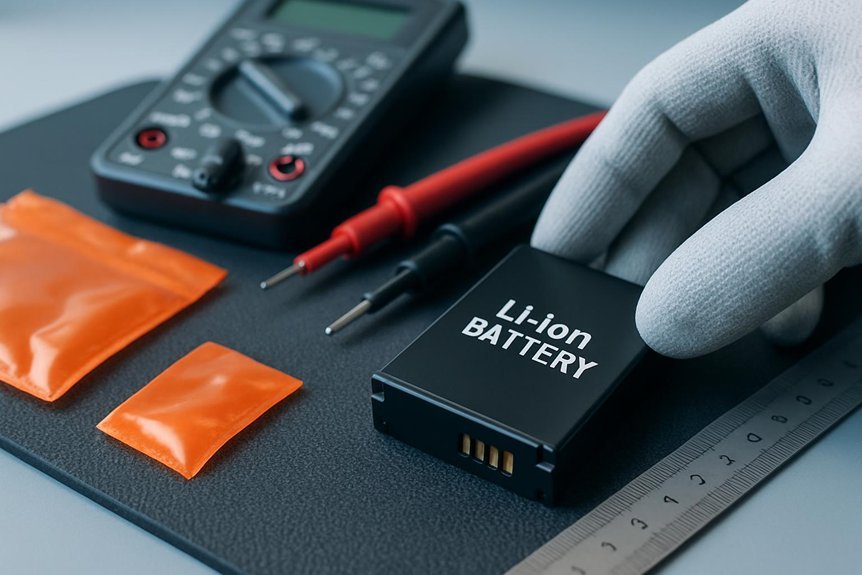
We’re covering Safe Handling Basics to ensure you understand how to manage lithium-ion devices safely from the moment you pick them up to daily use. We’ll outline Proper Storage Practices to protect against degradation and short circuits, and Transportation Precautions to prevent damage during transit. Let’s start with clear, actionable steps you can apply right away.
Safe Handling Basics
Safe handling for lithium-ion devices is essential to prevent damage, injury, and fire. We approach basics with clarity, aiming to minimize risk through defined steps, inspections, and controls that stay practical in daily use.
- Follow pre-use safety briefing to confirm device integrity and electrolyte status
- Handle with non-conductive tools, and avoid sharp impacts or crush hazards
- Inspect cables, connectors, and seals for wear; replace damaged components promptly
- Maintain proper charging practices, observing recommended currents and temperatures
- Adhere to disposal guidelines and regulatory requirements for end-of-life or defective packs
This foundation keeps operations safe, reproducible, and compliant, while guiding readers to responsible behavior and timely escalation when anomalies arise.
Proper Storage Practices
Proper storage for lithium-ion devices reduces aging, degradation, and safety risks. We keep units at a stable, dry ambient temperature and avoid extreme swings that stress chemistry. We disconnect nonessential peripherals and store devices with a partial state of charge, typically around 40–60%, to minimize voltage-induced stress. We use manufacturer-approved storage containers or cases that shield from dust and moisture, and we keep the environment clean and well-ventilated. We perform regular battery inspection for signs of swelling, leakage, or corrosion on contacts, addressing issues promptly to prevent safety hazards. We ensure connectors are clean and dry before storage and avoid metal objects that could bridge terminals. We document storage conditions and perform periodic checks to sustain battery health and corrosion prevention.
Transportation Precautions
Transportation precautions are essential for safe handling of lithium-ion devices during transit. We outline practical steps to minimize risk while preserving performance, focusing on transportation safety and lithium handling. We speak to you directly to clarify responsibilities, packing methods, and inspection routines, ensuring compliance with regulatory expectations and carrier requirements. Our approach balances protection, weight, and accessibility, reducing shock, heat buildup, and short circuits during movement. By following these controls, we support safe transfer between locations, warehouses, and users, while preserving battery integrity and data security. Trust our concise guidance to prevent incidents, support emergency response readiness, and maintain operational continuity.
- Use undamaged original packaging and rigid containers
- Remove accessories that could cause short circuits
- Keep temperatures within manufacturer specifications
- Label and document battery quantities and watt-hours
- Conduct pre- and post-transport inspections for damage
Warning Signs for Lithium-Ion Issues
What warning signs should we watch for to catch lithium-ion issues early? We’ll outline concrete indicators you can use with quick battery diagnostics to prevent failures. Look for rapid capacity loss, excessive heat during charging or use, swelling, unusual pops or smells, or unexpected voltage drops under light load. If any of these appear, pause use and re-test with a calibrated meter, log temperatures, and inspect for physical damage. Persistent impedance rise between tests or sudden shortening of cycle life signals deeper degradation. Documenting these trends helps us decide whether cycling should be reduced or the module replaced. Table below provides a quick visual guide for assessment, helping you differentiate benign fluctuations from critical faults.
| Symptom | Immediate action |
|---|---|
| Rapid capacity loss | Run battery diagnostics; halt use if confirmed |
| Heat/impedance spike | Cool, re-test; replace if persists |
Maintenance for Everyday Devices
We’ve covered warning signs for lithium-ion issues; now we apply that vigilance to everyday devices. We’ll translate principles into practical routines that preserve battery health, emphasizing everyday device care and battery charging basics. By adopting a disciplined workflow, you reduce stress on cells, extend lifespan, and prevent unexpected downtime.
- Inspect connectors and ports regularly for debris and corrosion
- Use manufacturer-approved chargers; avoid aftermarket adapters
- Charge between 20% and 80% when feasible to reduce cycle stress
- Avoid overnight charging for high-discharge devices
- Calibrate battery metrics only if required by the device’s guidance
Adhering to these steps keeps devices reliable, minimizes heat buildup, and preserves capacity, enabling predictable performance in daily use.
Troubleshoot Lithium-Ion Battery Issues
What’s going wrong with your lithium-ion battery, and how can we fix it quickly and reliably? We’re here to diagnose common failure modes, apply practical checks, and outline corrective actions. Begin with voltage and temperature monitoring, then inspect for swelling, corrosion, and connector integrity. If capacity is degraded, consider cycling history and charger compatibility; recalibration may help. For charging issues, verify charger specs, cable health, and port cleanliness. If temp is high, improve cooling methods and airflow; if too low, allow gradual warming before charging. Warranty considerations matter: document date, serial, and failure patterns, and contact the manufacturer when applicable. Table below visualizes the approach.
| Issue | Quick Check | Action |
|---|---|---|
| High temp | Monitor temps | Improve cooling |
| Low capacity | Cycle count | Recalibrate if supported |
| Charging fault | Charger/cable | Replace/verify |
| Swelling | Visual inspect | Stop use, contact support |
| Longevity | Logs | Consider replacement planning |
Frequently Asked Questions
Can Temperature Swings Affect Battery Health During Charging?
Yes, temperature swings can affect battery health during charging. We monitor temperature for temperature sensitivity and charging safety, adjusting charging rates to stay within safe ranges and prevent thermal runaway or capacity loss.
Do Lithium Batteries Benefit From Partial Charging Cycles?
We do: yes, lithium batteries benefit from partial charging, reducing stress during cycle aging. We tread softly like sailors near reefs, avoiding full-depth drains; partial charging curbs rapid aging, balancing capacity retention and practical charging cadence for our devices.
How Do I Recycle Old Lithium Batteries Correctly?
We recycle old lithium batteries correctly by finding a certified recycling facility and following their intake guidelines; we avoid DIY disassembly. We consider recycling facility compatibility and the environmental impact of disposal to minimize risk and maximize material recovery.
Are There Risks Using Third-Party Chargers?
We should avoid third party chargers; they pose safety risks, including overheating and improper regulation. We caution you, reader, that such devices can undermine battery integrity, so we carefully choose certified options to protect performance and safety.
What Signs Indicate End-Of-Life Beyond Swelling?
End of life signs include abrupt capacity loss, persistent voltage sag, and accelerated self-discharge beyond typical degradation. We’ll monitor battery degradation trends, quantify capacity fade, and note safety risks to determine when replacement is warranted.
Conclusion
We’re committed to helping you extend battery life with smart charging, careful storage, and vigilant checks. By using manufacturer-approved chargers, keeping between 20–80%, and avoiding overnight high-discharge fills, you’ll reduce wear. Inspect cords, seals, and ports; store cool and dry with a partial charge; label storage periods. Monitor temperature and performance, recalibrate only when needed, and replace worn parts promptly. Remember: a stitch in time saves nine—consistent care prevents costly failures and keeps devices safe.