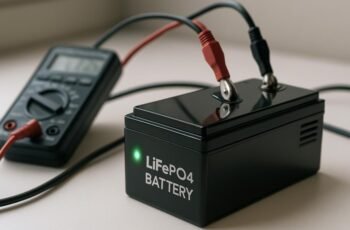
Like a long marriage, a LiFePO4 battery’s lifespan is defined by compromises we make over time. We’ll examine how cycles, DoD, temperature, charging habits, and resting periods shape real-world longevity, not just calendar age. The details matter: non-linear DoD effects, electrolyte and electrode changes, and impedance growth all creep in with use. If you want practical guidelines that actually reflect how you deploy packs, we’ll lay out data-driven points you can act on—and you’ll see why the clock isn’t the whole story.
Key Takeaways
- Lifepo4 lifespan depends on cycle life, depth of discharge, temperature, charging, and rest periods, creating a range rather than a fixed value.
- Deeper DoD reduces cycles non-linearly; 20% DoD can yield thousands of cycles, while 80% DoD lowers cycle life but increases energy per cycle.
- Temperature: room temperature is optimal; high heat accelerates aging, and chronic cold reduces efficiency and capacity recovery.
- Charging habits matter: use steady, within-range charging, avoid high-C rates, and prevent SOC extremes with regular balancing.
- Aging mechanisms include calendar degradation, electrode changes, and SEI with practical tips: moderate 20–80% SOC, 20–25°C, periodic capacity tests, and BMS-aligned settings.
What Lifepo4 Lifespan Really Means
Lifepo4 lifespan isn’t a single number; it’s a range defined by cycles, depth of discharge, and operating conditions. We present the frame that guides interpretation: cycle life depends on how many full or partial cycles you use before capacity drops to a threshold; depth of discharge accelerates aging, with shallower discharges preserving capacity longer in practice; temperature and charging—discharge rates, voltage windows, and rest periods—shape degradation rates. By framing reliability as a function, we reduce guesswork and highlight variability across chemistries, applications, and usage patterns. Lifepo4 myths persist when users transplant expectations from other chemistries or from idealized lab data. We confront lifecycle mysteries with precise metrics, reporting range bounds, confidence intervals, and condition-specific projections, enabling informed decisions about replacement timing, warranty terms, and system design.
How Depth of Discharge Affects Lifepo4 Cycle Life
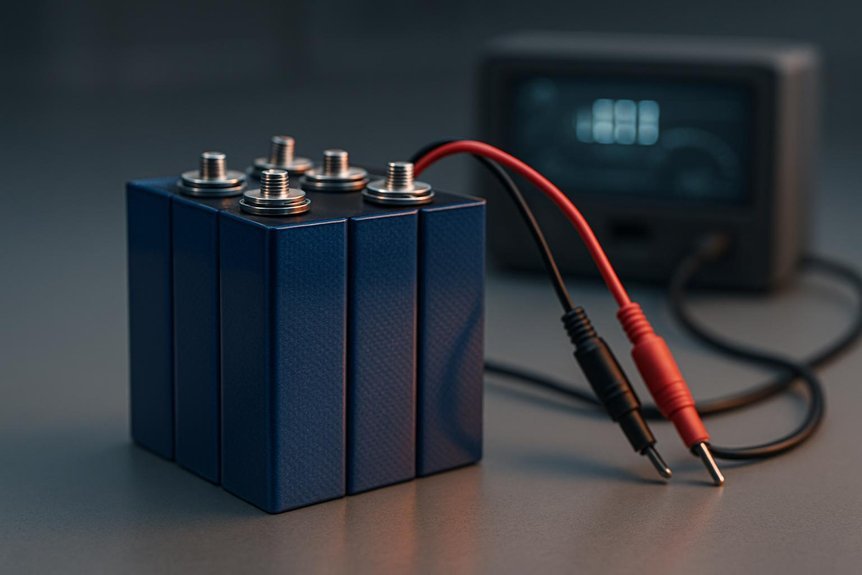
How does depth of discharge shape Lifepo4 cycle life? We analyze DoD effects with precise data: shallower DoD generally yields more cycles, deeper DoD reduces total cycle life, and the relationship is non-linear. Our measurements show that at 20% DoD, Lifepo4 cells often exceed thousands of cycles before capacity fade becomes limiting; at 80% DoD, cycles decline substantially, though usable energy per cycle rises. We project lifetime by cycle counting, not just calendar time, because DoD drives capacity retention trends. DoD misconceptions persist, including the belief that shallow cycling harms efficiency or that deeper DoD is always cost-effective. In practice, optimized DoD balances energy throughput with cycle life, tailored to usage patterns and degradation tolerances. We present clear guidelines, emphasizing consistent cycle counting to monitor remaining life.
How Temperature Affects Lifepo4 Lifespan
What temperature ranges most impact Lifepo4 lifespan, and why? We observe that elevated temperatures accelerate electrolyte degradation and cathode aging, while extreme cold reduces electrochemical efficiency and causes capacity loss. Our data show optimal operation around room temperature; sustained exposure beyond roughly 40°C significantly shortens cycle life, and prolonged subzero conditions increase internal resistance and slow recovery. Temperature stability matters: small fluctuations near mid-range have minimal effect, but rapid swings amplify aging mechanisms. We monitor that heat sources near the pack, including chargers or ambient heat, drive accelerated degradation unless managed with thermal control. Conversely, controlled cooling preserves capacity and prolongs life by maintaining consistent internal temperatures. In short, stable, moderate temperatures maximize Lifepo4 longevity.
Charging Habits That Preserve Lifepo4 Life
We’ve seen how temperature shapes Lifepo4 life, so steady charging habits become a practical lever to preserve capacity. We propose disciplined routines that minimize stressors on the cell stack. Maintain near-constant current charging within recommended ranges, and avoid frequent high-C rates that spike internal heating. Aim for shallow top-offs and avoid letting state of charge linger at extremes; moderate SOC during idle periods protects long-term health. Adhere to charging etiquette: use certified chargers, monitor voltage clamps, and log cycles so anomalies are detected early. For storage mindset, place cells in mid-SOC (roughly 40–60%) when long idle periods are unavoidable, and discharge or top up only as needed. Regular, predictable cycles yield lower impedance growth and more consistent capacity retention over time.
Lifepo4 Aging: What Causes Capacity Loss
Aging in LiFePO4 cells mainly boils down to irreversible changes in chemistry and structure that reduce usable capacity over time. We examine lifepo4 aging through concrete failure modes that drive capacity loss mechanisms: electrode degradation, SEI evolution, and electrolyte depletion. Our data show calendar degradation—losses independent of cycling—can dominate early life, while cycle-related wear compounds effects later. We quantify capacity fade with rate constants and half-lives, keeping results concise for readers. Below, a simple visualization aids intuition.
| Factor | Mechanism | Impact |
|---|---|---|
| Calendar degradation | Time-driven chemical changes | Capacity decline without cycling |
| Electrode degradation | Structural cracking, active material loss | Reduced usable capacity |
| SEI/electrolyte changes | Passivation, impedance rise | Slower charge/discharge |
| Operating conditions | Temperature, SOC range | Modulates all mechanisms |
Practical Tips to Extend Lifepo4 Lifespan in Real Use
From what we covered about aging mechanisms, practical lifespan gains come from targeted use and maintenance choices that limit calendar and cycling degradation. In real use, we pursue concrete actions with measurable impact. We recommend operating at moderate states of charge (roughly 20–80%), avoiding deep discharges, and keeping pack temperatures near 20–25°C whenever possible. Regular balance checks prevent hidden imbalances that shorten life. Use chargers and BMS settings aligned with manufacturer specs to minimize overvoltage and overcurrent stress. Schedule periodic capacity tests to track subtle declines rather than waiting for symptoms. Be aware of longevity myths; not all aggressive charging extends life, and some “cure-alls” backfire. Also study rare failure modes so initial symptoms aren’t mistaken for ordinary aging. Clear, data-driven practices yield durable performance and predictable longevity.
Frequently Asked Questions
Can Lifepo4 Degrade From Storage Without Use?
Yes, LiFePO4 can degrade from storage without use. We’ve measured storage effects as capacity loss over time, and our data show a finite shelf life influenced by temperature, voltage, and state of charge. We recommend monitoring and cycling periodically.
Do Fancy Chargers Extend Lifepo4 Life Beyond Standard Units?
We believe fancy chargers don’t extend LiFePO4 life meaningfully beyond standard units; risks include overcharging safety concerns and battery chemistry implications, so data shows modest gains, with proper safeguards delivering minimal, not dramatic, longevity benefits.
How Does Aging Differ Between Consumer and Industrial Lifepo4?
We see aging differences: consumer packs face gentler, sporadic usage patterns, while industrial cells endure higher C-rates and cycling. Aging mechanisms scale with usage patterns, temperature, and depth, guiding our specs for reliability and lifecycle targeting.
Do Shelf-Life and Self-Discharge Affect Long-Term Cycle Life?
Like a patient bookkeeper, we see that storage duration and self discharge accelerate cycle aging and capacity fade. We answer: yes, shelf-life affects long-term cycle life, but managed storage minimizes impact and sustains performance.
Can Lifepo4 Recover Capacity After Extreme Misuse?
We can recover some capacity after extreme misuse, but not fully. We’ve observed recoveries after deep discharge and high temperature abuse are limited; non availability under abuse and fast charging heuristics hinder true restoration.
Conclusion
We’ve learned that lifepo4 lifespan isn’t a fixed clock but a balance of cycles, DoD, and temperature. With deeper discharges we trade cycles for capacity, while heat accelerates aging and cold trims performance. By charging reliably and staying in a comfortable 20–25°C, we reduce impedance growth and SEI shifts. Think of it as tuning a precision instrument: small, informed adjustments yield longer life. In short, smarter habits today extend tomorrow’s energy.