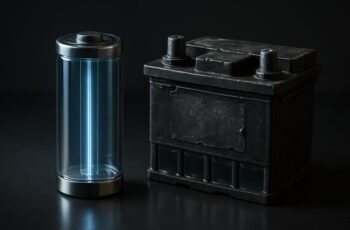
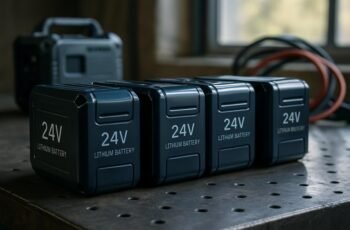
When we compare LiFePO4 with conventional lithium-ion batteries, we’re weighing more than capacity and price. LiFePO4 chemistry provides greater thermal stability, stronger safety margins, and substantially longer cycle life, while conventional lithium-ion cells deliver higher energy density in a smaller, lighter package. Charging behavior, temperature tolerance, application demands, and lifetime cost also affect the decision. The better choice depends on which trade-offs matter most for your system.
Key Takeaways
- LiFePO4 batteries are safer and more thermally stable, while conventional lithium-ion batteries have greater thermal-runaway and fire risks.
- LiFePO4 typically lasts longer, delivering about 2,000–5,000 cycles compared with roughly 500–1,500 cycles for conventional lithium-ion batteries.
- Lithium-ion batteries offer higher energy density, making them lighter and more compact than similarly rated LiFePO4 batteries.
- LiFePO4 generally costs more initially, but its longer lifespan can provide lower total ownership costs over time.
- Lithium-ion suits portable electronics and long-range EVs, while LiFePO4 is preferable for solar storage, fleet vehicles, and safety-focused systems.
LiFePO4 vs Lithium-Ion: Which Is Better?
LiFePO4 batteries are generally better when safety, long service life, and stable performance matter most, while conventional lithium-ion batteries offer higher energy density and lower weight. We should choose LiFePO4 for stationary storage, backup power, electric vehicles requiring durability, and applications exposed to demanding operating conditions. Its chemistry typically provides stronger thermal stability, lower fire risk, and more consistent capacity retention over many cycles. Conventional lithium-ion batteries remain preferable when minimizing size and mass takes priority, such as portable electronics, drones, and weight-sensitive equipment. We should also evaluate purchase price, operating temperature, charging requirements, usable capacity, and battery-management-system quality rather than comparing chemistry alone. Neither option is universally superior: LiFePO4 emphasizes safety and longevity, whereas conventional lithium-ion emphasizes compact energy storage and payload efficiency. Our application determines the better choice.
How LiFePO4 and Lithium-Ion Batteries Work
Although LiFePO4 and conventional lithium-ion batteries use different cathode materials, both generate electricity through reversible lithium-ion movement between the cathode and graphite-based anode. During discharge, lithium atoms at the anode release electrons, while lithium ions travel through the electrolyte toward the cathode. The electrons move through the external circuit, powering our device; the separator prevents internal electrical contact while permitting ion transport. During charging, an external power source reverses these processes, driving lithium ions back into the graphite anode and restoring stored chemical energy. We can thus view each cell as an electrochemical system with four essential components: anode, cathode, electrolyte, and separator. Cell voltage results from the difference in electrochemical potential between the two electrode reactions, while current depends on ion transport and electron flow through connected circuitry.
Compare LiFePO4 and Lithium-Ion Chemistry
When comparing the chemistries, we should focus on how each cathode’s crystal structure controls voltage, stability, and usable performance. LiFePO4 uses an olivine structure, where strong phosphate bonds stabilize the framework and limit oxygen participation during cycling. Its nominal voltage is about 3.2–3.3 volts per cell, with a relatively flat discharge curve that supports predictable voltage delivery. Lithium-ion batteries usually use layered oxide cathodes, such as NMC or NCA, paired with graphite anodes. These structures provide higher specific energy and a nominal cell voltage near 3.6–3.7 volts, but their electrochemical behavior varies by formulation. We should consequently treat “lithium-ion” as a broad category, not one chemistry. Electrode composition, particle engineering, and operating limits determine capacity, power capability, cycle retention, and low-temperature performance.
LiFePO4 vs Lithium-Ion Safety Differences
We’ll compare thermal runaway risk in LiFePO4 and conventional lithium-ion cells, focusing on how each chemistry responds to overheating, damage, and overcharging. We’ll also examine fire safety, including ignition behavior, heat release, and the effectiveness of protective controls.
Thermal Runaway Risk
Thermal runaway occurs when a battery’s internal heat generation exceeds its ability to dissipate heat, triggering accelerating reactions that can cause venting, fire, or explosion. We generally find LiFePO4 cells less susceptible because their phosphate-based cathode has stronger chemical bonds and releases oxygen less readily during overheating. That stability raises the temperature at which self-heating accelerates and reduces the energy available to sustain the reaction. Conventional lithium-ion cells using nickel- or cobalt-rich cathodes typically have lower thermal-runaway thresholds and greater heat-release potential, particularly when overcharged, internally damaged, or exposed to excessive temperatures. We shouldn’t interpret this difference as immunity: LiFePO4 cells can still enter runaway if abuse overwhelms their controls. Cell quality, state of charge, separator integrity, thermal management, and battery-management-system protection strongly influence the actual risk in either chemistry.
Fire Safety Comparison
How does fire safety differ between LiFePO4 and conventional lithium-ion batteries? We find that LiFePO4 generally offers greater thermal stability because its phosphate-based cathode releases less oxygen during overheating. That chemistry reduces, but doesn’t eliminate, ignition and propagation risks.
- Heat tolerance: LiFePO4 typically withstands higher temperatures before entering thermal runaway, while nickel- or cobalt-based cells can destabilize sooner.
- Fire behavior: If damaged, conventional lithium-ion cells may burn more intensely because released oxygen sustains combustion. LiFePO4 can still vent flammable gases and ignite.
- Protection requirements: We still need certified battery-management systems, temperature monitoring, current limiting, mechanical protection, and appropriate charging equipment for either chemistry.
We shouldn’t treat LiFePO4 as fireproof. Manufacturing defects, overcharging, crushing, short circuits, and external heat can compromise both battery types. Proper spacing, ventilation, fusing, and manufacturer-approved chargers remain essential for safe installations and emergency planning.
Compare Battery Lifespan and Cycle Life
LiFePO4 batteries typically deliver a longer cycle life than conventional lithium-ion batteries, often reaching 2,000–5,000 full cycles compared with roughly 500–1,500 cycles for common NMC or NCA chemistries. We can consequently expect LiFePO4 systems to retain useful capacity through more years of regular charging and discharging. Their olivine phosphate cathode supports stronger structural stability, limiting degradation during repeated cycling. Conventional lithium-ion cells can still provide long service, but their lifespan depends more heavily on operating temperature, charge rate, discharge depth, and voltage limits. We should compare warranties and end-of-life capacity, not cycle counts alone; manufacturers may define a cycle as capacity throughput until retention reaches 70% or 80%. Partial cycling generally reduces cumulative stress, so proper battery-management settings and moderate operating conditions can extend either chemistry’s practical lifespan.
Energy Density and Battery Size Compared
Although LiFePO4 cells offer excellent safety and cycle life, conventional lithium-ion batteries generally provide higher energy density—about 150–250 Wh/kg compared with roughly 90–160 Wh/kg for LiFePO4, depending on the specific chemistry and cell design. For the same stored energy, we should consequently expect LiFePO4 packs to require greater mass or volume.
- Space: A lithium-ion pack can deliver equivalent capacity in a smaller enclosure, benefiting laptops, drones, and compact vehicles.
- Weight: LiFePO4’s lower gravimetric density may increase payload demand, especially in mobile systems.
- Capacity: If dimensions are fixed, lithium-ion typically stores more watt-hours; LiFePO4 may provide less usable energy unless we enlarge the pack.
Actual comparisons also depend on packaging, cooling hardware, safety clearances, and manufacturer-specific designs. We should evaluate watt-hours per liter and kilogram at the complete-pack level, not rely solely on cell specifications. Safety requirements and durability can justify LiFePO4’s larger footprint where size constraints aren’t dominant.
Charging Speed and Temperature Performance
We’ll compare how quickly LiFePO4 and lithium-ion batteries accept charge under typical operating conditions. We’ll also examine their temperature tolerance, including how heat affects charging safety and cycle life. Finally, we’ll assess cold-weather performance, where reduced ion mobility can limit charging and output.
Charging Speed Comparison
When charging speed and temperature performance matter, we should compare both the battery chemistry and its charging limits rather than assume one technology is universally faster. Charging time depends on cell design, charger output, battery size, state of charge, and the manufacturer’s specified C-rate.
- LiFePO4: It commonly supports steady, high-current charging, often reaching a practical full charge efficiently because its voltage curve remains stable.
- Lithium-ion: It may accept higher peak power in some high-performance designs, shortening early charging stages, but its constant-voltage phase can extend total time.
- System limits: The battery-management system regulates current, voltage, and balancing, so the rated charger—not chemistry alone—determines real-world speed.
We should compare watt-hours added per minute, not just charging percentages. A properly matched charger can make either chemistry perform faster, while undersized equipment masks the cells’ capability. Always follow the manufacturer’s charge profile and maximum current specification.
Temperature Tolerance Differences
Temperature tolerance affects both charging speed and battery safety, but LiFePO4 and lithium-ion cells respond differently to heat and cold. LiFePO4 chemistry generally tolerates elevated operating temperatures better, retaining stability and reducing thermal-runaway risk. Lithium-ion cells can deliver high charging rates, but heat accelerates electrolyte degradation, increases resistance, and may require active cooling. As a result, we can often charge lithium-ion batteries faster under controlled temperatures, while LiFePO4 packs support consistent performance across a broader practical range. Battery-management systems regulate current, voltage, and temperature in both designs. When temperatures rise, these systems may reduce charging power or disconnect the pack to prevent damage. We should consequently evaluate the manufacturer’s temperature limits, cooling strategy, and charge-rate specifications rather than compare nominal charging speed alone. Chemistry, cell design, and thermal management determine real-world results.
Cold-Weather Performance
Cold conditions slow ion movement in both LiFePO4 and lithium-ion cells, increasing internal resistance and reducing available power. We’ll notice weaker acceleration, lower usable capacity, and slower charging as temperatures fall. However, chemistry and battery-management controls create important differences:
- LiFePO4: It generally delivers stable cold-weather output, but manufacturers commonly restrict charging below 0°C (32°F) to prevent lithium plating. Integrated heaters or warming periods can restore charging speed.
- Lithium-ion: NMC and similar cells may accept charge somewhat more readily in mild cold, yet their power and capacity also decline. The BMS still reduces current near freezing and may stop charging at lower temperatures.
- Practical use: We should precondition either battery before charging, keep it insulated, and consult its specified temperature limits.
Above freezing, charging speed improves progressively; at subzero temperatures, forcing current risks permanent damage, regardless of chemistry.
Upfront Cost and Lifetime Value
Although LiFePO4 batteries typically cost more upfront than conventional lithium-ion batteries, we should evaluate them by total lifetime value rather than purchase price alone. Their higher initial price reflects durable cell chemistry, robust safety margins, and generally longer cycle life. If we measure cost per delivered kilowatt-hour over the battery’s service life, LiFePO4 can become more economical, especially under frequent cycling. We should also account for reduced replacement frequency, lower degradation, and potentially simpler thermal-management requirements. Conventional lithium-ion batteries may offer a lower entry cost, but their usable capacity, cycle count, and replacement schedule can materially affect ownership expenses. To compare accurately, we should calculate total cost of ownership using purchase price, usable energy, expected cycles, efficiency, maintenance, and end-of-life costs rather than relying on retail price alone.
Best Applications for Each Battery Type
We’ll compare how LiFePO4 and lithium-ion batteries perform in electric vehicles, solar energy storage, and portable electronics. We’ll assess energy density, safety, cycle life, weight, and operating demands to match each chemistry with its strongest use case. This comparison will show why lithium-ion often suits compact devices and vehicles, while LiFePO4 typically benefits stationary storage and high-cycle applications.
Electric Vehicles
For electric vehicles, LiFePO4 batteries suit standard-range models, fleet vehicles, and applications prioritizing safety, long cycle life, and lower cost, while lithium-ion chemistries such as nickel-manganese-cobalt better serve long-range and performance vehicles that require higher energy density and reduced battery weight. We should match chemistry to operating demands, payload, climate, charging frequency, and vehicle packaging.
- LiFePO4: We gain strong thermal stability, durable cycling, and lower material cost, making it practical for buses, delivery vans, and commuter cars.
- Nickel-manganese-cobalt: We achieve greater driving range and faster acceleration from a lighter pack, benefiting premium cars and high-performance applications.
- System design: We must evaluate usable capacity, thermal management, charging limits, and degradation, not nominal energy density alone.
LiFePO4 generally tolerates frequent charging better, whereas high-nickel lithium-ion packs demand stricter temperature and state-of-charge control. Therefore, we should prioritize total ownership requirements rather than select batteries by range alone.
Solar Energy Storage
When selecting batteries for solar energy storage, we should match chemistry to daily cycling, backup duration, installation conditions, and available space. LiFePO4 suits residential systems requiring frequent cycling, high thermal stability, and long service life. Its lower energy density demands more volume, but its stable chemistry supports indoor installation with appropriate protection. Other lithium-ion chemistries, particularly NMC, fit installations where compact dimensions and lower initial weight matter. They can deliver high energy density, yet they generally require tighter thermal management and may provide shorter cycle life.
| Priority | LiFePO4 | Other lithium-ion |
|---|---|---|
| Daily cycling | Excellent | Good |
| Space efficiency | Moderate | High |
| Thermal tolerance | Higher | Lower |
| Backup duration | Long-life | Compact |
For long-duration residential backup and daily solar arbitrage, we’ll generally favor LiFePO4. Where space is constrained, lithium-ion can be practical, provided monitoring, ventilation, and certified protection are adequate.
Portable Electronics
In portable electronics, we’ll match battery chemistry to energy density, device size, power demand, and expected charge cycles. Lithium-ion batteries generally suit smartphones, laptops, cameras, and drones because their high specific energy delivers longer runtime with less weight and volume. They also support high discharge rates, which benefits compact devices with demanding processors or motors.
- Choose lithium-ion for thin, lightweight products where maximum energy density matters.
- Choose LiFePO4 for portable power stations, medical equipment, or rugged field electronics requiring exceptional safety and long cycle life.
- Compare operating conditions: LiFePO4 tolerates repeated cycling and thermal stress better, but its lower cell voltage and energy density require a larger, heavier pack.
We’ll also verify each device’s charging system, since LiFePO4 and conventional lithium-ion cells require different voltage limits and battery-management settings.
How to Choose Between LiFePO4 and Lithium-Ion?
Choosing between LiFePO4 and lithium-ion batteries depends on your application’s priorities, including safety, service life, energy density, cost, and operating conditions. We should select LiFePO4 when thermal stability, long cycle life, and frequent charging outweigh compact size. Its lower energy density and higher initial cost may require more space and budget, but its chemistry reduces thermal-runaway risk and supports demanding duty cycles.
We should choose conventional lithium-ion chemistry when minimizing weight and volume matters most, particularly in portable electronics, electric vehicles, and applications requiring maximum energy density. However, we’ll need appropriate battery-management systems, thermal controls, and charging protection. We should also evaluate discharge rates, temperature range, maintenance requirements, warranty terms, and total ownership cost. Matching chemistry to load profile and safety requirements produces the most reliable, economical result.
Frequently Asked Questions
Can Lifepo4 and Lithium-Ion Batteries Be Recycled?
Yes, we can recycle both LiFePO4 and lithium-ion batteries. We should use certified facilities, which recover metals and components safely. Don’t dismantle or discard them in household waste; recycling methods and recovered materials vary.
Are Lifepo4 Batteries Compatible With Existing Lithium-Ion Chargers?
Usually, we can’t assume compatibility: LiFePO4 batteries need chargers with suitable voltage limits and charging profiles. Some lithium-ion chargers work safely, but using mismatched equipment can cause catastrophic damage, overheating, or fire. Always verify specifications first.
How Should Lifepo4 and Lithium-Ion Batteries Be Stored?
Store both chemistries cool, dry, and ventilated, but we’ll follow manufacturer limits. We’ll isolate terminals, avoid freezing or heat, and maintain partial charge: LiFePO4 around 40–60%; lithium-ion approximately 30–50%. Check periodically.
Do These Batteries Require Different Battery Management Systems?
Yes, we need different BMS settings: LiFePO4 requires lower voltage limits and specialized balancing, while lithium-ion uses higher limits. Don’t mix them; each system must match its chemistry, cells, temperature monitoring, and charging profile precisely.
Can Lifepo4 and Lithium-Ion Batteries Be Used Together?
No, we shouldn’t connect LiFePO4 and conventional lithium-ion batteries together. Their voltage curves, charging requirements, and BMS protections differ, causing imbalance, overcharging, reduced performance, or safety hazards. Use matched chemistry, capacity, age, and batteries.
Conclusion
Choosing between LiFePO4 and lithium-ion depends on our priorities. Lithium-ion delivers greater energy density, while LiFePO4 provides stronger thermal stability, safer operation, and substantially longer service life. With LiFePO4 cells often reaching up to 5,000 cycles, we may recover their higher upfront cost through reduced replacement and maintenance expenses. For portable, weight-sensitive devices, lithium-ion remains practical; for storage, high-temperature environments, and frequent cycling, LiFePO4 is generally the more durable, lower-risk investment.