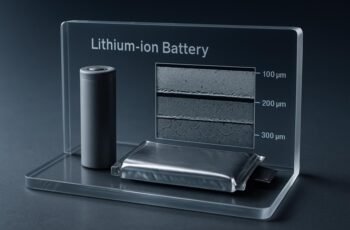
Imagine we’ve just finished a 12-hour cycle run and note the pack voltage at 3.3V per cell on the LiFePO4 bank. We’ll discuss a practical maintenance checklist we can apply consistently to verify health, track baselines, and catch anomalies early—without overspecifying, yet with precise steps. If we don’t lock in a routine for voltage, impedance, and temperature, small drifts become bigger issues down the line, so let’s establish that method and keep momentum as we proceed.
Key Takeaways
- Gather baseline specs and monitor voltage, impedance, and capacity to quickly assess LiFePO4 battery health.
- Inspect terminals, prevent corrosion, log cycle counts, temperatures, and perform quick diagnostic fixes daily.
- Use seasonal routines: storage at partial SOC, temperature-aware cycling, and periodic health checks with data-driven thresholds.
- Ensure safe charging: proper charger, voltage window, balanced charging, thermal monitoring, and automatic overcharge cutoffs.
- Address common issues promptly: rebalance for voltage drift, improve cooling for heat rise, and reassess BMS settings for anomalies.
Diagnose LiFePO4 Battery Health Quickly
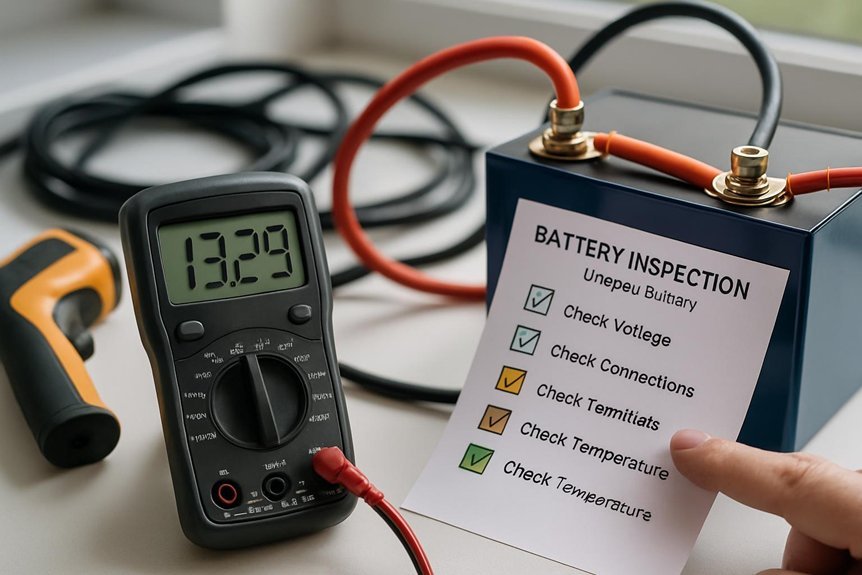
Diagnosing LiFePO4 battery health quickly starts with a focused data check. We gather baseline measurements and compare them to manufacturer specs, looking for deviations in voltage, impedance, and capacity estimates. Our diagnostic techniques rely on precise open-circuit voltage readings after rest, end-of-discharge voltages, and temperature corrections to avoid skewed results. We track internal resistance trends, cell balance status, and charge-discharge efficiency to flag aging signs. Health indicators like rapid voltage sag, elevated impedance, and reduced capacity guide our next steps, not guesswork. We document cycle counts, recent operating temperatures, and any abnormal ambient conditions. With a structured data approach, we isolate potential causes, preserve safety margins, and set actionable thresholds for maintenance or deeper inspection.
Maintain LiFePO4 Battery Health: Daily and Seasonal Routines
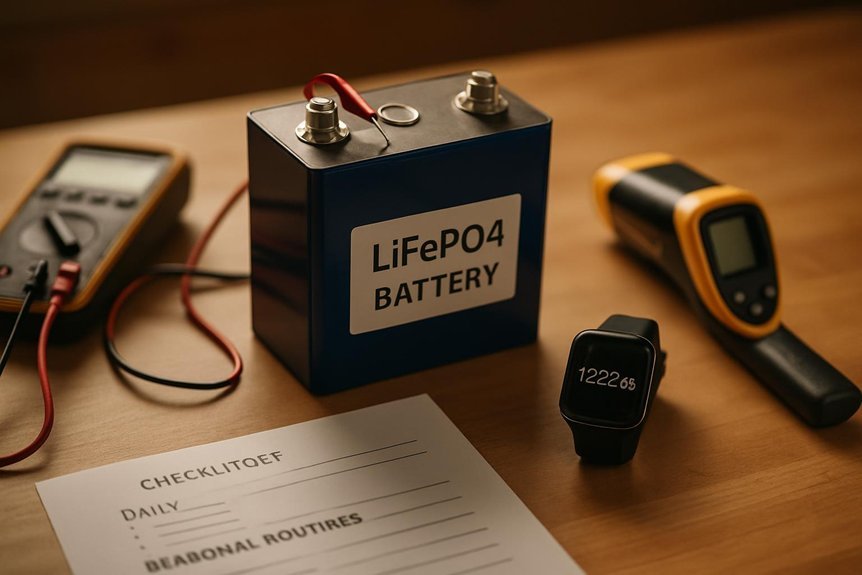
From the health checks we perform after diagnosing LiFePO4 battery health, we now implement daily and seasonal routines to preserve performance and extend life. We outline precise steps to maintain health through structured actions, not guesswork. Daily routines focus on monitoring terminal health, corrosion prevention, and safe charging practices within usage guidelines. Seasonal routines emphasize storage safety, temperature-aware cycling, and battery health reconditioning when appropriate. We pair diagnostics with quick fixes and quick remedies to address issues before they escalate, ensuring consistent performance. Together, these routines reduce common problems and support long-term reliability, while remaining aligned with best practices for Lifepo4 diagnostics.
Daily and seasonal LiFePO4 routines safeguard health with precise, proactive fixes.
- Maintain health by daily terminal inspection, corrosion checks, and safe charging adherence.
- Implement seasonal routines for temperature tracking, storage safety, and health-preserving cycling.
- Apply quick fixes and remedies to prevent degradation and sustain battery health over time.
Safe Charging, Storage, and Usage for LiFePO4
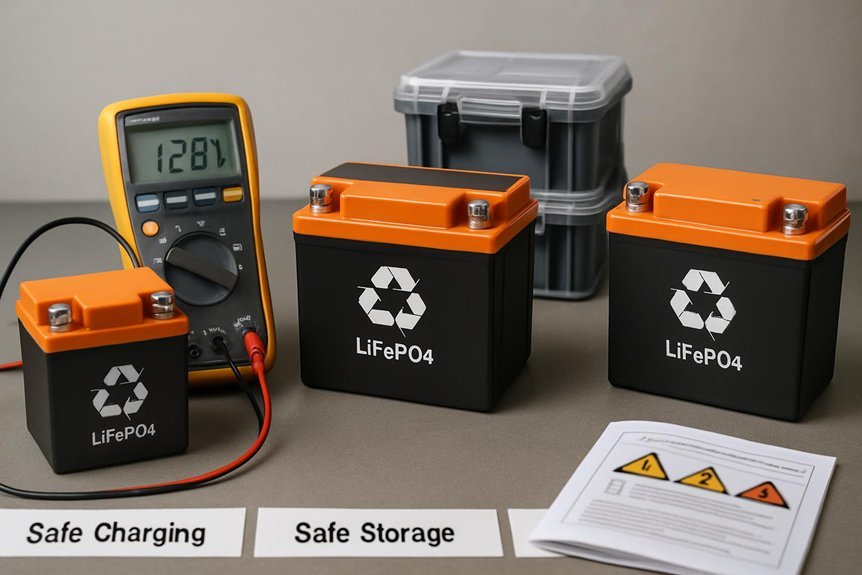
How can we guarantee LiFePO4 charging, storage, and usage are both safe and effective? We outline steps with precise limits and actionable checks. Safe charging relies on correct charger compatibility, accurate voltage windows, and controlled current during initial stages. We recommend balanced charging, thermal monitoring, and automatic cutoffs to prevent overcharge. For storage, keep cells at partial state of charge, in a cool, dry environment, with periodic checks for voltage drift and seal integrity. Usage safety demands proper enclosure, vibration mitigation, and fault isolation to avoid short circuits. Consider environmental impact by selecting recyclable packs and adhering to disposal guidelines. Regularly verify insulation, cabling, and connector integrity to maintain system reliability. Safe charging, storage, and usage minimize degradation and hazards.
Inspect LiFePO4 Terminals and Prevent Corrosion
Regular inspection of LiFePO4 terminals is crucial to prevent corrosion and guarantee reliable connections. We approach this task methodically, documenting condition, cleanliness, and tightness during each check. Our aim is to quickly diagnose health signals and address issues before they escalate, aligning with daily routines and safe charging practices. We verify terminal contact surfaces, inspect for verdigris or film formation, and confirm corrosion-free hardware. If contamination is detected, we follow a controlled cleaning protocol and reseal fasteners to maintain low-resistance paths. Seasonal storage steps include moisture control and terminal protection to extend life. By staying vigilant, we sustain optimal performance and reliability over time.
- inspecting terminals
- preventing corrosion
- maintaining daily routines
Common LiFePO4 Problems and Quick Fixes
We often see a handful of common LiFePO4 issues that can disrupt charging, efficiency, and longevity, and we address them with a concise, methodical approach. We communicate what’s wrong, perform diagnosis health checks, and implement quick fixes to restore performance. Common problems include voltage drift, reduced capacity, and excessive heat. Quick fixes involve balancing, cooling, and confirming connector integrity. We emphasize daily routines that prevent recurrence: regular voltage monitoring, clean terminals, and safe storage. If anomalies persist, we reassess cell grouping and BMS settings to avoid cascading failures.
| Symptom | Action |
|---|---|
| Voltage drift | Rebalance pack; verify BMS tuning |
| Heat rise | Improve cooling; verify load limits |
Frequently Asked Questions
How Do Temperature Fluctuations Affect Lifepo4 Longevity Long-Term?
We determine that temperature fluctuations degrade longevity; maintaining temperature stability and proper environmental controls preserves battery chemistry, reduces stress, and extends life, while charging safety practices mitigate risks and optimize performance under varying conditions.
Can Lifepo4 Tolerate Deep Discharge Without Damage?
Yes, we avoid deep discharge; LiFePO4 tolerates it poorly. We prioritize battery safety by preventing deep discharge, using low-voltage cutoffs, and monitoring SOC to maintain performance and longevity. We follow precise, methodical procedures for protection.
Do Charger Brands Impact Lifepo4 Battery Life?
Charger brands can impact life, particularly through battery compatibility and temperature effects; choose models with proper CC/CV profiles. We monitor cycle management, ensuring compatible chargers cope with voltage rise, thermal limits, and safe charging protocols for longevity.
What Is the Ideal Cycle Count for Lifepo4?
We’d say the ideal cycle count for LiFePO4 is around 2000–5000 charge cycles, depending on depth of discharge. We’ll monitor cycling efficiency and charge cycles closely, adjusting usage to maximize longevity and performance for you.
How Often Should You Perform a Full Capacity Test?
We perform a full capacity test every 6–12 months, depending on usage, and after any major cycle. We’ll verify full capacity and perform charge calibration to ensure accurate readings and optimal performance for our system.
Conclusion
We’ve walked the lines of a careful LiFePO4 routine, and you’re not far from steady, reliable performance. If a metric looks off, it’s merely a gentle reminder to pause, reassess, and adjust rather than push through. Our approach keeps risks low and accuracy high, while preserving battery longevity. In this careful cadence, issues drift into insignificance, and resilience quietly reinforces your system. With disciplined checks, success becomes the expected, not the hopeful.