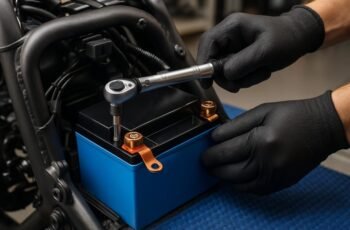
We want to test whether lithium starter batteries truly outlast lead-acid under typical automotive duty, given their higher energy density and flat under-load voltage. We’ll weigh high-rate cycling, heat stress, and BMS quality as the main lifespan determinants. If we can map duty cycles and temperature exposure to impedance growth, we might forecast replacement timing more reliably. There’s practical nuance in charging, deep-discharge avoidance, and manufacturer specs that could shift the outcome—we should proceed carefully.
Key Takeaways
- Lithium starter batteries offer higher energy density and flatter voltage, improving cranking reliability and cold-start performance than lead-acid.
- Lifespan is limited by high-rate cycling, heat, and parasitic losses that accelerate SEI growth and impedance rise.
- Signs of impending failure include voltage drops during cranking, persistent voltage sag, and increased internal resistance.
- Extend life with manufacturer-recommended charging, avoid deep discharges, regular SOC checks, and storage at 50–70% charge.
- Is a lithium starter right for your vehicle depends on electrical compatibility, heat management, mounting, and total cost of ownership.
How Lithium Starter Batteries Work Compared With Lead-Acid
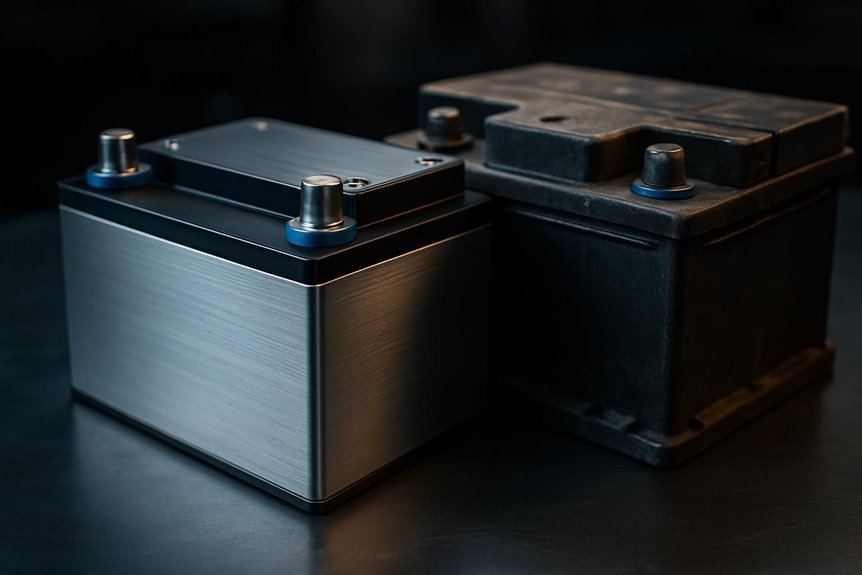
How do lithium starter batteries differ from traditional lead-acid packs in function and efficiency? We compare architectures, performance, and aging mechanisms, not anecdotes. Lithium chemistry enables higher energy density, faster cold-start response, and flatter voltage delivery under load, improving cranking reliability. Unlike lead-acid, lithium cells maintain near-constant voltage until near depletion, reducing parasitic losses and enabling tighter BMS control over current and temperature. We assess charge acceptance, self-discharge, and cycle life under automotive conditions, emphasizing the implications for warm- and cold-start efficiency and system sizing. We acknowledge maintenance myths, clarifying that, while lithium packs require monitoring, electrolyte maintenance isn’t needed as with flooded lead-acid. Our focus remains on measurable electrical behavior, safety boundaries, and integration considerations for modern starter systems.
Core Factors That Limit Lithium Starter Lifespan
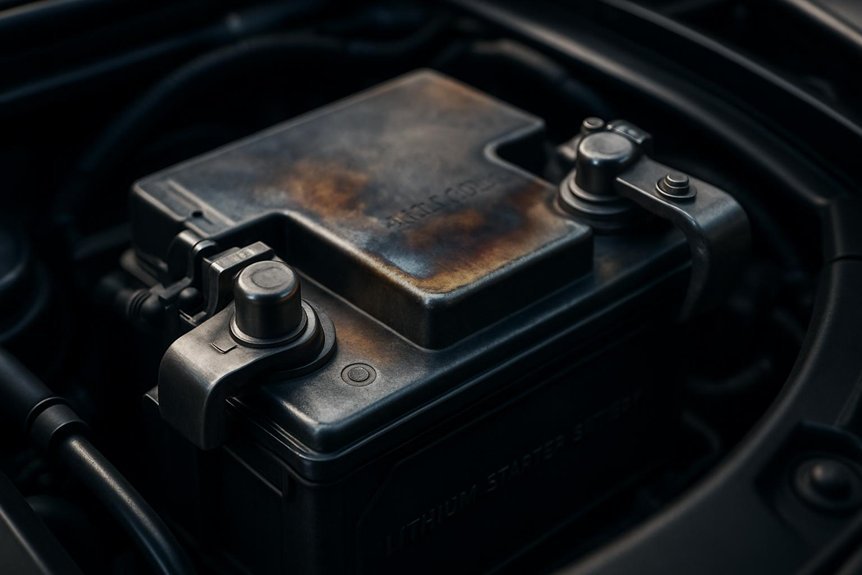
Despite their promise, lithium starter packs face three core aging drivers: high-rate cycling stresses, thermal excursions, and electrolyte/electrochemical degradation under automotive duty cycles. We, as readers, examine how these core factors cap lifespan limits in real-world use.
| Factor | Impact on lifespan limits |
|---|---|
| High-rate cycling | Accelerates SEI growth, increases impedance |
| Thermal excursions | Accelerates degradation and capacity loss |
| Electrolyte degradation | Alters ionic transport, lowers output |
| Electrochemical drift | Reduces usable energy under load |
| Duty-cycle variation | Mismatches design, shortens usable life |
Symptoms That Signal Replacement Might Be Near
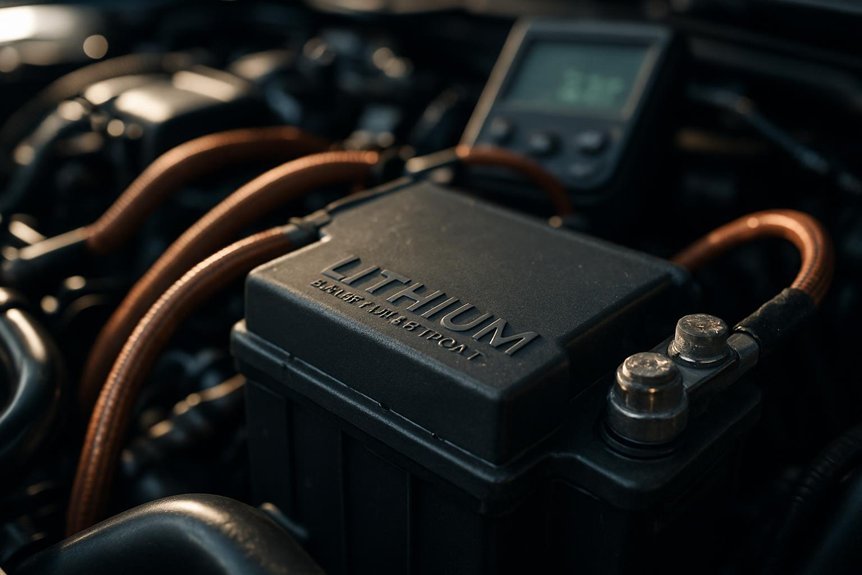
Are warning signs becoming evident as a lithium starter battery ages, and what do they indicate about imminent replacement? We assess symptoms by correlating battery health indicators with load response. Early indicators include voltage drops under modest cranking, or inconsistent starting performance that isn’t resolved by a routine reset. As deterioration progresses, corrosion signs may appear at terminals, signaling increased internal resistance and potential parasitic losses. Persistent voltage sag in cold starts or after resting periods often foreshadows reduced cranking capability and imminent failure. We quantify these patterns against manufacturer thresholds; repeated events suggest a higher likelihood of sudden battery failure. Combined, these signs guide proactive replacement decisions, avoiding stranded starts and minimizing risk to vehicle electronics. Proper diagnostics remain essential to distinguish aging from external drain or faulty wiring.
Practical Care and Charging Habits to Extend Life
Effective care and charging practices directly influence lithium starter battery longevity. We, however, focus on disciplined routines that respect battery chemistry and system limits. Practical charging requires avoiding extended high-current pulses, minimizing deep discharges, and maintaining voltage within manufacturer specs. We recommend regular state-of-charge checks, using appropriate chargers, and enabling temperature compensation to prevent stress from ambient heat or cold. Storage between drives should keep packs near 50–70% state of charge to slow self-discharge and electrolyte aging effects. Clean terminals and proper insulation reduce parasitic drains that shorten life. We emphasize monitoring for voltage sag under load, ensuring alternator compatibility, and avoiding auxiliary loads when the engine isn’t running. These habits optimize cycle stability, efficiency, and overall lifespan of the lithium starter battery, backed by battery chemistry fundamentals.
Is a Lithium Starter Right for Your Vehicle? A Practical Buyer’s Guide
A lithium starter battery can be a strong upgrade for many vehicles, but it’s not a universal fit. We evaluate compatibility by examining electrical system tolerance, cranking profile, and mounting constraints, then compare to lead-acid baselines. Our analysis centers on lithium weight, which affects vehicle dynamics, mounting ergonomics, and weight distribution, plus heat management under sustained cold starts. We assess cost impact across upfront price, installation, and potential warranty implications, balancing against longer cycle life and faster recharge. Our practical guide emphasizes vehicle compatibility quirks: alternator output, BMS integration, and warranty coverage. We also consider climate and usage patterns, noting that high-current demands in cold starts favor certain chemistries. In sum, choose lithium only if benefits align with your drivetrain, operating environment, and total cost of ownership targets.
Frequently Asked Questions
How Long Does a Lithium Starter Battery Typically Last in Cold Climates?
We typically see lithium starter batteries last 2–5 winters in cold climate battery longevity, with reduced capacity affecting cold climate battery longevity and lithium starter performance; our analysis shows higher C-rate use and proper thermal management improve outcomes for you.
Can Lithium Starters Fail Suddenly Without Warning Signs?
Yes, lithium starters can fail suddenly without warning. We monitor for starting failure warning indicators and sudden breakdown signs, noting that abrupt voltage drops, unexpected cranking resistance, or rapid temperature changes can precede a full breakdown.
Do Lithium Starters Require Special Chargers or Alternators?
Honestly, yes: lithium starters require charging compatibility checks with their chemistry. We must ensure compatible chargers and alternators. We discuss lithium starter chemistry and charging compatibility, noting specialized BMS protections and precise current limits for safe operation.
How Does Vibration Affect Lithium Starter Longevity?
Vibration effects reduce lithium starter longevity by causing microcracks and connection loosening; shock resilience is essential. We evaluate mounting, damping, and cell integrity to minimize fatigue, ensuring consistent cranking performance under real-world vibrations and temperature variation.
Are There Warranty or Replacement Terms Unique to Lithium Starters?
Warranty terms for lithium starters vary; we offer lithium warranty coverage and clear replacement terms, with quantified limits and conditions. We’ll guide you through eligibility, timelines, and process, ensuring precise, analytical guidance—like a roadmap you can trust.
Conclusion
We’ve weighed weaknesses and wins, weaving warnings with wisdom. With lithium starters, longevity hinges on loyal load management, cool clustering, and careful charging. We’ve seen performance soar when cycles stay modest and temperatures stay tolerable, while severe swings sabotage stamina. So, steer seekers toward strict specs, steady schedules, and smart safeguards. Should setbacks surface, short, swift service shines. In short, selective sizing, steadfast care, and disciplined use deliver durable, dependable drives.