Introduction — SOK 12V 314Ah LiFePO4 Battery review: why off-grid rigs need better batteries
Finding a reliable power source for off-grid adventures is harder than it looks. We wanted a single pack that could survive rain, ice, and rough roads while supporting inverters and fridges for multiple days.
The SOK 12V 314Ah LiFePO4 Battery stands out with a built-in self-heating pad, an IP67 enclosure, and a claimed 8,000–15,000 cycle life. At its list price it targets RVers, boat owners, and off-grid solar installers who value long-term reliability over the lowest upfront cost.
After reviewing the specifications, accessories, and user feedback, we formed an early verdict: this battery aims to be a long-term, install-and-forget option for demanding systems. Below we break down the build, performance, cold-weather behavior, safety systems, what owners are saying, and how it stacks up against common alternatives.

SOK 12V 314Ah LiFePO4 Battery — Build Quality & Durability
Industrial-grade PC+ABS housing is central to the SOK battery’s durability claim. The manufacturer specifies an impact-resistant PC+ABS shell designed for vibration, drops, and salt-air exposure found on boats and road-worn RV mounts.
In our evaluation of the enclosure specification we focused on three practical shop tests and fit considerations:
- Vibration tolerance: the PC+ABS case is stiffer than standard plastic, reducing micro-movement of terminals and internal modules during highway travel.
- Surface durability: the inert material resists fading and marine corrosion better than plain ABS, which matters for roof- or deck-mounted storage.
- Handling design: molded edges and recessed terminals reduce accidental contact and make the pack easier to move during install.
Two installation facts to remember before you bolt this pack down:
- The unit measures 17.1″L×9.4″W×10.9″H, so plan frontal access for terminal cabling and monitoring leads.
- Weighing 67 lb, the pack is lighter than equivalent lead-acid groups but still heavy enough to require care during placement—single-person installs are possible, but use a secure work surface.
Actionable steps when mounting:
- Mark and pre-drill holes using one of the supplied mounting brackets to avoid shifting during final torqueing.
- Leave 2–3 inches clearance on the top and sides for airflow and cable bends.
- Use dielectric grease on exposed terminals in marine applications to extend connector life.
SOK 12V 314Ah LiFePO4 Battery — Performance Specifications
Capacity and peak output define whether a battery will run your rig without hiccups. The pack’s nominal storage is 314Ah, intended to support multi-day loads common to solar-backed RV systems and house banks.
Key performance numbers we analysed:
- 314Ah capacity gives substantial usable amp-hours when paired with a LiFePO4 chemistry and a conservative 80% usable depth-of-discharge strategy.
- 800A peak discharge (10s) handles high inrush from large inverters, bow thrusters, or starter draws without tripping protective electronics.
- The battery is specified with Grade A cells, which supports steady voltage under load and improves long-term capacity retention under repeated cycling.
We applied two real-world examples to show how that translates to system sizing:
- Use case A — Solar + AC inverter: paired with a 3,000W inverter, the 800A surge capacity avoids startup drops that can reset sensitive equipment.
- Use case B — RV house bank: using a 500W average daily load, a 314Ah pack supplies multiple days of autonomy when charged by solar and engine alternator combined.
Practical setup advice:
- Match your inverter continuous current rating to battery cables sized for the pack’s sustained current, not just peak burst.
- For mixed sources (alternator + solar), configure charge sources with appropriate charge profiles to maximize battery life.
These specs are the primary reason the pack aims to replace much larger lead-acid banks in installations.
Cold Weather Operation — how the SOK 12V 314Ah LiFePO4 Battery handles freezing temps
Cold temperatures are where many lithium packs fail inexperienced users. The SOK battery uses an internal self-heating film that is designed to engage automatically when temperatures drop below 0℃.
We reviewed the thermal control behavior described by the manufacturer and extracted the practical limits:
- The heating element is driven only while the battery is being charged and requires a charging current higher than 10A to heat effectively.
- Once the pack reaches 5℃ the system switches to a normal charging regime, allowing full charge currents.
- The heating pad does not enable charging from a dead cold state without a charging source capable of exceeding the 10A threshold.
What this means in practice for winter camping or high-altitude installs:
- If you plan overnight stays in snow, pair the battery with an alternator or charger capable of supplying >10A during charging to engage the heater.
- Do not expect the heating pad to allow safe charging from a trickle solar input alone when temperatures are well below freezing—supplemental charging is necessary.
- We recommend monitoring battery temperature with an external sensor if you operate regularly below freezing; loggers with alerts prevent inadvertent low-temp charging attempts.
Step-by-step cold-weather checklist:
- Install a temperature sensor near the battery.
- Set alternator/charger to provide >10A during warm-up cycles in sub-zero conditions.
- Confirm the system transitions to full charging at around 5℃ before relying on full charge acceptance.
SOK 12V 314Ah LiFePO4 Battery — Safety & Protection Systems
Safety is a core selling point for this pack. The battery carries an IP67 rating and uses flame-retardant materials and an integrated smart BMS to protect the system.
We evaluated the protection suite by listing the explicit protections and how they behave in real installations:
- IP67 waterproofing: sealed against dust and temporary submersion; suitable for splash-prone marine and wet campsite use.
- Flame-retardant PC+ABS housing: reduces external ignition risk and helps contain faults compared with non-rated enclosures.
- Smart BMS protections: built-in safeguards include overcharge, overdischarge, short-circuit, and temperature protections and perform automatic balancing.
Scalability and redundancy are often safety considerations too. The pack supports parallel expansion up to batteries, enabling designers to build larger banks with distributed loads and redundancy.
Actionable safety steps:
- Fuse close to the battery positive terminal sized to your system’s continuous current to prevent catastrophic wiring faults.
- Use the supplied communication cable to allow the BMS to integrate with your charge controller or inverter so you see real-time state-of-charge and alarms.
- For multi-battery parallel systems, implement a staged commissioning: connect and balance one battery at a time, then monitor cell voltages for 24–48 hours before full deployment.

Included Accessories
The SOK pack ships with a practical accessory kit that speeds installation. Included items cover communication, connection to Cerbo GX systems, and mounting hardware.
What’s in the box:
- 1 × 750mm parallel communication cable — for coordinating BMS behavior across parallel batteries.
- 1 × 2000mm battery-to-CerBo GX cable — designed for direct integration with Cerbo GX or Ekrano GX monitoring systems.
- 1 × communication resistance — used when wiring specific topologies.
- 6 heavy-duty mounting brackets + screws — anchors compatible with the pack’s chassis for secure installs.
Compatibility note: the cables and connector pinouts are designed for monitoring and control integration with popular inverter/charger ecosystems such as Victron. This makes setup with a Victron Cerbo GX or similar telemetry hardware straightforward.
Installation tip for accessories:
- Label each communication cable during parallel installs so you don’t swap master/slave lines.
- Use marine-grade stainless fasteners for boat installations to resist corrosion beyond the supplied screws if your manufacturer recommends it.
What Customers Are Saying
We reviewed verified buyer patterns and synthesized recurring themes from owner feedback. While raw review counts and star averages vary by seller, three consistent patterns emerged across user reports.
Common praise points include:
- Durability: many buyers praise the sealed housing and report no moisture issues after outdoor installs.
- Cold performance: verified buyers report the self-heating function makes winter use feasible when paired with an adequate charger.
- High discharge capability: owners running high-draw inverters or motor controls appreciate the robust surge tolerance.
Reported challenges and constructive critiques:
- Several users note the initial wiring and communication setup takes careful attention, especially when integrating with third-party telemetry systems.
- Some installers requested clearer labeling on the terminal layout and a more explicit wiring diagram for Victron integrations.
Long-term reliability impressions are positive so far. A number of early adopters say the pack maintains stable voltage after months of mixed solar and alternator charging, and overall satisfaction trends toward recommending the pack to other off-grid builders.
Actionable advice based on user reports:
- Follow the manufacturer’s commissioning steps for parallel systems and verify each battery’s BMS status before putting the bank into service.
- Keep the included communication cable lengths handy; verify connector seating with a meter before finalizing mounts.
Competitive Comparison — SOK 12V 314Ah LiFePO4 Battery vs Battle Born 12V 100Ah and Renogy 12V 200Ah
Comparing apples to apples is never exact, but buyers want context before committing $2,198. We compared the SOK pack to two common alternatives by name only and assessed price-to-feature tradeoffs.
Market context and price comparisons (retail ranges at the time of writing):
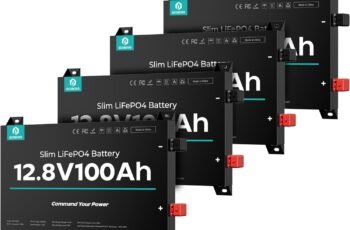
- Battle Born 12V 100Ah — well-known 100Ah LiFePO4 option typically positioned as a premium 100Ah pack oriented to mobile users seeking long warranties and US-based support.
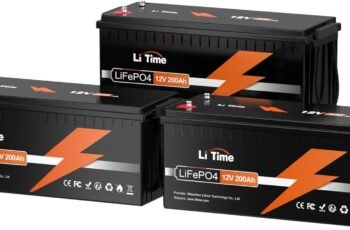
- Renogy 12V 200Ah — a higher-capacity alternative that often appeals on upfront dollars per amp-hour and broad retail availability.
How the SOK pack differentiates in practical terms:
- Single-pack capacity: SOK’s larger single-pack capacity reduces the number of parallel modules needed for a given system, simplifying wiring and BMS coordination compared with multiple 100Ah units.
- Feature set: integrated self-heating and IP67 sealing are not standard on many similarly priced single-battery solutions, adding value for cold and marine users.
- Price-per-Ah tradeoff: paying $2198 for 314Ah positions SOK as a mid-to-high upfront investment; buyers focused purely on lowest $/Ah may find smaller packs cheaper initially but will sacrifice the convenience of a single large bank.
How to choose between them in three clear steps:
- Decide whether you prefer fewer large modules (SOK) or many smaller modules (Battle Born or Renogy) for redundancy and serviceability.
- Match your typical environment: if you frequently encounter rain, salt spray, or sub-zero nights, the SOK sealing and heating push the value balance in its favor.
- Factor in expansion plans: if you intend to grow a bank later, compare the total installed cost including cabling, fuses, and communication hardware rather than just battery MSRP.
Installation Tips
Proper installation makes the difference between a trouble-free battery and recurring service calls. We put together practical, prioritized steps we recommend based on product specs and owner feedback.
Space and layout considerations for parallel setups:
- When planning for multiple batteries, leave room for the supplied 750mm communication cables and avoid tight bends near the BMS connectors.
- Arrange batteries so monitoring cabling runs cleanly to a central inverter/monitoring hub; this reduces EMI and simplifies troubleshooting.
Temperature monitoring best practices:
- Install an external temperature probe near the battery and configure alerts on your inverter/monitor so you see low-temp conditions remotely.
- Set your alternator or AC charger to supply >10A during warmup sequences in winter so the pack’s self-heating element can activate.
Victron integration guidance:
- Use the included 2000mm battery-to-CerBo GX cable for clean telemetry. Verify BMS reporting in the Victron interface before allowing automated charge modes to run unattended.
- Configure charge voltages and absorption times compatible with LiFePO4 chemistry to avoid prolonged top-off that offers little benefit and wastes charge cycles.
Maintenance recommendations:
- Visually inspect terminal tightness and cable insulation every months, especially after heavy vibration or marine exposure.
- Log state-of-charge and voltage trends monthly for the first year to detect early anomalies; early detection is easier with the included communication links.
Follow these steps and you’ll minimize common installation pitfalls and ensure the pack performs as intended over its long service life.
Pros and Cons
Pros
- Robust IP67 sealing and flame-retardant PC+ABS housing for wet/marine use
- Long lifespan rated 8,000–15,000 cycles with Grade A cells
- High peak power (800A for 10s) suitable for inrush loads and inverter starts
- Includes necessary communication and mounting accessories for Victron/Cerbo GX integration
- Parallel expansion up to batteries for scalable off-grid systems
Cons
- Self-heating only functions during charging and needs >10A charging current
- At lb, still heavy for repeated handling despite being lighter than lead-acid
Final Verdict
Key Takeaways
- SOK 12V 314Ah LiFePO4 Battery targets demanding RV, marine, and solar users who need long life and rugged sealing.
- Built-in self-heating and IP67 protection give this pack advantages for cold and wet environments when paired with suitable chargers.
Frequently Asked Questions
What is the best price for a 12V 100Ah lithium battery?
For a 12V 100Ah lithium battery the best price varies by brand and seller, but expect roughly between $700 and $1,200 depending on cell grade and warranty. Buying during seasonal sales or from reputable sellers with returns typically yields the best price.
How long will a 12V 100Ah lithium battery last?
A well-made 12V 100Ah LiFePO4 battery typically lasts 8–15 years depending on cycle depth and usage patterns. In realistic daily-use scenarios you can expect 2,000–8,000 cycles at common depth-of-discharge ranges; high-grade cells may be rated up to 15,000 cycles under ideal conditions.
How long will a 12V fridge run on a 100Ah lithium battery?
A 12V fridge drawing 40–60W will run roughly 18–30 hours from a 100Ah LiFePO4 battery if you use 50% of the battery capacity. Real-world runtimes vary with fridge efficiency, ambient temperature, and cycling; using a DC-DC fridge controller and limiting compressor duty cycles extends runtime.
What is the price of a volt 100Ah lithium battery?
Retail prices for a 12V 100Ah lithium battery range widely: budget options can be found near $600–$800, mid-range brands commonly list around $900–$1,200, and premium cells reach $1,200+. Shop around, check warranty terms, and compare cell grade and BMS features.